


-
Products
-
About Us
-
Roasters
-
Gifts
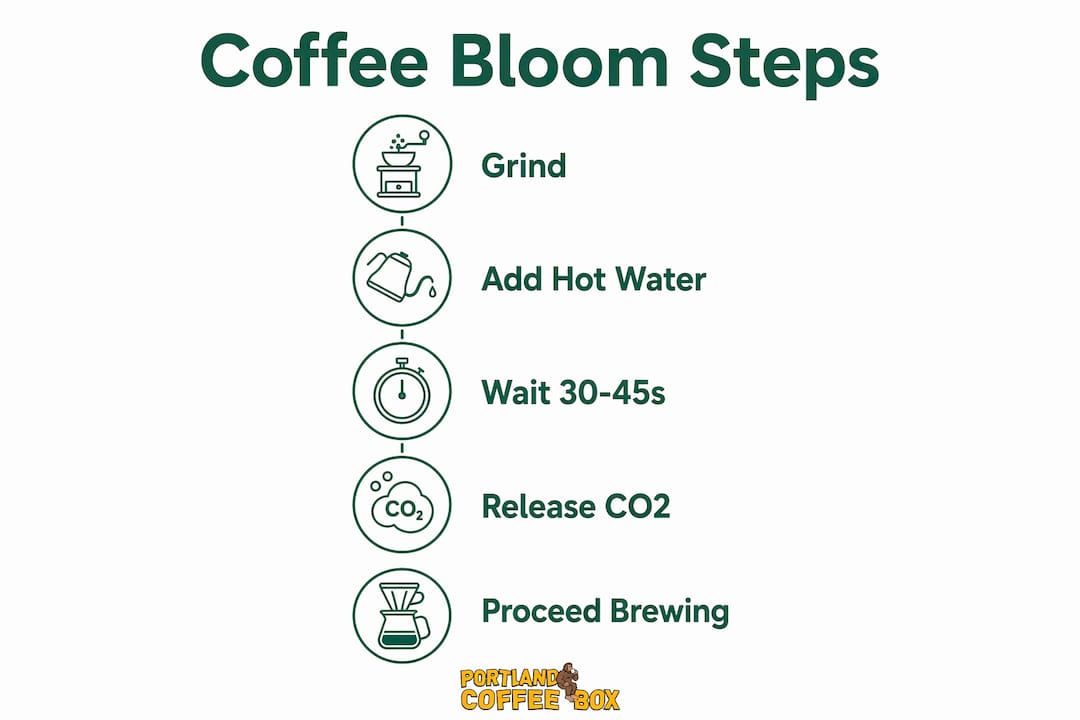
Coffee bloom is defined as the rapid release of carbon dioxide gas that occurs the moment hot water contacts freshly ground coffee during brewing. You see it as a dome of bubbles swelling up from the grounds, lasting roughly 30–45 seconds. This pre-infusion phase is not decorative. It is the single most important step for even extraction and a clean, balanced cup. Understanding what is coffee bloom when brewing gives you direct control over flavor clarity, and it starts with knowing exactly what is happening inside those grounds.
CO2 gets trapped inside coffee beans during the roasting process. Heat causes organic compounds in the bean to break down and release carbon dioxide gas, which stays locked inside the cell structure until the bean is ground and exposed to water. The moment hot water hits the grounds, that gas escapes fast, creating the visible bubbling and swelling you see in the brewer.
The problem with skipping the bloom is real. CO2 repels water, creating an uneven barrier across the coffee bed. Water channels around gas pockets instead of saturating the grounds uniformly. The result is uneven extraction, sourness from carbonic acid formation, and a muddy or flat flavor in the cup.
The bloom phase, also called pre-infusion, solves this by letting the gas escape before the main pour begins. Blooming helps water contact coffee evenly by removing that CO2 barrier, which leads to balanced extraction across every particle. Think of it as clearing the road before the water travels through.
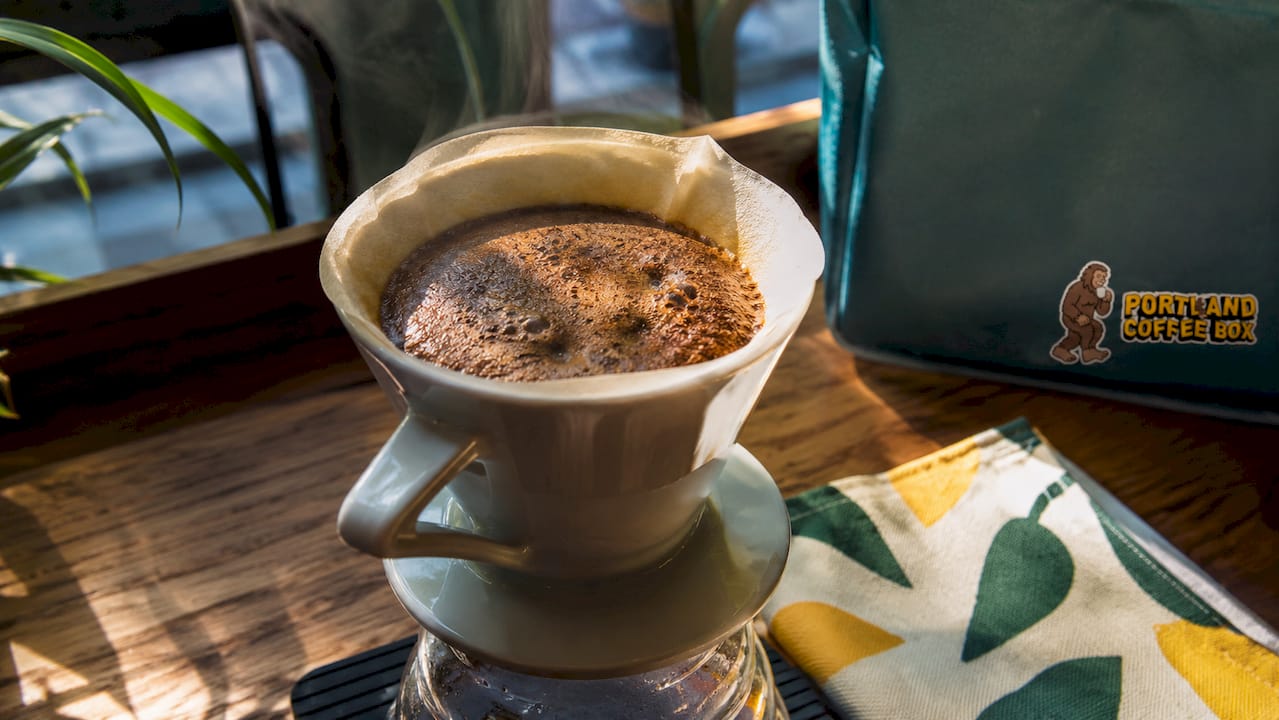
Pro Tip: Use water that is just off the boil, around 200°F, for your bloom pour. Water that is too cool will not trigger an aggressive enough gas release, and you will lose the full benefit of the pre-infusion phase.
The pre-infusion technique applies across pour-over methods, French press, AeroPress, and even some manual brewing approaches that emphasize controlled saturation before full extraction begins.
Bloom intensity tells you a lot about your beans, but not everything. The clearest, most vigorous bloom happens when beans are 3 to 14 days off-roast, the window when CO2 is still actively degassing from the cell structure. Beans roasted too recently can actually over-bloom, releasing so much gas that extraction becomes erratic. Beans roasted too long ago have already lost most of their CO2 and produce a weak or flat bloom.
Roast level changes the character of the bloom as well. Lighter roasts tend to produce a cleaner, more defined bubble dome because their CO2 is still tightly bound in a denser cell structure. Darker roasts create oily foam on the surface during bloom, which looks dramatic but is partly caused by surface oils emulsifying with water rather than pure CO2 release. That foam is not a direct freshness signal the way a light roast bloom is.
Storage conditions matter more than most home brewers realize. Here is how different factors shape what you see in the brewer:
Knowing your freshly roasted coffee details, specifically the roast date and storage method, gives you the context to interpret what your bloom is actually telling you.
Getting the bloom right is a technique, not a ritual. Follow these steps and you will notice a real difference in cup clarity.
Pouring too much water during bloom drowns the grounds and starts extraction prematurely. The goal is surface saturation, not immersion. Over-pouring during bloom is one of the most common mistakes home brewers make, and it directly undermines the purpose of the step.
Pro Tip: After your bloom pour, look for dry spots on the surface of the grounds. If you see any, your pour was uneven. Adjust your spiral pattern on the next brew to make sure every ground gets wet before the bloom phase ends.
Bloom visibility also varies by brewing method. Pour-over methods like the V60 or Chemex show the clearest bloom because the grounds sit exposed in a filter. French press and AeroPress show bloom too, though the enclosed chamber makes it less dramatic. Espresso machines handle pre-infusion differently through pressure, so the bloom phase looks and behaves differently than in manual methods. For consistent brewing results, practice the same bloom technique every time and adjust only one variable at a time.
Several persistent misconceptions about bloom lead home brewers to draw the wrong conclusions from what they see.
Using bloom as a freshness indicator is smart, but treating it as the sole measure of quality leads to bad conclusions. Check your bean quality signals alongside bloom behavior for a fuller picture.
Coffee bloom is the CO2 release phase that determines whether your water extracts flavor evenly or bypasses half the grounds entirely.
| Point | Details |
|---|---|
| Bloom definition | CO2 escapes from fresh grounds on hot water contact, creating visible bubbling for 30–45 seconds. |
| Optimal freshness window | Beans 3–14 days off-roast produce the most reliable bloom and best extraction conditions. |
| Correct water ratio | Use 2–3 times the coffee weight in water for the bloom pour to saturate grounds fully. |
| Swirl, do not stir | Gentle swirling keeps the coffee bed intact; stirring creates channels that cause uneven extraction. |
| Bloom is one signal | Absence of bloom does not mean poor quality; frozen or well-stored beans can show weak bloom and still taste excellent. |
I used to treat bloom as optional, something specialty coffee people did to look serious. Then I started paying attention to what happened in the cup when I skipped it. The difference was not subtle. Cups brewed without bloom tasted sharper on the front end and flat on the finish. The same beans, bloomed properly, had more clarity and a longer, cleaner aftertaste.
The mistake most home brewers make is treating bloom as a timer exercise. You pour, you wait, you move on. But bloom is actually a sensory checkpoint. Watch how the dome rises. Notice whether it collapses quickly or holds for the full 45 seconds. A fast collapse often means the beans are older or were stored in warm conditions. A slow, steady rise usually means you are working with fresh, well-stored coffee.
The other thing I learned the hard way is that bloom technique matters as much as bloom timing. An uneven pour during bloom creates dry patches that never fully saturate, and those patches extract poorly no matter how careful your main pour is. I started treating the bloom pour with the same attention I give the rest of the brew, and my consistency improved immediately.
Bloom is not magic. It is chemistry you can see with your eyes. Once you understand what it is telling you, you stop guessing and start brewing with real intention. That shift from mechanical habit to mindful observation is where craft coffee actually begins.
— Cody Salane
The bloom only works when your beans are fresh enough to bloom in the first place. Portland Coffee Box sources small-batch, freshly roasted coffee from Portland’s top craft roasters and ships it directly to your door, so you receive beans at peak degassing, right in that 3–14 day sweet spot.

Every subscription is built around freshness and variety, with flexible subscription options in one, two, three, and four bag sizes to match your brewing volume. Whether you are perfecting your pour-over bloom or just getting started, Portland Coffee Box puts the right beans in your hands at the right time. Free shipping on every order, and a bonus bag of coffee is available to get you started on the right foot.
Coffee bloom is the rapid release of CO2 gas that occurs when hot water first contacts freshly ground coffee. It appears as a dome of bubbles and swelling that lasts roughly 30–45 seconds.
Use 2–3 times the weight of your dry coffee grounds for the bloom pour. For 20 grams of coffee, that means 40–60 grams of water.
Not necessarily. Well-degassed or properly frozen beans can show a weak bloom and still produce a flavorful, complex cup. Bloom absence is one freshness signal, not a definitive quality test.
The bloom phase should last 30–45 seconds. Cutting it short leaves CO2 in the coffee bed, which blocks even water penetration during the main pour.
No. Coffee bloom is CO2 escaping from grounds at atmospheric pressure during manual brewing. Espresso crema is an emulsion of CO2, water, and oils formed under high pressure. They look similar but are different in nature and cause.


