


-
Products
-
About Us
-
Roasters
- Gifts
Coffee grades are a standardized quality classification system that measures bean quality through physical defect counts and sensory evaluation scores. Understanding the difference between coffee grades explained by industry bodies like the Specialty Coffee Association (SCA) gives you a real advantage when selecting beans. Grades directly shape flavor complexity, aroma intensity, and the consistency you experience in every brew. Whether you’re shopping for a single origin or building a subscription, knowing how grades work helps you spend smarter and taste better.
The SCA grading system is the most widely accepted framework for specialty coffee standards worldwide. It uses a 100-point sensory scale evaluated by certified Q-Graders who assess 10 attributes including aroma, flavor, acidity, body, and balance. The SCA defines specialty coffee as scoring at least 80 points with zero primary defects and no more than five secondary defects in a 350-gram sample. That threshold is not arbitrary. It represents the minimum standard at which a coffee delivers genuine complexity and consistency.
The SCA scoring tiers break down as follows:
That last point matters. Most coffee in the world never reaches the specialty tier. The 80-point line is where pricing, traceability, and flavor expectations shift dramatically.
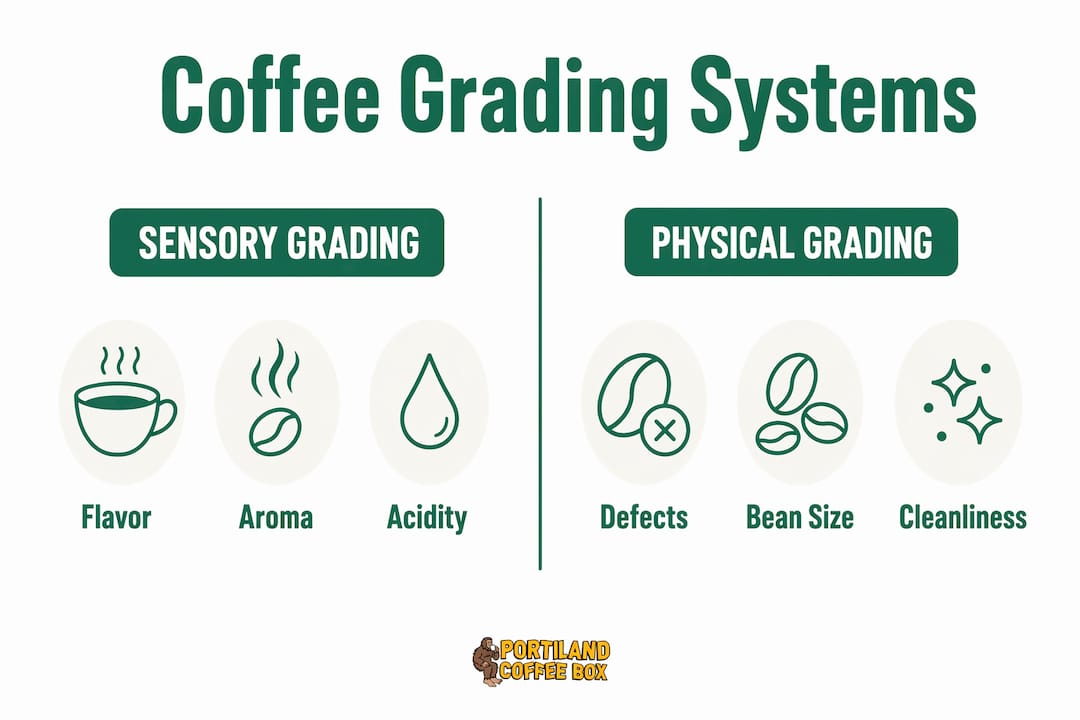
Sensory scoring is not the only grading method. Physical defect systems evaluate green beans before roasting by counting flaws in a sample. Ethiopia uses a 1–5 grading system based on a 300-gram sample. Grade 1 washed coffee allows 0–3 defects, while Grade 5 natural coffee allows 121–180 defects. Physical grading does not measure flavor at all. A Grade 1 bean is cleaner and more consistent, but its cup quality still depends on sensory evaluation.
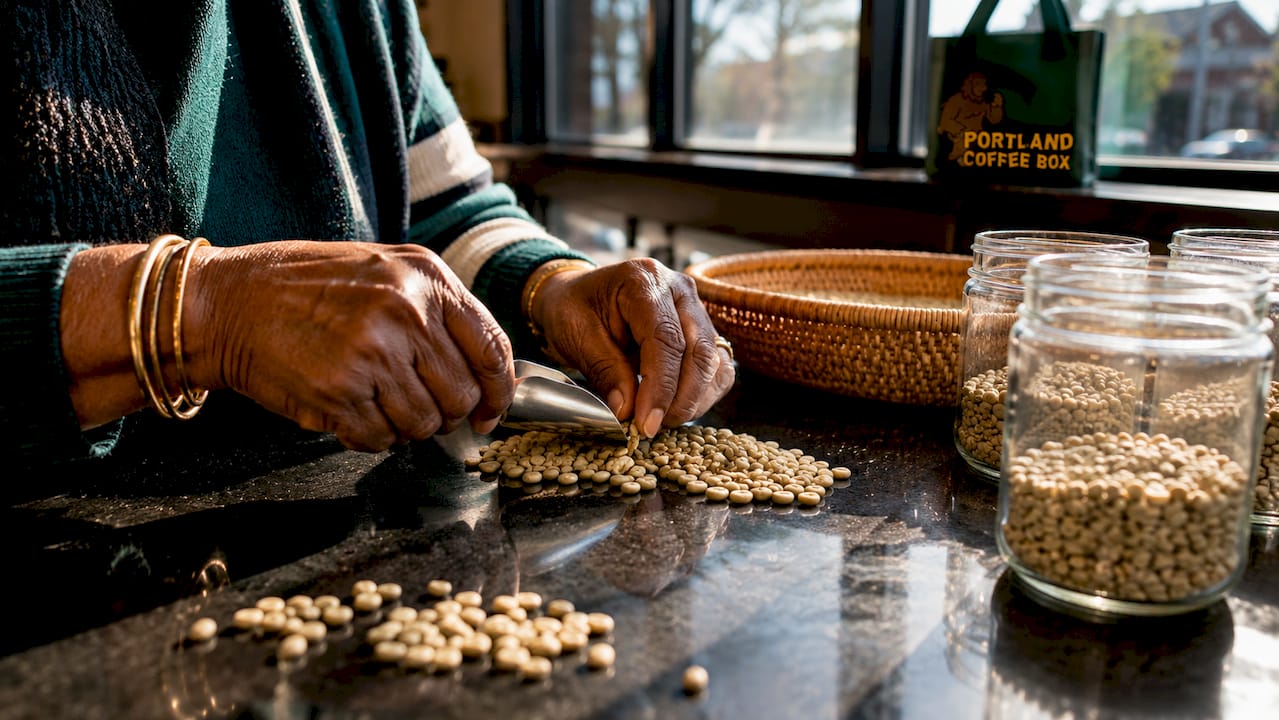
The two systems work together. A coffee can pass physical grading but still score below 80 on the SCA scale if its flavor profile lacks complexity. Conversely, a physically clean bean from a great origin with skilled processing can score well above 85. Understanding both systems gives you the full picture.
| Grading System | What It Measures | Key Threshold |
|---|---|---|
| SCA Sensory Score | Flavor, aroma, body, acidity, balance | 80+ points = specialty |
| Ethiopian Physical Grade | Defect count per 300g sample | Grade 1 = 0–3 defects |
| Kenyan Size Grade (AA) | Bean screen size | Screen 18+ = AA |
Higher grades produce more distinctive, layered cups. The SCA cupping protocol uses precise brewing parameters of 8.25g of coffee per 150ml of water at 92–96°C to create a controlled, repeatable evaluation. That standardization means scores are genuinely comparable across origins and roasters. A coffee scoring 86 in Ethiopia and one scoring 86 in Colombia have both cleared the same rigorous bar.
The sensory attributes that Q-Graders evaluate each score on a scale of 6–10 in 0.25-point increments. Because the scale is compressed into that high-end range, small score differences carry real weight. An 80 versus an 86 is not a minor gap. It represents a meaningful difference in flavor complexity, aroma clarity, and aftertaste quality.
Physical defects also affect the cup in direct ways:
Specialty-grade coffees, by contrast, come from traceable supply chains that reward quality at every stage, from farm to export. That traceability is not just an ethical feature. It produces cleaner, more consistent beans that roasters can work with confidently.
Pro Tip: When reading tasting notes on a bag, cross-reference the SCA score if listed. A coffee with bright citrus notes and an 87-point score is not marketing language. Those notes were identified under controlled cupping conditions by a certified evaluator.
Roasting and brewing also influence the final cup, but they cannot rescue a low-grade bean. A skilled roaster working with specialty-grade beans will consistently outperform the same roaster working with commodity lots. Grade sets the ceiling for what is possible in your cup.
The biggest misconception is that size-based grade labels like “AA” indicate superior cup quality. Kenyan AA beans are simply larger beans that passed through a screen size 18 sieve. Bean size affects roasting consistency and visual appeal, but it does not determine flavor. A Kenyan AA from a poorly managed farm can score below 80 on the SCA scale. A smaller-screened bean from an exceptional farm can score above 88.
Other common misunderstandings worth correcting:
Q-Graders who produce SCA scores undergo periodic recalibration to maintain consistency across international markets. That process prevents score drift and subjectivity bias, making the SCA scale a reliable tool rather than a loose opinion. When a roaster publishes an SCA score on their packaging, it carries real meaning.
Start with the SCA score as your quality filter. Any coffee scoring 80 or above has cleared a verified quality threshold. From there, use the score tier to set expectations. An 85-plus coffee will typically offer more distinct origin character and aroma complexity than one sitting at 81. That difference shows up in the cup.
Pro Tip: Ask your roaster for the lot number and farm name alongside the SCA score. That combination tells you the coffee is traceable, which is a strong signal of specialty-grade sourcing and ethical supply chain practices.
Understanding how roast profiles interact with grade also sharpens your selections. Light roasts preserve the origin character that earns high sensory scores. Dark roasts can mask defects but also obscure the complexity that makes specialty grades worth seeking out.
Coffee grades are the most reliable quality signal available to enthusiasts, combining physical defect counts and sensory scores to define what separates specialty from commodity.
| Point | Details |
|---|---|
| SCA specialty threshold | Coffees scoring 80+ points with minimal defects qualify as specialty grade. |
| Physical vs. sensory grading | Defect counts measure cleanliness; SCA scores measure flavor complexity. Both matter. |
| Size labels mislead | Terms like AA indicate bean size, not cup quality or sensory score. |
| Score gaps are significant | The difference between 80 and 86 points reflects a meaningful quality gap on a compressed scale. |
| Grade is a starting point | Use scores alongside processing method and origin to make the best bean selections. |
I used to shop for coffee the way most people do: by roast level and price. Dark roast, medium price, done. It took tasting a properly cupped 88-point Ethiopian natural side by side with a commodity dark roast to understand what I had been missing. The difference was not subtle. It was the difference between a cup that tasted like coffee and one that tasted like a specific place, a specific harvest, a specific set of choices made by a farmer and a roaster who both cared deeply about the result.
What grading knowledge actually gives you is a framework for asking better questions. When I see a bag without a published SCA score or a traceable origin, I treat that as information. Transparency about grades is a signal of integrity in sourcing. Roasters who know their beans’ scores share them because those scores represent real craft.
The mistake I see most often is treating grades as a ranking of personal enjoyment. They are not. A coffee scoring 82 might be exactly what you want in your morning cup. An outstanding 91-point micro-lot might be too delicate for your brewing setup or too bright for your palate. Grades tell you about objective quality. Your preferences tell you about what you love. The best approach uses both.
Start with grades to filter for quality. Then let your own tasting experience guide you from there. That combination is what turns coffee from a habit into something genuinely worth paying attention to.
— Cody Salane
Portland Coffee Box curates every monthly box around specialty-grade beans sourced from Portland’s top small-batch roasters. Each selection features fresh, traceable coffee with the kind of quality transparency that grade-conscious enthusiasts appreciate.
Every roaster in the Portland Coffee Box network is chosen for their commitment to quality and craft. Subscriptions come in flexible sizes, from a one-bag coffee box for focused exploration to a four-bag subscription for households that take their coffee seriously. Free shipping is included on every order. If you want to experience what specialty grading actually tastes like in your own kitchen, Portland Coffee Box is a direct path to beans that earn their scores.
The SCA defines specialty coffee as scoring at least 80 points on a 100-point scale, with zero primary defects and no more than five secondary defects in a 350-gram sample.
Not necessarily. Grades measure objective quality, but personal flavor preference varies. A well-processed 82-point coffee may suit your palate better than a 90-point coffee from a different origin or processing style.
AA is a size-based grade used in countries like Kenya, indicating that beans passed through a screen size 18 sieve. It refers to bean size, not cup quality or SCA sensory score.
Physical grading counts defects in a green bean sample to assess cleanliness and consistency. Sensory grading evaluates flavor, aroma, body, and balance through a standardized cupping protocol. Both systems together give a complete quality picture.
Q-Graders score each attribute on a compressed 6–10 scale in 0.25-point increments, so a gap of even a few points reflects a real and noticeable difference in flavor complexity and overall cup quality.


