


-
Products
-
About Us
-
Roasters
- Gifts
Roast profile differences between light and dark coffee define everything from flavor and acidity to body and caffeine content. A roast profile is the full thermal journey a green coffee bean takes from raw to finished, including temperature increase rates, airflow, and total development time. Light roasts stop around 196–205°C, preserving the bean’s origin character. Dark roasts push past 225°C, fundamentally rewriting the flavor through heat-driven chemical reactions. Understanding these differences helps you choose beans that match your taste, brew method, and morning ritual with real intention.
The core distinction is chemical transformation. Light roasts preserve the acids, sugars, and aromatic compounds already present in the green bean. Dark roasts break most of those compounds down and replace them with roast-derived flavors.
Light roasts reach internal temperatures of 196–205°C and stop just after first crack, the audible pop that signals moisture escaping and cell walls expanding. Dark roasts push to 225°C or beyond, often reaching second crack, where the bean’s cellular structure fractures further and oils migrate to the surface. These temperature benchmarks are industry standards used by specialty roasters worldwide.
The chemical reactions behind each roast level tell the real story. Light roasting preserves chlorogenic acids, which contribute brightness and antioxidant activity. Dark roasting converts those same chlorogenic acids into bitter compounds called phenylindanes, which increase bitterness and reduce flavor separation. Sugar caramelization also accelerates at higher temperatures, shifting sweetness toward a roasted, almost smoky quality.
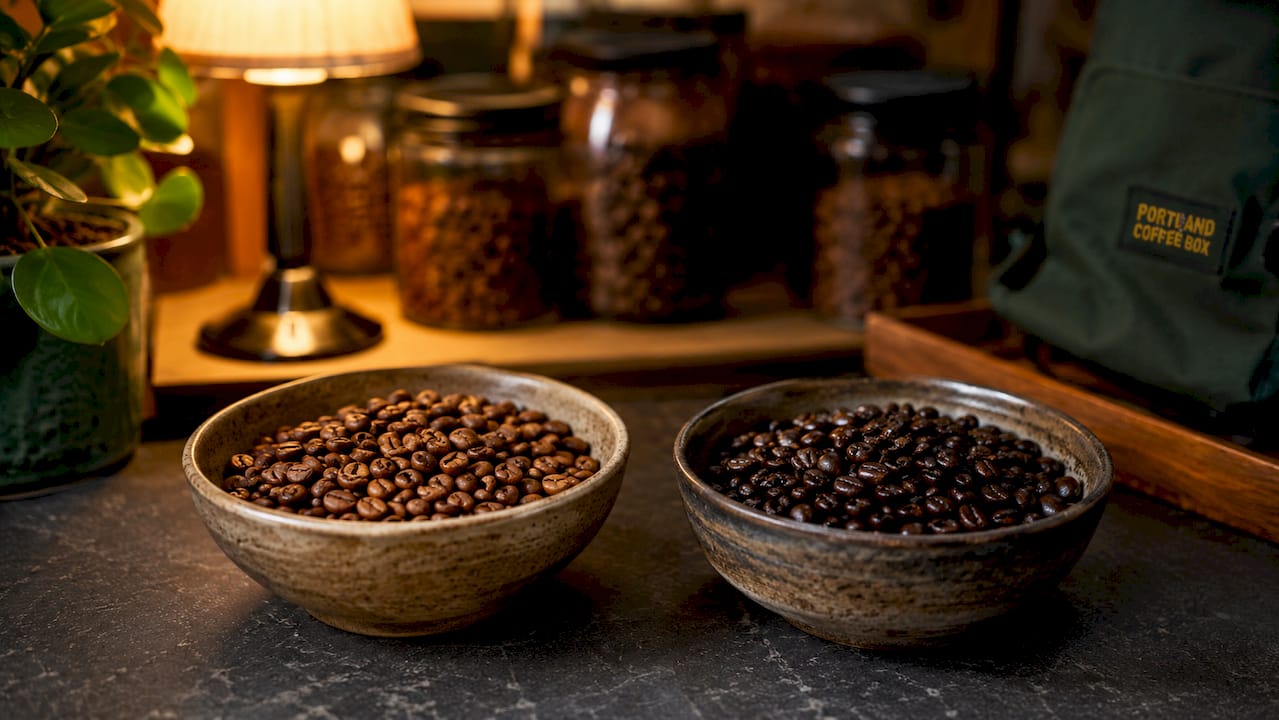
Visual cues confirm the difference immediately. Light roast beans are dry, tan to medium brown, and dense. Dark roast beans are oily, dark brown to near black, and noticeably lighter in physical weight due to moisture loss. Specialty roasters use Agtron scores, a numeric color scale, to measure roast level objectively and consistently.
Pro Tip: If you want to understand a roaster’s craft, ask for their Agtron score or development time ratio. These numbers reveal far more about a coffee’s flavor potential than the words “light” or “dark” on the bag.
| Roast Level | Temperature Range | Key Flavor Drivers | Body | Acidity |
|---|---|---|---|---|
| Light | 196–205°C | Fruit, floral, citrus, origin character | Light | High |
| Medium | 205–225°C | Caramel, nuts, balanced sweetness | Medium | Medium |
| Dark | 225°C+ | Smoke, dark chocolate, roast bitterness | Heavy | Low |
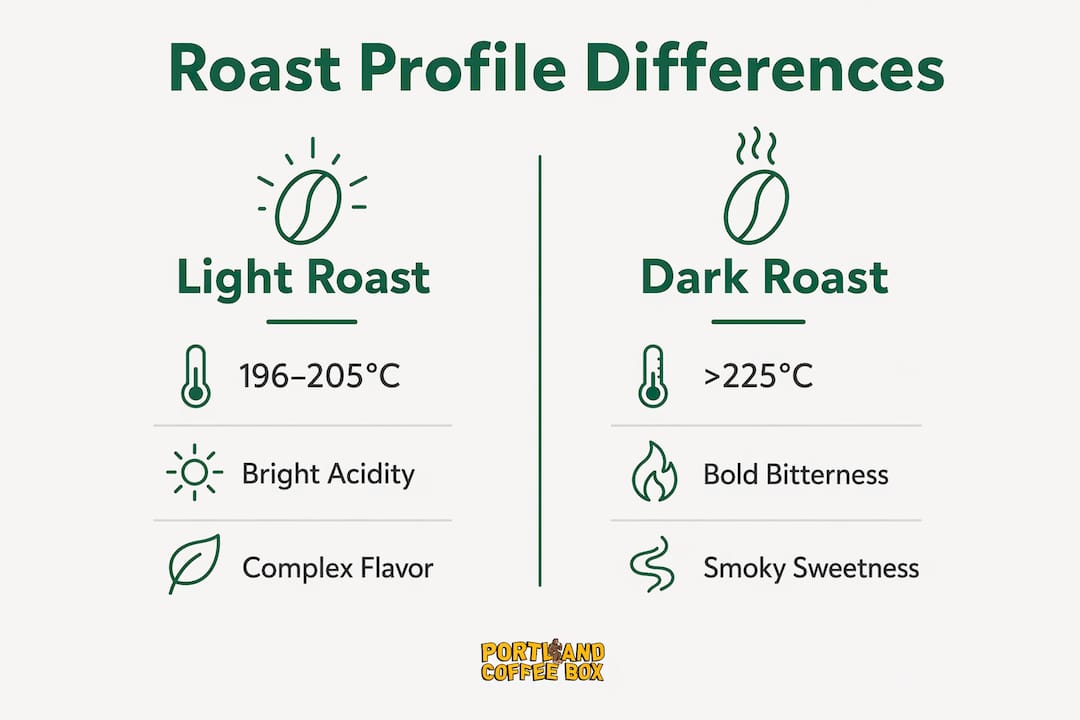
Temperature duration determines which flavor compounds survive and which are destroyed. Light roasts preserve origin fruit, floral, and citrus notes with high acidity and a lighter body. Dark roasts emphasize roast-driven flavors like smoke and dark chocolate, with low acidity and a heavy, coating mouthfeel. The bean’s origin, whether Ethiopian, Colombian, or Sumatran, becomes far less recognizable after extended heat exposure.
Antioxidant content also shifts with temperature. Light roasts retain more chlorogenic acids, which are linked to antioxidant properties. Dark roasting degrades these compounds significantly. For coffee drinkers who value both flavor and nutritional profile, roast level is a meaningful variable.
Light roast flavor is defined by brightness, complexity, and origin transparency. You taste the coffee’s terroir, the soil, altitude, and processing method that shaped the bean before it ever reached a roaster. A well-roasted Ethiopian light roast might deliver jasmine, blueberry, and lemon zest. A Colombian light roast often shows red apple, caramel, and stone fruit.
Perceived acidity in specialty coffee is a positive brightness, distinct from sourness caused by underdevelopment. Phosphoric and chlorogenic acids give light roasts a sparkling, clean clarity. Sourness, by contrast, is a defect caused by stopping the roast too early or using poor green coffee. The two are not the same, and confusing them leads many coffee drinkers to avoid light roasts unnecessarily.
Light roasts also have a lighter body, meaning the mouthfeel is thinner and more tea-like compared to dark roasts. This surprises drinkers who associate “strong” with heavy texture. Strength and body are separate qualities. A light roast can be intensely flavorful while still feeling delicate on the palate.
Key sensory characteristics of light roast coffee:
“Many consumers fear coffee acidity, associating it with sourness. In specialty coffee, brightness is a key pleasure factor, unlike the bitter notes that dominate dark roasts.” — Science of Coffee Clarity and Brightness
Dark roast characteristics are shaped almost entirely by heat, not origin. By the time a bean reaches second crack, most of its original fruit acids and delicate aromatics have been replaced by roast-derived compounds. The result is a bold, smoky, bittersweet cup with a heavy, coating body.
Dark roasts excel in milk-based drinks precisely because of this boldness. The roasted bitterness cuts through steamed milk and cream in a way that light roasts cannot. Espresso blends designed for lattes and cappuccinos are almost always medium to dark roasted for this reason. The flavor profile holds up under dilution.
Sweetness in dark roasts comes from caramelization rather than the natural fruit sugars preserved in lighter roasts. A well-managed dark roast can taste smooth, rich, and almost chocolatey. A poorly managed one tastes flat, ashy, and one-dimensional. The difference comes down entirely to roasting technique.
Caffeine content by weight slightly favors light roasts. Light roast retains approximately 5–10% more caffeine by weight than dark roasts due to less thermal degradation. That difference is negligible in home brewing. Dose and grind size have far greater effects on caffeine intake than roast level.
The confusion between roast intensity and caffeine strength is one of the most persistent myths in coffee. Dark roasts taste stronger but typically carry slightly less caffeine by weight. Perceived strength is a flavor quality, not a measure of caffeine content.
Brewing adjustments matter more than roast level for caffeine control. Grind finer, use more coffee, or brew with a longer contact time to increase extraction. Roast level is a flavor decision, not a caffeine management tool.
Here are the key brewing adjustments for each roast type:
Pro Tip: If your light roast tastes sour, raise your water temperature before adjusting grind size. Under-extraction from cool water is the most common culprit, not the roast itself. Read more about consistent brewing technique to dial in any roast level.
Roast level describes the color endpoint of a bean. Roast profile describes the full thermal journey that produced that color. Two beans at the same roast level can taste completely different depending on how the roaster managed temperature increase rates, airflow, and development time. This distinction separates great roasters from average ones.
A skilled roaster uses the profile to control caramelization timing, acid transformation, and aroma development. A rushed roast, even at the correct final temperature, can produce underdeveloped acidity or harsh bitterness. Roast profile management shapes sugar caramelization, acid breakdown, and bitterness control in ways that roast level alone cannot capture.
| Quality Factor | Roast Level (Color) | Roast Profile (Thermal Journey) |
|---|---|---|
| What it measures | Final bean color | Full temperature curve and timing |
| Flavor control | Limited | High |
| Origin character | Partially preserved | Fully manageable |
| Bitterness risk | Moderate | Controlled by development time |
| Consistency | Variable | Repeatable with data |
Understanding small-batch roasting practices helps explain why craft roasters consistently produce better cups than mass-market alternatives. Small batches allow roasters to monitor and adjust the thermal profile in real time, responding to each unique green coffee’s density, moisture content, and origin character.
A light roast with poor profile management tastes vegetal or sour. A dark roast with poor profile management tastes flat and ashy. Roast quality is not guaranteed by roast level. It is earned through careful, deliberate technique.
Light and dark roast profiles produce fundamentally different cups because heat transforms the bean’s chemistry, not just its color.
| Point | Details |
|---|---|
| Temperature defines roast level | Light roasts stop at 196–205°C; dark roasts exceed 225°C and reach second crack. |
| Acidity is a positive quality | Light roast brightness comes from preserved chlorogenic acids, not sourness or defect. |
| Caffeine differences are minor | Light roasts hold 5–10% more caffeine by weight, but dose and grind size matter far more. |
| Grind size must match roast | Dense light roast beans need finer grinds; porous dark roast beans need coarser grinds. |
| Profile beats level for quality | Two beans at the same roast level taste different based on how the thermal journey was managed. |
I have tasted thousands of cups across both ends of the roast spectrum, and the most honest thing I can say is this: the light vs dark debate is mostly a distraction from the real question, which is whether the roast was done well.
A poorly developed light roast is genuinely unpleasant. It tastes grassy, sharp, and hollow. A well-developed light roast from a skilled Portland roaster is one of the most complex, rewarding cups you can drink. The same logic applies to dark roasts. A flat, ashy dark roast is forgettable. A carefully managed dark roast with rich chocolate and smooth bitterness is deeply satisfying, especially in a milk-based drink.
My practical advice for anyone new to light roasts: start with a pour-over, use water just off the boil, and grind finer than you think you need. The first cup will likely surprise you. The brightness reads as vibrant, not harsh, when the roast is done right.
For dark roast drinkers who want to branch out, try a medium roast from a single-origin bean before jumping straight to a light. The medium roast gives you caramel sweetness and some origin character without the full acidity shift. It is a natural stepping stone.
The most valuable thing you can do is taste widely and pay attention. Roast level is a starting point, not a verdict. The best cup is the one that matches your palate, your brew method, and the moment you are in.
— Cody Salane
Every coffee drinker deserves to taste the full spectrum of what great roasting can produce. Portland Coffee Box curates fresh, small-batch beans from Portland’s top craft roasters, handpicked for quality, variety, and seasonal freshness. Each box includes light, medium, and dark roast options so you can experience the real differences in roast profiles firsthand, not just read about them.
Whether you are chasing the bright citrus clarity of a light roast or the bold, chocolatey depth of a dark roast, a three-bag subscription gives you the range to compare and discover what you love. Free shipping on every order, and Portland Coffee Box donates a portion of every sale to environmental causes through its 1% For the Planet membership. Great coffee and a clear conscience belong together.
Light roasts stop at 196–205°C, preserving origin fruit and floral notes with high acidity. Dark roasts exceed 225°C, replacing those compounds with roast-driven bitterness, smoke, and heavy body.
No. Light roast retains approximately 5–10% more caffeine by weight due to less thermal degradation. Dose and grind size affect caffeine intake far more than roast level does.
Sourness in light roast coffee signals underdevelopment, either from stopping the roast too early or brewing with water that is too cool. Raise your water temperature to 93–96°C and grind finer to improve extraction.
Yes. A well-managed dark roast produces smooth, rich, chocolatey flavors through controlled caramelization. Poor roast profile management, not roast level itself, causes the flat, ashy taste many drinkers associate with dark roast.
Pour-over and AeroPress are the best matches for light roast coffee. Both methods allow precise water temperature control and highlight the delicate acidity and origin character that define light roast flavor.


