


Small batch roasting is the practice of roasting coffee in limited quantities to maximize flavor control, preserve origin character, and deliver fresher beans to the cup. Unlike large-scale commercial roasting, this method prioritizes precision over volume. Whether you’re a home roaster experimenting with a drum roaster or a specialty coffee enthusiast chasing the perfect cup, understanding small batch coffee roasting changes how you think about every bag you open.
Small batch roasting means roasting smaller quantities of green coffee beans at one time, typically ranging from a few hundred grams to around 15 kilograms per cycle. The industry uses no fixed legal definition for “small batch.” As one industry analysis notes, it is a production practice emphasizing quality rather than volume. That distinction matters because it shifts the conversation from marketing labels to actual craft.
The roasting process itself involves applying heat to green coffee beans until they reach a desired roast level, from light to dark. During roasting, beans go through chemical changes including the Maillard reaction and caramelization, which develop flavor, aroma, and body. Small batches heat up and react more quickly to changes in heat and airflow, giving the roaster immediate control over flavor development. That responsiveness is the core advantage of the method.
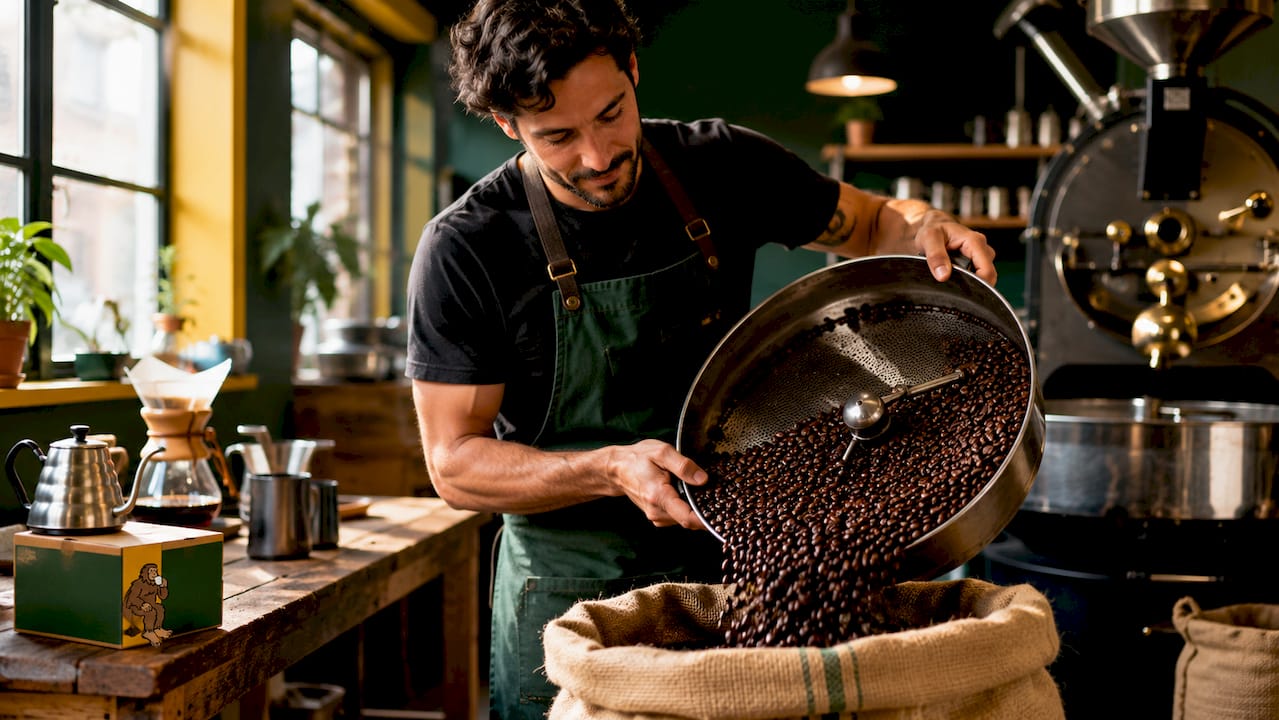
Pro Tip: If you’re new to home roasting, start with 250-gram batches. Smaller loads give you faster feedback and make it easier to spot what went wrong before you scale up.
The differences between small batch and commercial roasting go well beyond batch size. Large commercial roasters often process hundreds of kilograms per cycle, prioritizing throughput and consistency across massive volumes. Small batch roasters work with tighter loads, which creates a fundamentally different relationship between the roaster and the beans.
| Factor | Small batch roasting | Large-scale commercial roasting |
|---|---|---|
| Batch size | Grams to ~15 kg | Hundreds of kilograms |
| Heat control | Immediate, responsive | Slower to adjust |
| Roast profile | Customized per lot | Standardized for consistency |
| Freshness | Roasted frequently, sold fast | Longer storage cycles |
| Bean sourcing | Micro-lots and single origins | High-volume commodity lots |
Commercial roasters lock in standardized profiles because changing variables mid-roast across a 200-kilogram drum creates unpredictable results. Small batch roasters can slow development, taper heat, or adjust airflow in real time. That flexibility protects delicate aromatics and enhances sweetness in ways large-scale operations simply cannot replicate.
Small batch roasters also gain access to micro-lots. These are tiny quantities from single farms or specific plots that offer unique flavor profiles unavailable to large roasters who require volume minimums. That sourcing advantage is one of the most underappreciated benefits of the small batch approach.
Small batch coffee roasting produces better flavor clarity and stronger origin character. When a roaster customizes a profile to a specific lot of Ethiopian Yirgacheffe or Colombian Huila beans, the result reflects the bean’s actual terroir rather than a blended average. Taste differences align with better bean selection, precise control, and fresh turnover, not just batch size labeling.
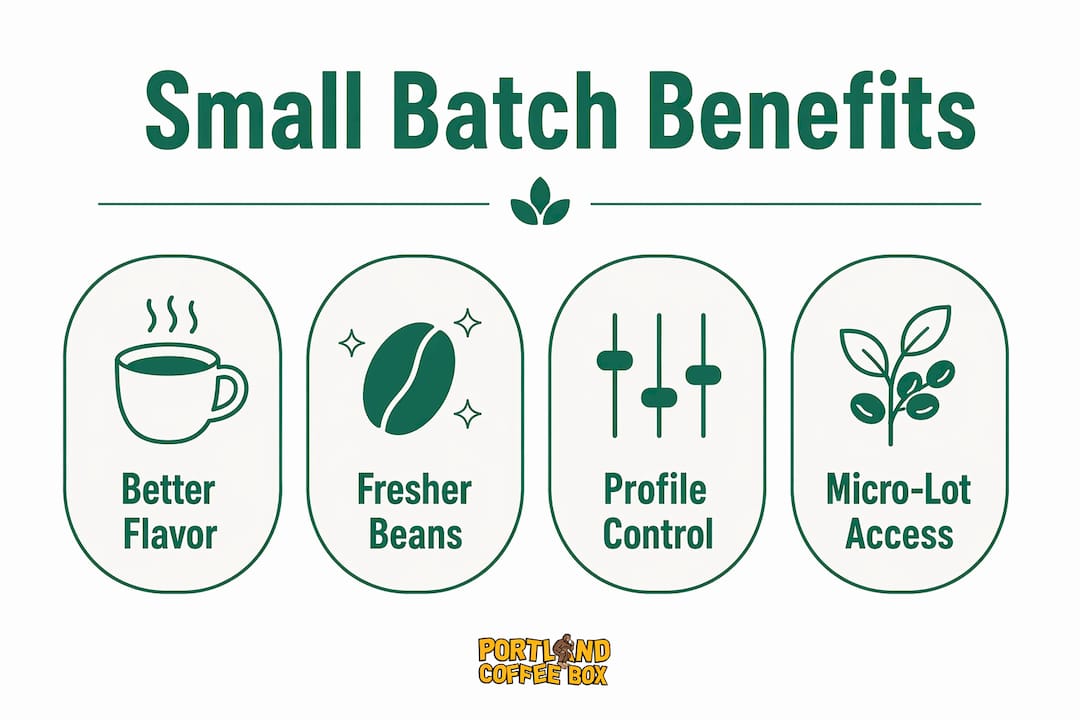
Freshness is the second major advantage. Freshly roasted small batches avoid long warehouse storage and deliver stronger aroma and cleaner tastes. Because small batch roasters produce less at a time, they roast more frequently. That means the coffee reaching your door or your local café was likely roasted days ago, not weeks.
The benefits of small batch roasting stack up clearly:
The ability to tailor roast profiles to specific lots is what separates artisan small batch roasting from commodity production. A skilled roaster working a 5-kilogram drum can respond to the sound of first crack, the color of the beans, and the aroma in the room. That sensory feedback loop produces coffee that tastes like it was made for the bean, because it was.
Successful small batch roasting depends on the right equipment and a disciplined process. The two most common machine types for small batches are drum roasters and air roasters (also called fluid bed roasters). Drum roasters, like those made by Probat, Diedrich, or Mill City Roasters, tumble beans in a rotating drum while applying heat. Air roasters use hot air to suspend and roast beans simultaneously, offering faster heat transfer and easier cleanup.
Here is the core process for a controlled small batch roast:
Professional small batch roasters log every roast and cup consistently to detect and act on deviations, improving quality over time. The principle is simple: you cannot fix what you do not measure. Effective small batch roasting requires a closed-loop system combining roasting logs, sensory cupping, and profile adjustments.
Pro Tip: Use free software like Artisan Roaster Scope to graph your roast curves in real time. Seeing your rate of rise visually makes it far easier to catch a stalling roast before it ruins the batch.
Home roasters have more tools available than ever before. Entry-level options like the Fresh Roast SR800 or the Behmor 1600 Plus handle batches from 100 grams to 450 grams and give meaningful control over heat and airflow. These machines are not toys. With discipline and a good log, they produce genuinely excellent coffee.
Practical principles for home roasters:
Mixing different beans in one batch is a common beginner mistake. Different origins have different densities and moisture levels, so they roast at different rates. Roasting them together almost always means one bean is perfect while another is under or overdeveloped. Roast separately, then blend after. That single change produces noticeably better results.
Traceability is what separates genuine small batch coffee from marketing spin. A bag that lists the farm name, harvest lot, processing method, and roast date tells you something real. A bag with a vague “small batch” label and a best-before date tells you almost nothing.
Roast date is a more actionable freshness indicator than best-before date for coffee enthusiasts. Knowing a bag was roasted on a specific date lets you calculate peak freshness and plan your brewing accordingly. Best-before dates, by contrast, are often set 12 months out and tell you nothing about when the coffee was actually roasted.
| Label element | What it tells you | Why it matters |
|---|---|---|
| Roast date | When beans were roasted | Lets you gauge freshness accurately |
| Farm or lot name | Origin traceability | Connects flavor to specific terroir |
| Processing method | Washed, natural, honey, etc. | Predicts flavor profile and body |
| Batch size or lot weight | Volume roasted | Signals micro-lot vs. commodity sourcing |
Small batch roasters who publish this information build genuine trust. When you can trace your coffee from a specific farm in Guatemala to a roast date last tuesday, the cup means something more. That connection between transparency and flavor is what drives the specialty coffee roaster community in cities like Portland, where craft and accountability go hand in hand. For a deeper look at how processing choices shape flavor, the coffee processing methods guide from Portland Coffee Box breaks it down clearly.
Small batch roasting produces better coffee because smaller loads allow real-time control, fresher turnover, and roast profiles built around each bean’s specific origin and character.
| Point | Details |
|---|---|
| Thermal responsiveness | Small batches react faster to heat changes, giving roasters precise flavor control. |
| Freshness advantage | Frequent small roasting cycles mean shorter time between roast and cup. |
| Micro-lot access | Small batch roasters can source rare, single-farm lots unavailable to large commercial operations. |
| Measurement discipline | Logging every roast and cupping every batch is the foundation of consistent quality. |
| Roast date over best-before | Always check the roast date on a bag. It is the most reliable freshness signal available. |
I’ve tasted a lot of coffee over the years, and the clearest dividing line between forgettable and memorable cups almost always traces back to roast size and roast date. Not price. Not origin hype. Not packaging. The roasters who take small batch seriously treat each lot as its own puzzle, and you taste that care in the cup.
What surprises most people is how much the measurement habit matters. Roasters who log nothing tend to plateau. They make a great batch, then can’t reproduce it because they changed something without noticing. The roasters I respect most treat their logs the way a chef treats a recipe. They write everything down, cup everything, and adjust with intention. That discipline is available to home roasters too. It just requires committing to the process.
My honest advice: if you’re buying coffee and the bag doesn’t have a roast date, put it back. And if you’re roasting at home, start keeping a simple notebook log. Those two habits alone will raise your coffee quality more than any equipment upgrade. The freshness benefits of recently roasted beans are real and measurable. Small batch roasting is the method that makes those benefits possible, consistently.
— Cody Salane
Portland Coffee Box partners with Portland’s top craft roasters to bring you fresh, small batch roasted beans every month, with roast dates you can actually read and origins you can actually trace.
Each subscription is built around the principles covered here: tight roast control, frequent roasting cycles, and transparent sourcing. You choose the size that fits your brewing habit, from a focused single-bag subscription to a full three-bag coffee box that lets you explore light, medium, and dark roasts side by side. For enthusiasts who want to go deep on single origins, the Two Bag Micro Lot Box delivers rare, traceable lots roasted in small batches by Portland’s best. Free shipping on every order, nationwide.
Small batch roasting means roasting coffee in limited quantities, typically from a few hundred grams to around 15 kilograms per cycle, to maximize flavor control and freshness. There is no fixed industry definition, but the practice prioritizes quality and precision over volume.
Small batches respond faster to heat and airflow changes, letting roasters make real-time adjustments that protect delicate aromatics and enhance sweetness. The result is better flavor clarity and stronger origin character than standardized large-scale roasting can deliver.
Entry-level drum roasters like the Behmor 1600 Plus and air roasters like the Fresh Roast SR800 are well-suited for home small batch roasting. Pairing either machine with a roasting log and a basic cupping setup gives you everything needed to improve consistently.
Check the roast date, not the best-before date. Roast date is the most reliable freshness indicator for specialty coffee. Most small batch roasters recommend brewing within two to four weeks of the roast date for peak flavor.
Yes. Small batch roasters and home roasters can source micro-lots through specialty green coffee importers. These tiny quantities from single farms offer unique flavor profiles that large commercial roasters cannot access due to volume requirements.


