


-
Products
-
About Us
-
Roasters
-
Gifts
Freshly roasted coffee beans are defined as beans consumed within 5–21 days of roasting, and they deliver measurably stronger cognitive and sensory benefits than stale commercial alternatives. The science behind why freshly roasted beans boost productivity goes well beyond caffeine. Fresh beans trigger dopamine release through aroma alone, deliver higher concentrations of chlorogenic acids for cleaner energy, and save professionals up to 30 minutes daily by reducing off-site coffee runs. Studies from the University of Oxford Saïd Business School and data from Kaapi Solutions confirm that access to quality on-site coffee lifts both mood and output. If you work from home or in an office, what’s in your grinder matters more than you think.
The aroma of freshly roasted coffee is not just pleasant. It is a neurochemical trigger. When you grind fresh beans, volatile aromatic compounds called pyrazines are released into the air. These compounds interact with your olfactory system and prompt your brain to release dopamine, creating a state of relaxed alertness before you take a single sip.
This phenomenon is known as the Coffee Shop Effect. Research shows it improves problem-solving ability and short-term memory by shifting your brain into a calm, focused state. The effect is distinct from caffeine’s mechanism. Caffeine blocks adenosine receptors to reduce fatigue, but aroma works through reward pathways, making you feel motivated and mentally present rather than just awake.
Stale beans lose their volatile aromatic compounds through oxidation. A bag of pre-ground coffee sitting on a grocery shelf for months delivers almost none of these sensory benefits. The aroma is flat, and the neurochemical response is minimal. Fresh beans, by contrast, carry the full aromatic profile that triggers this mental shift.
That 82% figure is significant. It means the sensory experience of coffee is nearly universal as a mood and focus driver, not a niche preference.
Pro Tip: Grind your beans at your desk or in your home office rather than in a separate room. The act of grinding releases the most concentrated burst of volatile aromatics, and that scent exposure primes your brain for focused work before you even brew.
The productivity boost from freshly roasted coffee involves more than aroma and caffeine. Fresh specialty beans carry high concentrations of chlorogenic acids and polyphenols, two antioxidant families that support cognitive function and regulate how your body processes caffeine’s stimulating effects.
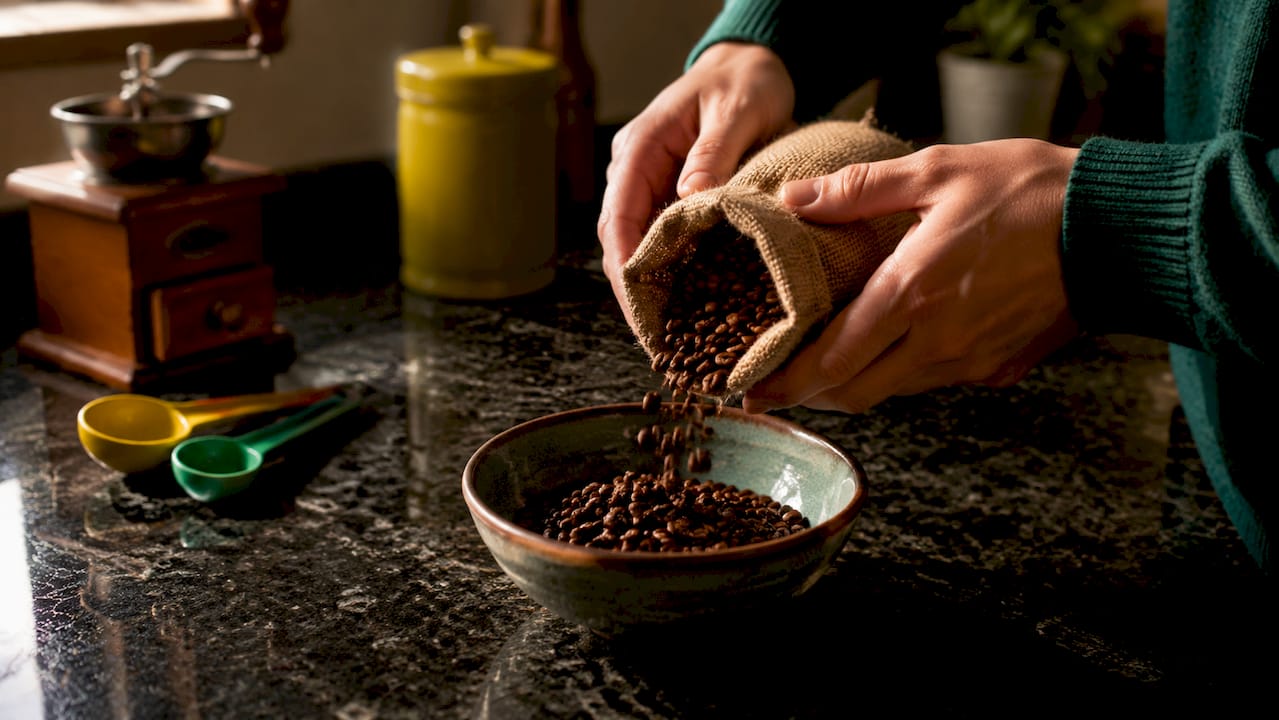
Specialty Arabica beans contain 30% more chlorogenic acid than typical Robusta blends. That difference matters for how you feel two hours after your morning cup. Chlorogenic acids slow glucose absorption and moderate the cortisol spike that often follows caffeine intake. The result is steadier energy without the anxiety or mid-morning crash that many professionals associate with cheap office coffee.
Over-roasted, mass-market blends degrade these antioxidants significantly during the roasting process. Dark, bitter commercial coffee may deliver caffeine, but it sacrifices the compounds that make that caffeine feel clean. Fresh, lightly or medium-roasted specialty beans retain far more of these protective compounds.
Pro Tip: Choose light or medium roast beans from a craft roaster for maximum antioxidant retention. The antioxidant benefits of fresh coffee are most pronounced in beans roasted at lower temperatures for shorter durations, which preserves the chlorogenic acid content that keeps your energy stable.
The practical takeaway is straightforward. If you find yourself jittery or crashing by 10 a.m., the problem is likely the quality and freshness of your beans, not coffee itself.
The answer is yes, and the numbers are specific. Off-site coffee runs take 20–22 minutes per employee per day. Across a five-day work week, that is nearly two hours of lost focus time per person. Multiply that across a team of ten, and you lose 100 hours of productive capacity weekly to coffee shop trips.
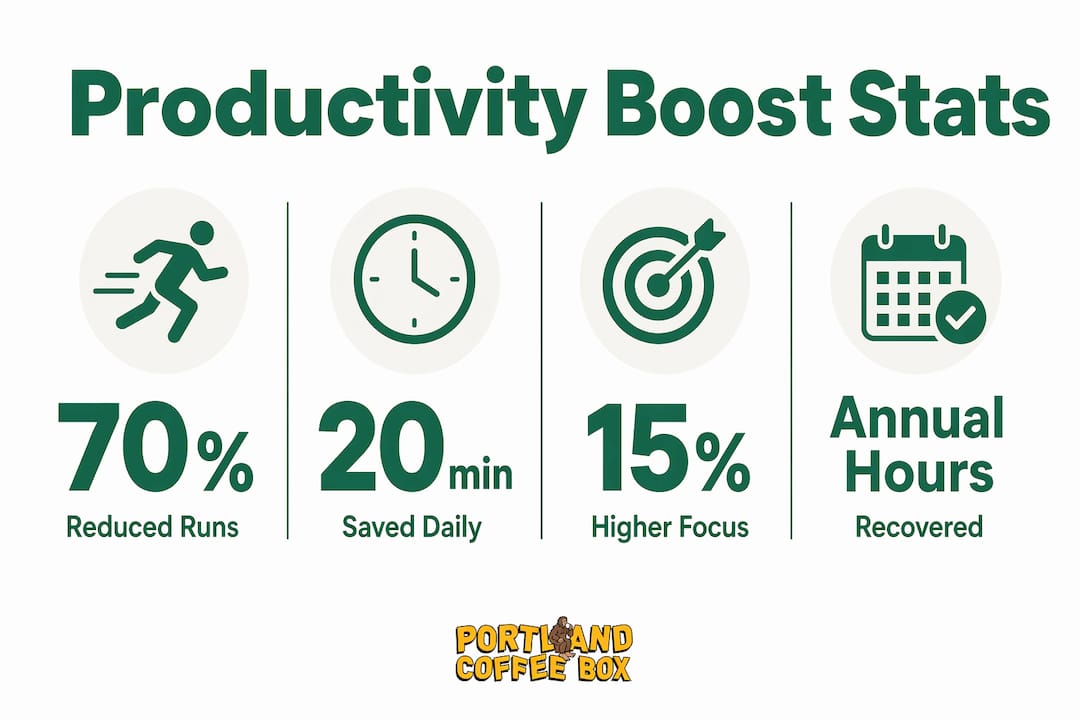
Kaapi Solutions reports that access to high-quality on-site coffee reduces off-site runs by 70% and increases employee productivity by up to 30%. That is not a marginal gain. It is a structural shift in how much focused work time your team actually has.
| Scenario | Daily Time Lost | Annual Time Lost Per Employee |
|---|---|---|
| Off-site coffee runs (no on-site option) | 20–22 minutes | ~68 hours |
| On-site quality coffee available | Under 5 minutes | Under 20 hours |
| Net time recovered | 15–17 minutes daily | ~48 hours annually |
The social dimension of on-site coffee also compounds these gains. Coffee breaks act as social catalysts, strengthening cross-department relationships and building the kind of informal trust that makes teams more effective. When those breaks happen in your own space with genuinely good coffee, they become a morale asset rather than a productivity drain.
A 2024 University of Oxford Saïd Business School study found that employees with premium on-site coffee report 15% higher productivity and 20% less stress. Both figures point to the same conclusion: the quality of your coffee environment shapes the quality of your work.
Coffee freshness is a chemical progression, not a fixed date on a bag. Volatile compounds oxidize gradually after roasting, and the window for peak aromatic complexity falls between 5 and 21 days post-roast. Before day five, beans are still off-gassing carbon dioxide from the roasting process, which can mute flavor and aroma. After day 21, oxidation accelerates and the sensory compounds that trigger the Coffee Shop Effect begin to fade.
Understanding this timeline lets you plan your supply so you are always brewing in the peak window. The ideal aromatic clarity peaks around 2–4 weeks post-roast for most single-origin and small-batch coffees.
| Freshness Stage | Days Post-Roast | Aroma Intensity | Focus Effect |
|---|---|---|---|
| Degassing | 0–4 days | Muted, CO2-heavy | Reduced sensory trigger |
| Peak window | 5–21 days | Full, complex | Maximum Coffee Shop Effect |
| Declining | 22–35 days | Fading | Moderate sensory benefit |
| Stale | 35+ days | Flat | Minimal aroma benefit |
Storage practice determines how long your beans stay in that peak window. One-way valve bags are the standard for a reason. They let CO2 escape without letting oxygen in, slowing the oxidation that degrades aromatic compounds. Keep your beans in a cool, dark location away from heat sources. Avoid the refrigerator, where moisture and odor absorption accelerate degradation.
Pro Tip: Order whole beans in quantities that you will consume within two to three weeks of the roast date. Grinding fresh each morning preserves the volatile aromatics that drive both the sensory and cognitive benefits of your cup. Check the coffee freshness guide from Tri Crow Coffee for a deeper look at how chemistry shapes every brew.
Freshly roasted coffee beans boost productivity through aroma-driven dopamine release, higher antioxidant content, and the time savings of on-site access working together.
| Point | Details |
|---|---|
| Aroma triggers focus before caffeine | Pyrazines in fresh beans release dopamine, creating relaxed alertness through scent alone. |
| Antioxidants stabilize energy | Chlorogenic acids in fresh specialty beans reduce jitters and prevent the mid-morning crash. |
| On-site coffee recovers lost time | Quality on-site coffee saves up to 22 minutes daily per employee, adding up to 68 hours annually. |
| Peak freshness window is 5–21 days | Brew beans within this post-roast window to capture the full aromatic and cognitive benefit. |
| Storage protects your investment | One-way valve bags and cool, dark storage preserve the volatile compounds that drive focus. |
I used to treat coffee as a utility. Grind, brew, drink, repeat. The brand or roast date felt like a detail for enthusiasts, not something that affected how I actually worked. That changed when I started paying attention to the difference between a bag roasted last week and one that had been sitting in a warehouse for three months.
The shift was not subtle. With fresh beans, the first grind of the morning felt like a deliberate act. The aroma alone changed my mental state before I touched the cup. I was more focused during the first two hours of the day, and the energy held steadier through the afternoon. With stale commercial coffee, I got caffeine but not that quality of attention.
What I have come to believe is that most professionals are solving the wrong problem. They reach for more coffee when focus fades, when the real fix is better coffee. The freshness and roast quality of your beans shape the neurochemical environment of your workday in ways that an extra shot of stale espresso simply cannot replicate.
The ritual matters too. Grinding fresh beans, waiting for the bloom, smelling the cup before you drink it. These small acts build a mental transition into focused work. They are not indulgences. They are tools, and treating them that way changes how you use them.
— Cody Salane
If the science above resonates, the practical question is how to maintain a steady supply of genuinely fresh beans without thinking about it. That is exactly what Portland Coffee Box was built for.
Each monthly box from Portland Coffee Box features small-batch beans handpicked from Portland’s top craft roasters, shipped fresh so you receive them within the peak aromatic window. Light, medium, and dark roasts are all available, and subscriptions come in flexible sizes to match your consumption. The three-bag subscription is a strong fit for remote workers who want variety and consistent freshness without over-ordering. For larger households or teams, the four-bag option keeps the supply steady. Every order ships free, and Portland Coffee Box donates a portion of revenue to environmental causes as a 1% For the Planet member. Fresh coffee, delivered with purpose.
Fresh beans retain volatile aromatic compounds like pyrazines that trigger dopamine release and create relaxed alertness. Stale commercial beans lose these compounds through oxidation, delivering caffeine without the sensory and neurochemical benefits.
The peak freshness window falls between 5 and 21 days post-roast. Before day five, beans are still off-gassing CO2. After day 21, oxidation accelerates and aromatic complexity fades.
Yes. Grinding releases the highest concentration of volatile aromatics, which trigger the Coffee Shop Effect. Research on sensory science confirms that aroma exposure alone improves problem-solving and short-term memory before you drink the coffee.
Specialty Arabica beans contain 30% more chlorogenic acid than typical Robusta blends. These antioxidants moderate cortisol spikes after caffeine intake, producing steadier energy and reducing the anxiety associated with over-roasted, mass-market coffee.
Off-site coffee runs take 20–22 minutes per employee daily. Quality on-site coffee reduces those runs by 70%, recovering up to 68 hours per employee annually and contributing to a reported 30% increase in productivity.


