


-
Products
-
About Us
-
Roasters
-
Gifts
Home delivery usually wins for busy people. When you factor in round-trip drive time, fuel, parking, and the impulse buys that sneak into every in-store cart, a delivery fee often costs less than the trip itself. The core advantages come down to a handful of reliable patterns:
The honest caveats: delivery fees, service charges, and occasional substitutions or delays are real. But for most busy households, those downsides are smaller than the time and money lost to frequent store runs.
The biggest advantage of home delivery isn’t the convenience. It’s the time. A typical grocery store run, including driving, parking, shopping, and returning home, consumes a considerable amount of your day. Placing the same order online takes only a few minutes. That gap compounds fast for households that shop weekly.
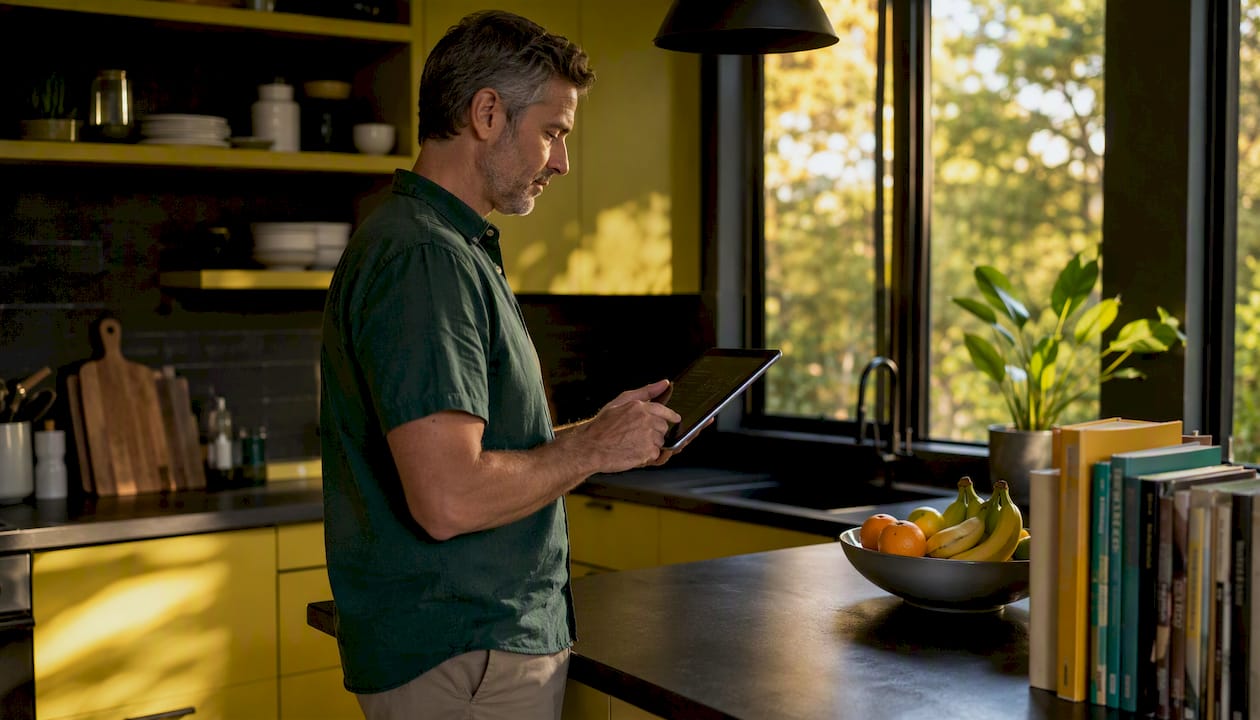
Think about what you do with recovered time. Even at the U.S. median hourly wage, an hour saved on errands has real dollar value. Monee’s 2025 total-cost guide recommends using the median hourly wage and the IRS mileage rate as default proxies when modeling whether delivery or a store run is cheaper. Once you plug those numbers in, the math often surprises people.
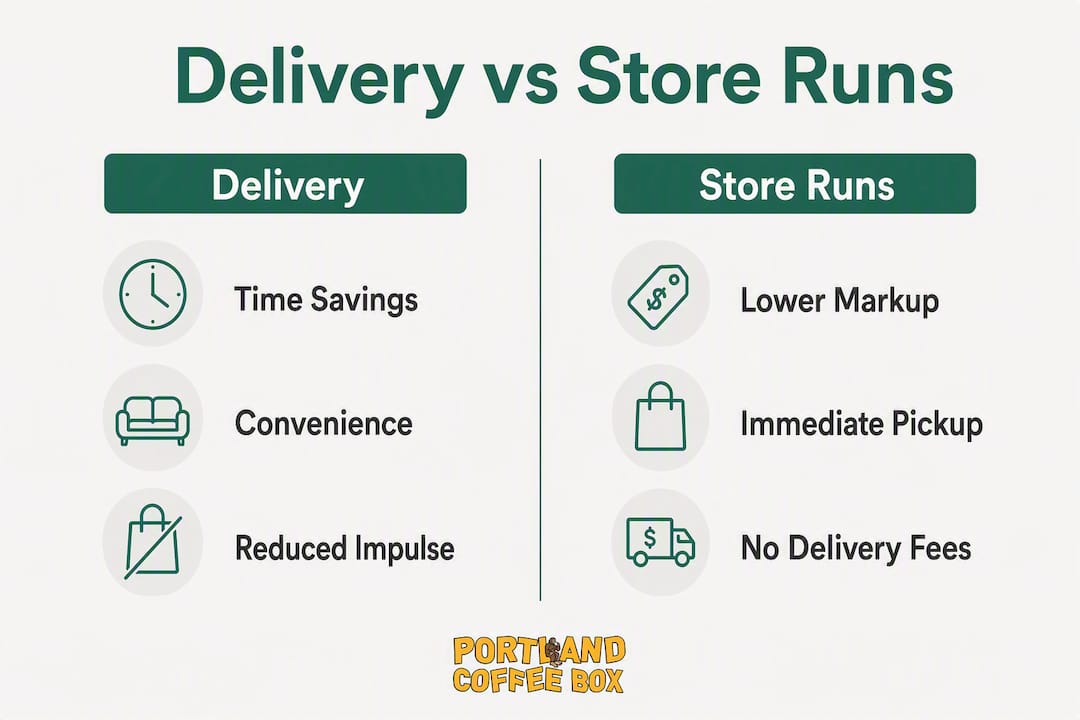
Shopping from a list online reduces impulse purchases by removing the in-store cues that trigger them. A visible running cart total lets you prune items before checkout rather than regret them at the register. For households trying to stick to a food budget, that cart-as-ledger dynamic is one of the most underrated advantages of home delivery.
Specialty and small-batch products, particularly in categories like coffee, olive oil, and artisan pantry staples, often don’t reach local supermarket shelves at all. Subscriptions make freshness and variety predictable, delivering curated selections on a cadence that removes the need to hunt. Consumer satisfaction research identifies “decision convenience” — the ease of selecting products without in-store pressure — as a primary reason shoppers prefer digital platforms for lifestyle goods.
Consumer Reports documented the practical case for grocery delivery during the pandemic, and the logic holds beyond that period. Crowded stores carry real exposure risk for immunocompromised shoppers. For people with mobility limitations, delivery isn’t a luxury — as Lifewire notes, it may be the only practical option for ordering food and essential goods. Bad weather, a sick child at home, or a packed work week all shift the calculus firmly toward delivery.
Pro Tip: Before dismissing delivery as “too expensive,” calculate your last store run: round-trip miles times the IRS mileage rate, plus 60 minutes of your time at your hourly rate. Most people find the gap is smaller than they assumed.
A 2024 analysis found grocery delivery is roughly 10% more expensive than in-store shopping on average before accounting for time saved. Membership programs often reduced the gap and sometimes made delivery cheaper than local trips. The key is counting all costs on both sides.
Delivery side: item markup (varies by platform), delivery fee ($3–$10 typical), service fee (often 5–15% of order), tip (customary 10–20%), and membership amortization if applicable.
Store-run side: fuel at the IRS mileage rate, parking fees if applicable, vehicle wear, and the time value of your round trip. Add a “second-trip risk” cost for any item the store is out of that sends you back.
Promotions, free-delivery thresholds, and membership discounts can flip the result in favor of delivery for larger baskets. The lowest shelf price doesn’t always mean the lowest total cost.
| Scenario | Store-run all-in estimate | Delivery all-in estimate | Likely winner |
|---|---|---|---|
| Small urgent item (1–3 items, 5-mile round trip) | $4–$8 trip cost + time | $5–$10 fee + tip, no markup savings | Store run or curbside pickup |
| Weekly big shop ($100 basket, 10-mile round trip) | $8–$12 trip cost + 60 min | $8–$15 fee + tip, membership reduces markup | Delivery with membership |
| Bulky or heavy goods (water, pet food, bulk staples) | $10–$12 trip + loading effort | $5–$10 fee, no lifting | Delivery clearly wins |
| Specialty subscription (coffee, pantry staples) | Repeated trips + limited selection | Flat subscription, free shipping options | Subscription delivery wins |
Pro Tip: Divide your annual membership fee by the number of orders you expect per year. If that per-order cost plus any remaining fees still beats your average trip cost, the membership pays for itself. Most households that order twice a month or more hit break-even quickly.
Not all delivery is the same. Matching the right type to your need is what separates a smooth experience from a frustrating one.
Real-time tracking and estimated arrival windows reduce the uncertainty that used to make delivery feel risky. You know when your order is coming, which makes planning around it easy.
Geographic note: Express and same-day options are concentrated in urban and suburban markets. Rural shoppers often rely on scheduled or carrier delivery, and holiday periods add 1–3 days across all types.
The decision comes down to a few testable questions. Run through this checklist when you’re on the fence.
A small urgent item (a single ingredient for tonight’s dinner) often favors a quick store run or curbside pickup, especially if the store is close. A large weekly shop almost always favors delivery once you price your time. Bulky or heavy goods — cases of water, bulk coffee, pet food — favor delivery every time because the physical effort alone is a hidden cost. For specialty items like single-origin coffee beans or artisan pantry goods, delivery isn’t just more convenient; it’s often the only way to access them at all.
The main failure modes to plan for: substitutions on out-of-stock items, occasional missed items, and slight freshness variance on produce. Leave clear substitution instructions and add item notes when ordering anything perishable. Factor in a “second-trip cost” — if there’s a real chance you’d need to return to the store for a missed item, that risk tilts the math further toward delivery.
Pro Tip: Use this fast heuristic: if your round-trip distance exceeds 8 miles or your expected trip time tops 60 minutes, delivery almost always wins once you price your time honestly. Save the store run for the quick, nearby, must-inspect-in-person situations.
Delivery gets cheaper and more accurate with a few deliberate habits.
Leave specific substitution instructions for every item that matters. “No substitutions” on produce you’re particular about; “substitute with same brand, larger size” on staples. Add notes for fragile or perishable items. Scheduling delivery during off-peak windows (mid-morning on weekdays) tends to improve accuracy because drivers are less rushed.
Keep a running digital shopping list and save frequent orders as templates. Setting default preferences (bag type, no-substitute flags, delivery instructions) once means you don’t repeat the setup every time.
Pro Tip: Tip generously on your first few orders with a new platform or driver. Reliable, careful service is worth the small premium, and it tends to be self-reinforcing. For small orders under $30, consider whether a slightly larger basket would both eliminate the small-order fee and justify a reasonable tip without adding net cost.
Coffee is one of the clearest cases where recurring delivery beats repeated store runs. Specialty coffee beans, the kind roasted in small batches by craft roasters, rarely appear on supermarket shelves. When they do, freshness is uncertain. A subscription solves both problems at once.
Portland Coffee Box curates fresh, small-batch beans from Portland’s top local roasters and ships them nationwide with free shipping on every order. Each monthly box reflects the season, the roaster’s craft, and a genuine commitment to quality that a grocery store aisle can’t replicate. You can explore the roaster profiles to see exactly who’s behind each bag.
The lineup covers a range of household sizes and coffee habits:
The coffee subscription vs. store-bought comparison breaks down the full cost and freshness picture. For anyone who makes a dedicated coffee run once or twice a month, a subscription removes those trips entirely while delivering fresher beans and a wider selection than most local stores carry.
Portland Coffee Box is also a 1% For the Planet member, directing a portion of every subscription toward environmental causes. The quality and the mission travel together in every box.
Home delivery beats store runs for most busy households once time, fuel, and impulse spending are counted as real costs alongside delivery fees.
| Point | Details |
|---|---|
| Time is the biggest win | A store run takes 45–90 minutes; ordering online takes under 10, making delivery the rational choice for busy schedules. |
| Delivery runs ~10% higher pre-membership | A 2024 analysis found grocery delivery is roughly 10% more expensive than in-store shopping on average before accounting for time saved; memberships often close or reverse that gap. |
| Use the 8-mile / 60-minute rule | If your round trip exceeds 8 miles or 60 minutes, delivery typically wins once time is valued honestly. |
| Specialty items favor subscriptions | Small-batch and curated goods often aren’t available locally; subscriptions like Portland Coffee Box deliver freshness and variety on autopilot. |
| Portland Coffee Box | Flexible one-to-four-bag subscriptions with free shipping replace repeated coffee store runs and deliver craft-roasted beans nationwide. |
There’s a version of the home delivery conversation that stays stuck on fees and markups. That framing misses the more interesting shift: delivery doesn’t just save time on a given Tuesday. It changes the shape of your week.
When you stop making reactive store runs, you stop making reactive purchases. The impulse loop that retail environments are literally designed to trigger, the end-cap display, the checkout candy, the “while I’m here” detour, disappears. What replaces it is a calmer, more deliberate relationship with what you buy and why. Your cart total is visible before you commit. Your list is the list. Nothing sneaks in.
The psychological benefit of that control is real, and it compounds. Households that shift recurring purchases to subscriptions report fewer “I need to run out” moments, which means fewer disrupted evenings and fewer last-minute decisions made under time pressure. For specialty categories like coffee, that predictability also means better quality: you’re not grabbing whatever’s on the shelf because you ran out. You have what you wanted, already there.
The conventional wisdom frames delivery as a premium you pay for laziness. The more accurate frame is that it’s a system for protecting your time and your budget from the friction and temptation that physical retail is built around. That’s not laziness. That’s good habit design.
If you want to cut coffee store runs entirely, Portland Coffee Box is built for exactly that. Fresh, small-batch beans from Portland’s best craft roasters, curated for quality and seasonality, arrive at your door every month with free shipping on every order. No hunting for good beans at the grocery store. No settling for stale bags from a shelf.
Choose from flexible subscription sizes: the One Bag Coffee Box for solo drinkers, the Two Bag Coffee Box for couples, or the Four Bag Coffee Box for households that take their coffee seriously. Specialty enthusiasts can try the Two Bag Micro Lot Box for rare, single-origin beans that simply don’t appear in local stores. New subscribers can also claim a Free Bonus Bag of Coffee to taste the quality before committing to a full cadence. Browse all options at Portland Coffee Box and place your first order today.


