


-
Products
-
About Us
-
Roasters
-
Gifts
If you need a quick answer: the five practical alternatives to extraspace.com are portable container services, on-demand valet/pickup storage, peer-to-peer marketplaces, local independent facilities, and in-home or on-site options. Pick by three factors: how long you need storage, how often you need access, and how much climate control your items require.
For specialty coffee subscribers, those factors matter more than most people realize. A Two Bag Coffee Box arriving monthly needs very different holding conditions than a seasonal bulk order. Small-batch roasted beans are scent-sensitive, moisture-sensitive, and time-sensitive. The wrong storage choice doesn’t just cost money — it costs flavor.
Quick picks by use case:
Move.org’s self-storage guidance consistently highlights that security, insurance transparency, and climate control are the top reasons consumers choose established national networks — but those same features are available through several affordable storage solutions that don’t require a national brand.
| Alternative Type | Best For | Typical Cost Range | Pickup/Delivery? | Access | Climate Control | Insurance/Coverage |
|---|---|---|---|---|---|---|
| Portable container services | Short-term moves, on-site packing | $50–$150/month | Delivery to your door | On-site during packing; facility after | Available at some facilities | Declared-value or add-on |
| Valet/on-demand pickup | Temporary holds, city dwellers | $50–$150/month per box | Yes, scheduled | Request-based retrieval | Often included | Typically included per-box |
| Peer-to-peer marketplaces | Budget-conscious, flexible terms | — | Varies by host | Negotiated with host | Rare | Minimal; verify independently |
| Local independent facilities | Long-term, frequent access | $60–$180/month | No | Drive-up or keypad | Often available | Facility or renter’s policy |
| In-home/on-site options | Permanent, no monthly fees | One-time cost | No | Immediate | DIY only | Homeowner’s/renter’s policy |
For a coffee subscriber managing monthly shipments — say, a Three Bag Coffee Box arriving every four weeks — a valet or on-demand service offers the cleanest fit: scheduled pickup, photo inventory, and climate-aware holding without a long-term lease.
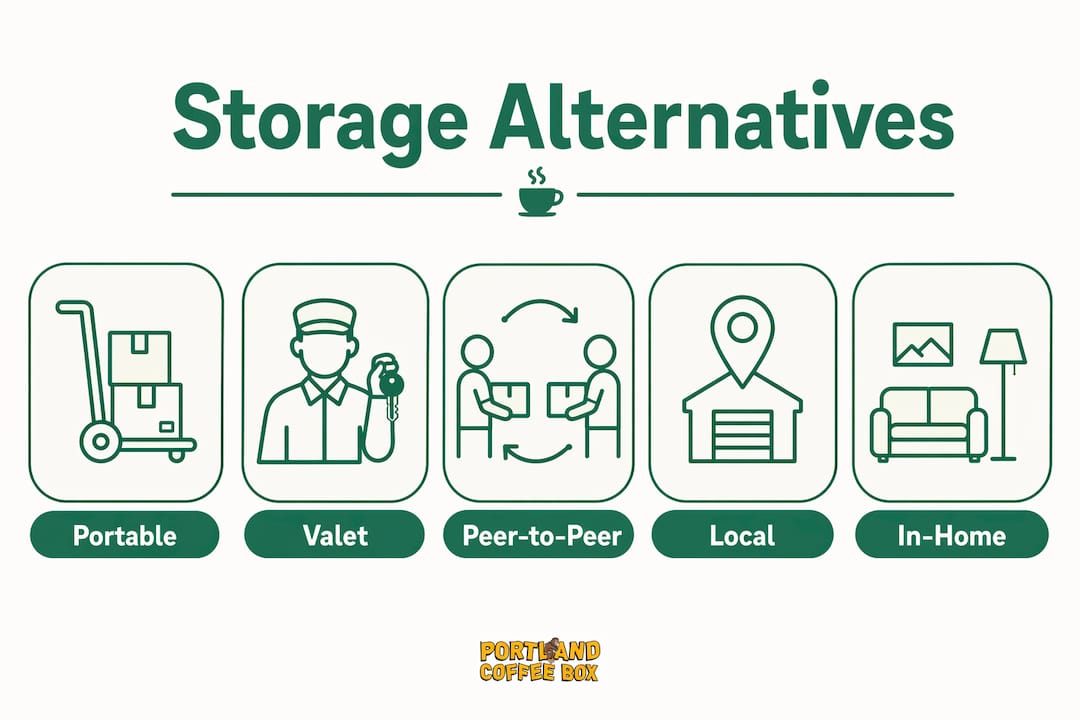
A company drops a weatherproof container at your address. You pack it on your own schedule, then they transport it to a storage facility or your next location. MoveBuddha’s comparison of portable storage options notes that providers like PODS and U-Pack offer different container sizes, so matching the unit to your actual inventory avoids paying for unused space. Access after transport usually requires scheduling a facility visit, which limits spontaneous retrieval.
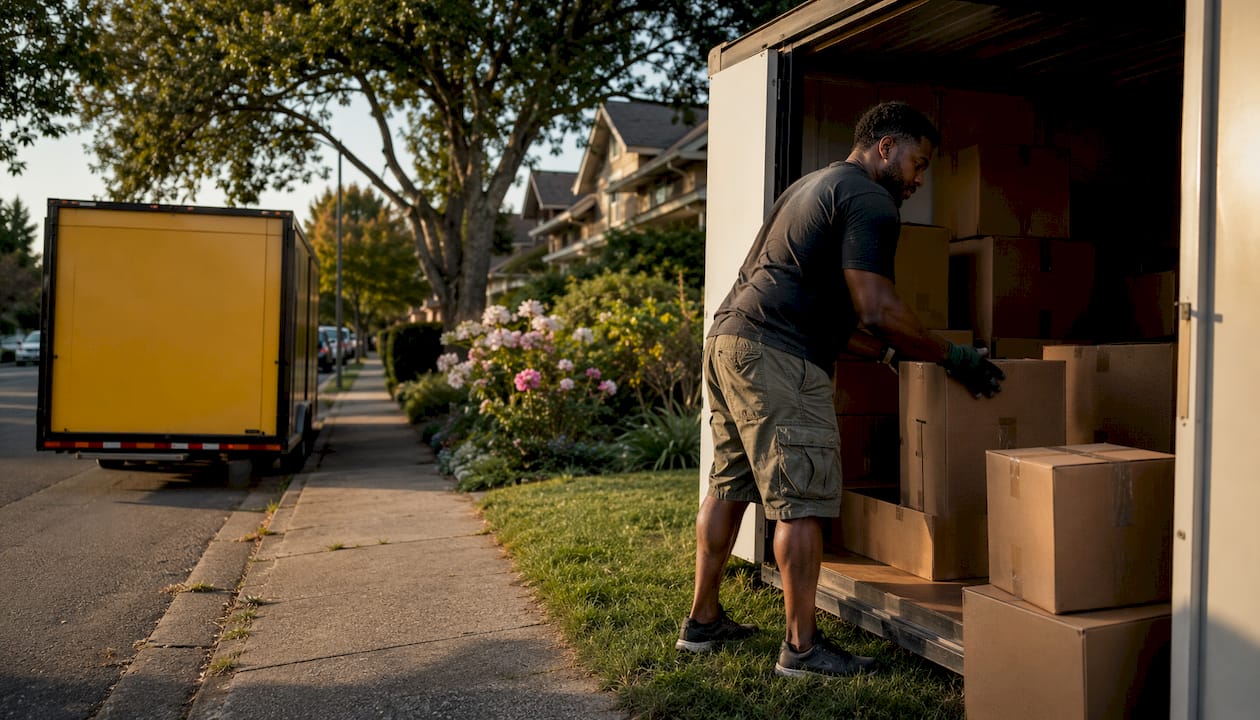
Pros: On-site packing convenience, no rush, flexible duration. Cons: Higher per-month cost than a traditional unit; retrieval requires advance notice once the container leaves your property.
You book online, a team picks up your items, photographs each one, and stores them in a climate-managed warehouse. Retrieval is request-based, typically within 24–48 hours. Taskrabbit’s overview of on-demand storage explains that services like MakeSpace and Clutter operate this way, though city availability is limited. For a subscriber holding a small-batch coffee inventory between shipments, the photo inventory feature is genuinely useful for tracking which roasts are where.
Pros: No transport needed, photo catalog, climate control often standard. Cons: Not available in every market; retrieval isn’t instant.
Platforms connect you with private hosts renting unused space — a garage, basement, or spare room. ConsumerAffairs’ alternatives guide lists this as one of the most cost-effective options available. The tradeoff is trust: security standards vary widely, climate control is rarely guaranteed, and access hours depend entirely on the host’s schedule.
Pros: Often the cheapest option; flexible terms. Cons: Security and climate control are inconsistent; requires strong verification steps.
Smaller, owner-operated storage facilities often charge less than national chains and offer more flexible lease terms. Move4U’s guide to storage alternatives highlights that local options frequently match national brands on security features while undercutting them on price. Climate-controlled units are common at this tier and worth the small premium for anyone storing coffee gear or packaged beans long-term.
Pros: Competitive pricing, personal service, often climate-controlled. Cons: No national brand accountability; insurance options vary.
A backyard shed, converted closet, or repurposed shipping container keeps everything on your property with zero monthly fees after setup. Access is immediate and unrestricted. The catch: HOA restrictions and local zoning rules can prohibit certain structures, so check local codes before investing. For a One Bag Coffee Box subscriber with minimal inventory, a well-sealed pantry shelf or climate-stable closet is genuinely sufficient.
Pros: No recurring cost, instant access, full control. Cons: Limited space; no professional security; climate management is DIY.
Pro Tip: Roasted coffee beans absorb surrounding odors. Store them away from cleaning products, paint, or anything with a strong scent — even in a sealed bag.
| Alternative Type | Short-Term Cost (1–2 months) | Long-Term Cost (6+ months) | Setup Timeline | Watch For |
|---|---|---|---|---|
| Portable container | $180–$540 total | — | 1–3 days for delivery | Fuel surcharges, transport fees |
| Valet/on-demand | — | — | Same-day to 48 hours | Per-item retrieval fees |
| Peer-to-peer | — | — | Hours to days | No insurance, access disputes |
| Local independent | — | — | Same day in most cases | Admin fees, mandatory insurance |
| In-home/on-site | One-time admin fee | — | Days to weeks | HOA/zoning restrictions |
Three practical scenarios:
Month-long hold between shipments: A valet service is the cleanest fit. You schedule pickup when your Four Bag Coffee Box arrives, hold the overflow, and request retrieval before the next shipment. Total cost: roughly $50–$150 for the month.
Holiday surge (3-month inventory rotation): A local independent facility with a climate-controlled unit handles the volume without a long-term commitment. Budget $180–$540 for the quarter, plus a one-time admin fee.
Permanent overflow storage: An in-home shed or converted space pays for itself within 6–12 months compared to any commercial option.
Hidden fees to watch: administrative or “move-in” fees at commercial facilities, mandatory insurance add-ons that aren’t disclosed upfront, and per-retrieval charges on valet services. Always ask for the all-in monthly total before signing.
Trust checks for peer-to-peer and local options:
Pro Tip: For subscribers holding small-batch roasts between shipments, vacuum-sealed bags inside an airtight container cut oxygen exposure and scent transfer dramatically — even in a non-climate-controlled space.
Pre-move packing tips for roasted coffee:
Pro Tip: Book your storage pickup or container delivery the same week your subscription ships, not after it arrives. That lead time prevents a scramble when the box lands at your door.
Coverage gaps are common across every alternative type, and most readers don’t discover them until something goes wrong.
Common coverage situations by type:
For peer-to-peer options specifically, an in-person site visit, a written access agreement, and a photo inventory are non-negotiable steps. The cost savings are real, but so is the trust gap.
Pro Tip: Pack small-batch roasts in short, airtight packaging rather than large bulk containers. Smaller units mean less air exposure each time you open one, and they’re easier to retrieve individually from a valet service.
The right storage alternative depends on duration, budget, and how often you need access — and for coffee subscribers, climate control is a fourth factor that often decides the winner.
| Point | Details |
|---|---|
| Match option to duration | Short-term needs (under 60 days) favor valet or portable containers; long-term needs favor local independent facilities. |
| Climate control protects quality | Roasted coffee degrades in heat and humidity; always confirm temperature specs before committing to a unit. |
| Verify peer-to-peer options | Visit in person, get access hours in writing, and confirm insurance before storing anything of value. |
| Watch for hidden fees | Admin fees, mandatory insurance, and retrieval charges can raise the true monthly cost well above the advertised rate. |
| Portland Coffee Box subscription size guides access frequency | A Four Bag Coffee Box subscriber needs more frequent access than a One Bag subscriber — let your subscription size inform your storage choice. |
There’s a habit worth building for anyone who takes their beans seriously: treat your storage decision the same way you treat your roast selection. The wrong environment between shipments undoes everything a small-batch roaster worked to achieve.
Access frequency is the factor most subscribers underestimate. If you’re receiving a Two Bag Micro Lot Box of rare, single-origin beans, a peer-to-peer garage with no climate control is a poor match — even for a short hold. Those roasts are time-sensitive in a way that commodity coffee simply isn’t. A valet service with documented temperature management, or a local climate-controlled unit you can visit on your own schedule, preserves what you paid for.
Practically: rotate your stock by roast date, label every bag before it goes into storage, and keep opened bags in airtight containers regardless of where they’re held. The small-batch roasters behind Portland Coffee Box’s curation put real craft into every release. Good storage habits honor that work.
If the whole storage question feels like more friction than your coffee routine deserves, there’s a simpler path. Portland Coffee Box ships fresh, small-batch beans from Portland’s top craft roasters directly to your door every month — no warehouse visit required, no climate-control anxiety, no long-term commitment.
Each box is curated for quality, variety, and seasonality, with free shipping on every order. Whether you prefer a single-bag rotation with the One Bag Coffee Box or a fuller spread with the Two Bag Coffee Box, the subscription sizes are built around real household rhythms. Portland Coffee Box is also a 1% For the Planet member, so every order supports environmental causes alongside your morning ritual. Browse the full lineup and find the size that fits your life at portlandcoffeebox.com.


