


-
Products
-
About Us
-
Roasters
-
Gifts
A coffee subscription is a recurring delivery service that ships freshly roasted beans on a schedule matched to your actual consumption, offering superior freshness, personalization, and convenience compared to traditional store-bought coffee. The coffee subscription vs store bought explained debate comes down to one core fact: specialty coffee has a peak flavor window of 7–45 days post-roast, and most retail coffee never reaches you within that window. Subscriptions from roasters like Portland Coffee Box ship within 24–48 hours of roasting, while store shelves often hold pre-roasted bags warehoused for weeks. Understanding this gap changes how you think about every cup you brew at home.
Freshness is the single biggest quality difference between a subscription and a bag grabbed off a grocery shelf. Specialty coffee peaks between 7 and 45 days after roasting, with filter coffee best at 7–21 days and espresso at 14–45 days. That window is tight, and retail distribution rarely respects it.
Store-bought coffee typically passes through a warehouse, a regional distributor, and then sits on a shelf before you buy it. By the time it reaches your grinder, the beans may be weeks past their roast date. The result is a flat, dull cup with muted aroma, regardless of how premium the packaging looks.
Reputable subscription roasters operate differently. Roast-to-order services ship within 1–5 days after roasting, and the best ones ship within 24–48 hours. That timing puts the coffee in your hands while it is still alive with flavor and CO2. Specialty coffee actually needs a short rest of 7–14 days after roasting to degas properly, so receiving beans a day or two post-roast is ideal for filter brewing.
The label tells you everything. A “Best By” date is nearly useless without knowing the roast date. A bag that reads “Best By: December 2026” could have been roasted in january 2025. Always look for a “Roasted On” date, which is the only number that tells you where the coffee actually sits in its flavor arc.
Key freshness indicators to check on any coffee package:
Pro Tip: When evaluating any coffee, check the roast date before the price. A $12 bag roasted three weeks ago delivers less flavor than a $20 bag roasted three days ago.
Subscriptions give you control that a store shelf never can. You choose the roast level, origin, grind size, and delivery frequency before the first bag ships. That baseline customization alone puts subscriptions ahead of the fixed, non-negotiable options at most grocery stores.
The real depth of personalization, though, comes after the first few deliveries. The most effective tailoring happens after 3–4 deliveries when you give direct feedback to the roaster. An onboarding quiz filters your initial preferences, but a conversation with the roaster about what you loved or missed in the last bag produces a genuinely customized experience. Most store-bought coffee offers zero feedback loop.
Subscription customization options typically include:
The processing method used at origin also shapes the flavor you receive. Washed, natural, and honey-processed coffees taste dramatically different even at the same roast level. A quality subscription roaster will explain these differences and help you find what resonates with your palate.
Pro Tip: After your second delivery, email the roaster with one specific note: what you liked and what you want more of. That single message produces better results than any quiz.
Getting the delivery frequency right is the most underrated part of choosing a subscription. Too frequent and you accumulate stale coffee. Too infrequent and you run out and reach for whatever is at the corner store.
Typical household consumption runs 250–500g per week for two people. That range is wide because brewing method matters. A French press household goes through beans faster than a household using a Moka pot. Tracking your actual usage for two weeks before committing to a frequency is the most reliable way to set the right cadence.
A practical framework for matching frequency to consumption:
Over-subscribing is the most common pitfall in the subscription model. When beans pile up faster than you drink them, the oldest bags age past their peak flavor window and the savings disappear. The financial benefit of a subscription only holds when you consume each delivery fully before the next one arrives.
Pro Tip: Track your bean usage for exactly two weeks before setting your subscription frequency. Weigh your bag at the start and end of the period. That number tells you your true weekly consumption, not your aspirational one.
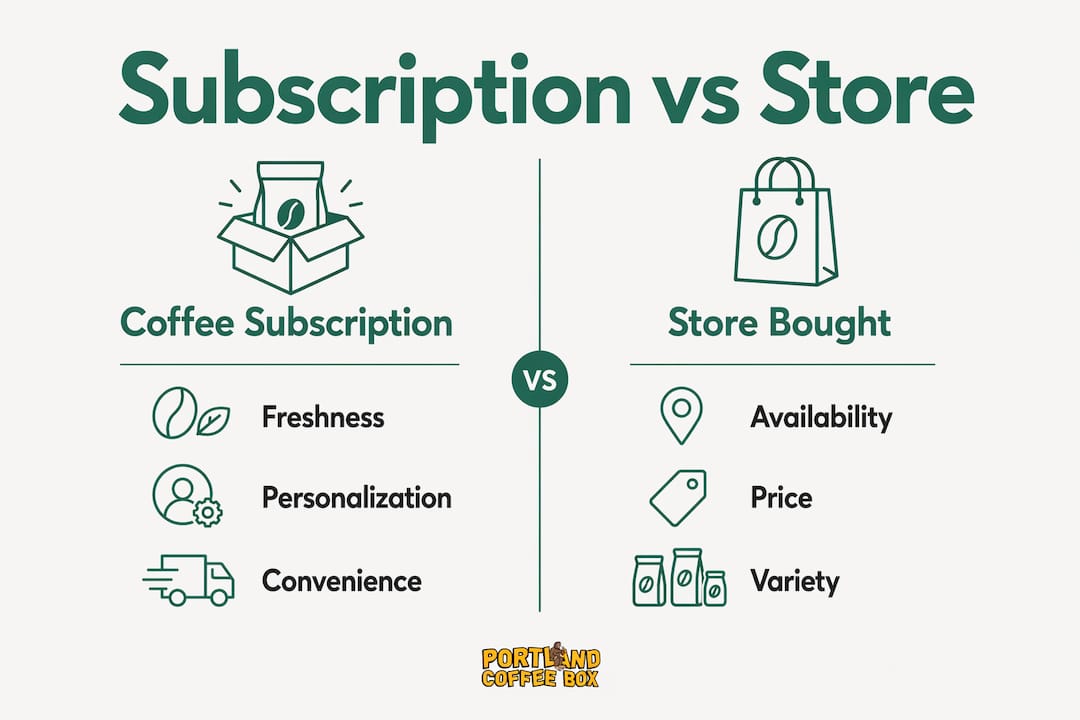
Convenience, cost, variety, and community connection each play a role in the subscription versus store-bought decision. No single option wins on every dimension, but subscriptions hold a clear advantage in most categories for regular home brewers.
Subscriptions operate on a set-and-forget model. You configure your preferences once, and fresh coffee arrives at your door. Store shopping requires a trip, a decision under pressure, and often a compromise on freshness. For busy households, the subscription model removes one recurring friction point entirely.
Subscription models often offer a 5–15% discount compared to one-time purchases from the same roaster. That discount only delivers real savings when consumption is consistent and no stale coffee accumulates. Store-bought coffee may appear cheaper per bag, but the cost of a flat, flavorless cup is harder to quantify. Specialty coffee brewed at home from fresh beans costs a fraction of a café visit and delivers comparable quality.
Store shelves offer visual variety, but most of it is commodity coffee with similar flavor profiles. Subscriptions from curated services rotate beans seasonally, exposing you to origins and processing styles you would never find at a grocery store. For discovery, though, local specialty roasters and café visits still offer something subscriptions cannot: the ability to taste before you buy. Local roasters provide community connection and sensory experience, but freshness must still be verified via roast dates. If a local roaster cannot tell you when the beans were roasted, treat the coffee as stale regardless of the branding.
The most practical approach for enthusiasts combines both channels. A subscription handles your daily brewing reliably, while occasional visits to local roasters or cafés satisfy the urge for variety and discovery. This model gives you freshness and consistency at home without sacrificing the sensory pleasure of exploring new coffees in person. Learning how to find small-batch local coffee online can extend that discovery habit beyond your immediate geography.
One practical consideration often overlooked: subscription cancellation policies matter. A service that makes pausing or canceling difficult creates friction that erodes the convenience advantage. Before committing, confirm that the subscription can be paused, adjusted, or canceled without penalty.
A coffee subscription delivers fresher, more personalized coffee than store-bought options when the frequency matches your actual consumption and you engage actively with the roaster.
| Point | Details |
|---|---|
| Freshness window is critical | Specialty coffee peaks at 7–45 days post-roast; subscriptions ship within 24–48 hours of roasting. |
| Roast date beats best-by date | Always check the “Roasted On” date to know where the coffee sits in its flavor arc. |
| Personalization deepens over time | The best tailored experience comes after 3–4 deliveries with direct roaster feedback. |
| Match frequency to real consumption | Track usage for two weeks before committing; over-subscribing leads to stale coffee and wasted money. |
| The hybrid model works best | Use a subscription for daily reliability and local roasters or cafés for variety and discovery. |
Most people ask “Is a subscription worth it?” when the better question is “Am I consuming coffee fast enough to make freshness matter?” That reframe changes everything.
I have seen enthusiasts invest in a premium subscription, receive beautifully roasted beans, and then let them sit for six weeks because life got busy. The subscription did its job. The consumption habit did not. The coffee went stale, the value evaporated, and the person blamed the service.
The freshness advantage of a well-run subscription is real and meaningful. Roasters who prioritize supply chain transparency and publish roast dates are delivering a genuinely superior product compared to anything sitting on a grocery shelf. But that advantage only lands in your cup if your delivery cadence matches your actual drinking rhythm.
My honest recommendation: start with a smaller subscription size, communicate with the roaster after your second delivery, and treat the first two months as a calibration period. A flexible coffee subscription that lets you pause, adjust, or skip is worth more than a locked-in plan with a slightly better discount. The best subscription is the one you actually drink before the next bag arrives.
— Cody Salane
Portland Coffee Box curates small-batch beans from Portland’s top local craft roasters and ships them fresh to coffee lovers across the country. Every box reflects the seasonality and variety that make Portland’s coffee scene worth talking about, with light, medium, and dark roasts available to match any brewing preference.
For moderate households, the two-bag subscription delivers consistent freshness without accumulation. Households that brew more will find the three-bag subscription hits the right balance of variety and volume. High-volume households or those who love rotating through origins can explore the four-bag subscription for maximum freshness and range. All subscriptions ship free, and Portland Coffee Box is a 1% For the Planet member, so every order supports environmental causes alongside great coffee.
A coffee subscription is a recurring delivery of freshly roasted beans shipped on a schedule you choose, typically weekly, bi-weekly, or monthly. The best services ship within 24–48 hours of roasting to maximize freshness.
Yes, in most cases. Subscription roasters ship beans within days of roasting, while store-bought coffee often sits in warehouses and on shelves for weeks before purchase, pushing it well past its peak flavor window.
Track your actual bean consumption for two weeks before subscribing. Typical household usage runs 250–500g per week for two people, which guides whether a weekly, bi-weekly, or monthly cadence fits best.
Subscriptions often carry a 5–15% discount over one-time purchases from the same roaster. The savings hold only when you consume each delivery fully before the next one arrives and avoid accumulating stale coffee.
Yes. Most subscriptions let you choose roast level, origin, grind size, and frequency at signup. Personalization deepens significantly after 3–4 deliveries when you share direct feedback with the roaster.


