


-
Products
-
About Us
-
Roasters
-
Gifts
A flexible coffee subscription is a recurring delivery service that lets you customize your coffee’s roast type, bag quantity, grind style, and delivery frequency to match exactly how you drink. Unlike a fixed monthly box, a flexible plan puts you in control. Services like Portland Coffee Box, Blueprint Coffee, and The Roast Haus Coffee Co. have built their entire models around this kind of personalized delivery. The result is fresher coffee, less waste, and a routine that actually fits your life. Whether you brew one cup a day or power through a full bag each week, a flexible plan adapts to you.
A flexible coffee subscription is the industry’s answer to the “set it and forget it” problem that plagued early delivery services. Traditional subscriptions shipped the same bag on the same date every month, regardless of whether you had three bags sitting on your counter. Flexible plans solve that by giving you real control over every variable.
The core mechanics are straightforward. You choose your bag size, roast level (light, medium, or dark), and grind type (whole bean, drip, espresso). Then you select how often you want delivery: weekly, every two weeks, or monthly. The best services also let you update delivery schedules and switch flavor profiles instantly through an online portal.

Freshness is where flexibility pays off most. Specialty coffee is best consumed within 7–21 days post-roast for filter coffee and 14–45 days for espresso. That narrow window means your delivery timing matters as much as the beans themselves. A flexible plan lets you sync shipments to your actual consumption rate, so you are never drinking stale coffee or throwing away surplus bags.
Pro Tip: Prioritize roasters that use a roast-to-order model. Services that roast and ship within 24 hours guarantee you receive beans at peak flavor, not beans that have been sitting in a warehouse.
Here is what a well-built flexible subscription typically offers:
One detail worth knowing: some platforms run on weekly cycles rather than true calendar months. That means your delivery date can shift over time, which can lead to coffee pile-ups if you are not paying attention. Monitoring your delivery schedule through the subscription portal prevents that problem entirely.
The subscription market has settled into a few distinct models, and each one suits a different kind of coffee drinker. Understanding the differences helps you pick the right fit from the start.
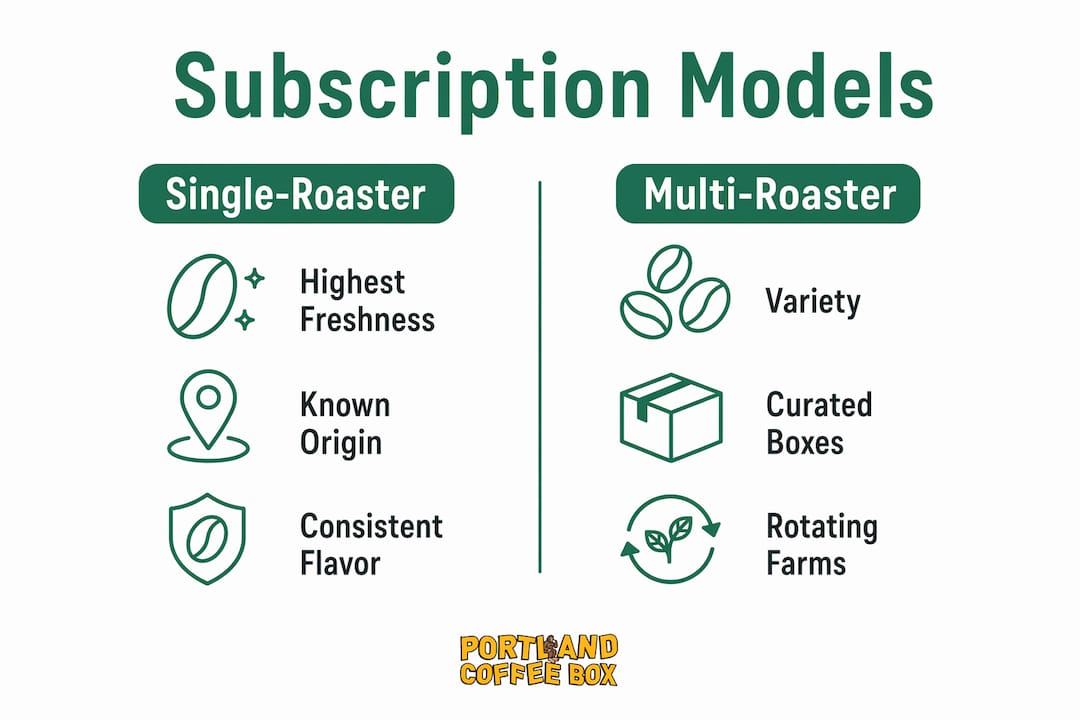
Direct roaster subscriptions come straight from a single craft roaster. You know exactly who roasted your beans, when they were roasted, and where the coffee originated. This model delivers the highest freshness consistency because there is no middleman adding transit time. It suits drinkers who have found a roaster they love and want a reliable supply of that specific quality.
Multi-roaster curated boxes pull beans from several roasters and package them together. Portland Coffee Box uses this model, sourcing small-batch beans from Portland’s top local craft roasters each month. The variety is the appeal. You might receive a bright Ethiopian natural from one roaster and a rich Guatemalan washed from another in the same box. The trade-off is that freshness varies in curated boxes because logistics between multiple roasters and a central fulfillment point adds time between roast and delivery.
Blend subscriptions deliver the same consistent flavor profile every cycle. They suit habitual drinkers who want their morning cup to taste the same every day without thinking about it.
Single-origin subscriptions rotate through coffees from specific farms or regions. They appeal to coffee explorers who want to taste how a Kenyan AA differs from a Colombian Huila or a Yemeni natural. Portland Coffee Box offers a single-origin two-bag option for exactly this kind of exploration.
| Model | Freshness | Variety | Flexibility | Best For |
|---|---|---|---|---|
| Direct roaster | Highest | Low | High | Loyal fans of one roaster |
| Multi-roaster curated | Moderate | High | Moderate | Variety seekers |
| Blend subscription | Moderate | Low | High | Daily routine drinkers |
| Single-origin | High | High | High | Flavor explorers |
The clearest benefit is freshness on demand. Matching delivery frequency to consumption prevents the two worst outcomes in home coffee: stale beans and surplus stockpiles. When your shipment arrives just as you finish your last bag, every cup you brew is within the optimal flavor window.
Convenience is the second major benefit. Automatic delivery means you never make an emergency run to a grocery store and settle for pre-ground coffee that has been sitting on a shelf for months. Your beans arrive at your door, roasted fresh, ready to brew.
The ability to sample without commitment is underrated. A good flexible plan lets you switch flavor profiles between deliveries, so you can try a light floral Ethiopian one month and a dark chocolatey Sumatra the next without ordering a full bag of something you might not enjoy.
Cost efficiency follows naturally. Buying fresh, small-batch coffee through a subscription is almost always cheaper per bag than buying the same quality at a specialty café or boutique shop. You also eliminate waste from beans that go stale before you finish them, which happens constantly with oversized one-time purchases.
A few practical considerations to keep in mind:
Pro Tip: Log into your subscription portal before each delivery cycle. Adjusting your preferences dynamically, based on how much coffee you have left, keeps your supply perfectly calibrated.
Choosing the right plan starts with honest self-assessment. Most people underestimate or overestimate how much coffee they actually drink. Spend one week tracking your consumption before committing to any frequency or bag size. The number will probably surprise you.
Follow these steps to find and maintain the right subscription:
The artisan roasters behind Portland Coffee Box’s curated roaster network follow this same logic in reverse. They roast to order, ship fast, and trust that a well-timed delivery beats a large, discounted shipment every time. That philosophy is worth borrowing for how you manage your own subscription.
One insight worth internalizing: the cheapest subscription is rarely the best value. Transparency in roast dates and origin information is the real measure of quality. A subscription that costs a few dollars more but ships beans roasted yesterday is worth far more than a bargain box with no roast date and unknown sourcing.
A flexible coffee subscription delivers the best value when you match delivery frequency to your actual consumption and prioritize roasters who publish roast dates and ship fresh.
| Point | Details |
|---|---|
| Freshness window is narrow | Filter coffee peaks within 7–21 days post-roast; espresso within 14–45 days. |
| Roast-to-order matters | Services that roast and ship within 24 hours deliver beans at peak flavor. |
| Match frequency to consumption | Mismatched timing creates stale beans or surplus stockpiles. |
| Use portal features actively | Skipping, pausing, and switching profiles keeps your subscription working for you. |
| Price is not the best indicator | Roast date transparency and origin clarity signal better value than lowest cost. |
by Cody Salane
I spent years buying coffee the wrong way. I would order a large bag from a roaster I loved, drink half of it fresh, and watch the rest go stale on my counter. The beans were not bad. My timing was.
Flexible subscriptions fixed that, but not because of the convenience angle everyone talks about. The real shift came from roast-to-order transparency. When a roaster prints the roast date on the bag and ships within a day of roasting, you stop treating coffee like a pantry staple and start treating it like produce. That mindset change alone improved every cup I brewed.
The pause and skip features matter more than most people realize. When I traveled for two weeks, I paused my subscription. When a friend brought over a bag from a local roaster, I skipped my next delivery. No waste, no guilt, no pile of bags on the counter. That kind of control is what separates a genuinely flexible plan from one that just calls itself flexible in the marketing copy.
My honest advice: start smaller than you think you need, check your roast dates obsessively for the first two months, and do not be afraid to rotate your flavor profile. A single-origin Ethiopian and a dark blend are not competing. They are two different experiences, and a good subscription lets you have both.
— Cody Salane
Portland Coffee Box was built around exactly the kind of flexibility this article describes. Each monthly box features fresh, small-batch beans handpicked from Portland’s top local craft roasters, curated for quality, variety, and seasonality.
You choose your subscription size: a two-bag box for solo drinkers, a three-bag box for households, or a four-bag box for serious coffee lovers. Every plan ships free, and you can pause, skip, or cancel anytime through your account portal. As a 1% For the Planet member, Portland Coffee Box also donates a portion of every order to environmental causes. New to the service? Grab a free bonus bag and taste what Portland’s craft coffee scene has to offer.
A flexible coffee subscription lets you customize delivery frequency, bag size, roast type, and grind preference, and adjust or pause shipments anytime without penalties.
Your delivery frequency should match your consumption rate. Filter coffee stays fresh for 7–21 days post-roast, so most solo drinkers do well with a biweekly or monthly delivery.
Single-roaster subscriptions typically deliver higher freshness because there is no extra transit time between multiple roasters and a fulfillment center. Multi-roaster curated boxes offer more variety but freshness can vary.
Yes. Any reputable flexible subscription, including Portland Coffee Box, allows cancellation with no penalties directly through your account portal.
Look for a printed roast date on every bag. Roasters that publish roast dates and ship within 24 hours of roasting deliver the most reliable freshness guarantee.


