


Small roasters are defined as independent, locally owned coffee businesses that roast in small batches and reinvest directly into the communities they serve. The role of small roasters in community goes far beyond a great cup of coffee. They act as economic engines, social gathering spaces, and sustainability advocates all at once. Whether you live in a city like Portland or a rural town in Wisconsin, your local roaster shapes the neighborhood in ways most people never stop to consider.
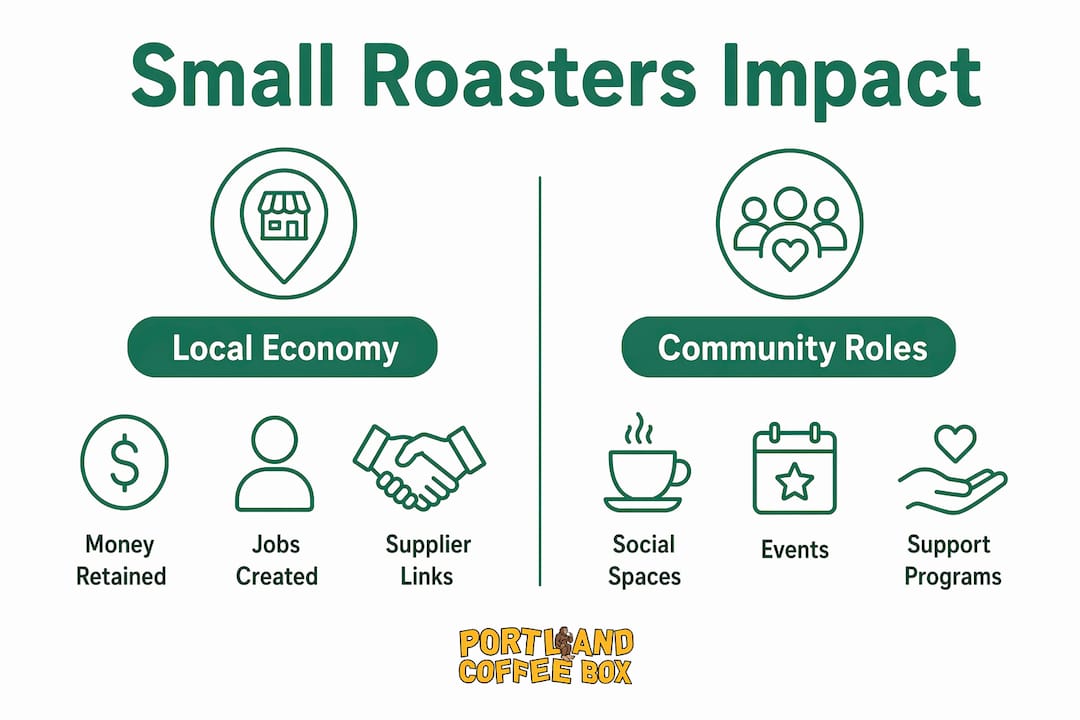
Small roasters keep more money circulating in your local economy. Every £1 spent at a local independent business retains about £0.68 within the local economy, compared to only £0.43 for national chains. That gap represents real dollars flowing to local suppliers, landlords, employees, and service providers rather than leaving the region entirely.
The difference compounds over time. A small roaster in your neighborhood buys beans from local importers, hires local staff, uses local repair services, and pays local taxes. Each of those transactions creates another round of local spending. National chains route most of those same transactions through centralized corporate systems, pulling value out of the community with every purchase.
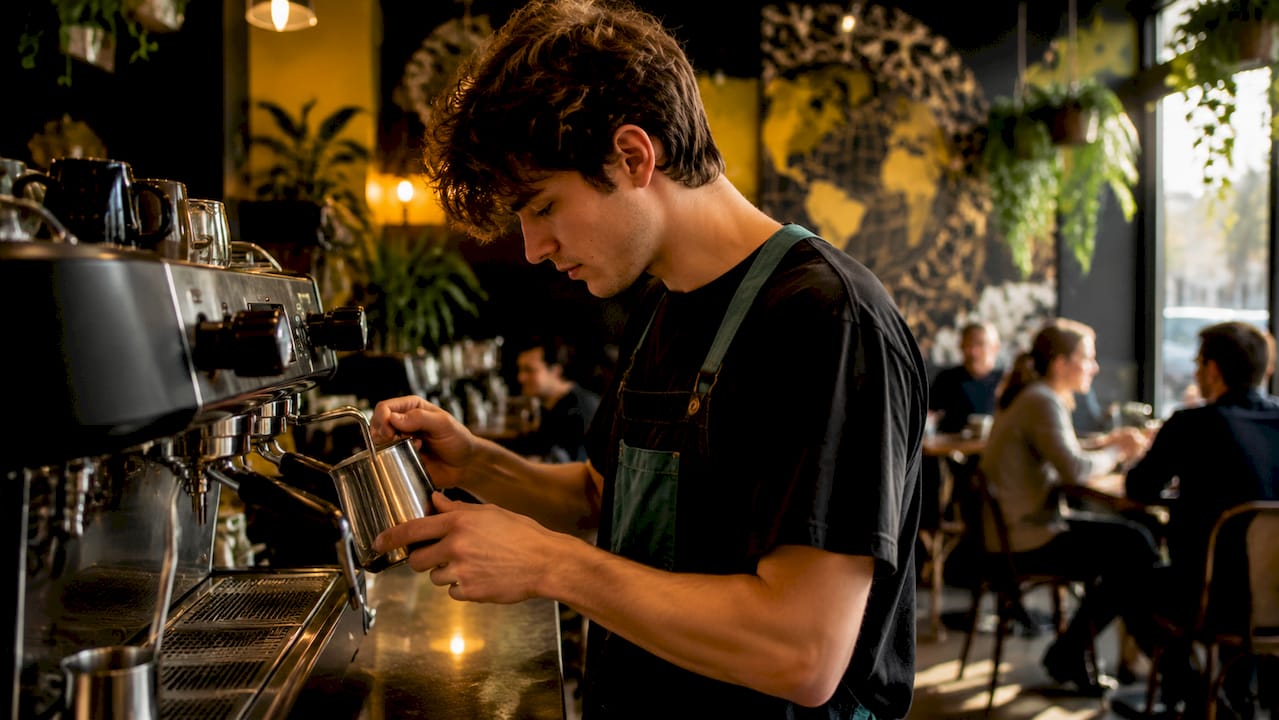
Small roasters also create jobs that tend to stay local. They hire baristas, roasters, delivery drivers, and marketing staff who live nearby and spend their paychecks at other local businesses. That workforce stability strengthens the entire local economy, not just the coffee shop.
| Spending Category | Local Roaster | National Chain |
|---|---|---|
| Local economic retention per $1 spent | ~$0.68 | ~$0.43 |
| Supplier relationships | Local and regional | Centralized corporate |
| Profits reinvested locally | High | Low |
| Community event sponsorship | Common | Rare |
| Local job creation | Direct and sustained | Limited local benefit |
Pro Tip: When you choose a local roaster over a chain, ask them where they source their beans and who they hire locally. That conversation alone tells you how deeply they are invested in your community.
Small roasters function as “third places,” a term urban sociologists use to describe spaces that are neither home nor work but where people gather freely. Small roasters serve as social infrastructure that combats social isolation, especially in rural communities where gathering spaces are scarce. Digital platforms cannot replicate the warmth of a real conversation over a shared cup.
Redwood Street Roasters in rural Edgar, Wisconsin, is a clear example. In a small town with limited social venues, the roastery became a place where neighbors reconnect, newcomers feel welcome, and local identity takes shape. The owner built the business with community health in mind, not just profit margins. That intention shows in how the space is used every single day.
The social benefits of small roasters extend well beyond a comfortable chair and good Wi-Fi. Community coffee movements like Florida Coffee Culture show how grassroots collaborations between small roasters and local consumers create lasting belonging through physical events and shared rituals.
Small roasters regularly provide:
Pro Tip: Follow your local roaster on social media or sign up for their newsletter. Most small roasters announce community events there first, and showing up is the simplest way to plug into local coffee culture.
Small roasters build loyalty by telling the full story of their coffee, from the farm to the cup. Transparency and relationship-building between roasters, producers, and customers generate loyalty and resilience against market volatility. When you know the name of the farm, the region, and the farmer behind your morning cup, you feel connected to something larger than a transaction.
Small roasters create what researchers call “community gravity,” a pull that keeps customers returning not just for coffee but for the relationships and stories attached to it. Goodman Coffee Roasters, for example, shares detailed sourcing notes with every bag, explaining why a specific harvest was chosen and what the producer’s story means to the roaster. That transparency turns a purchase into a shared value.
This model also protects small roasters during difficult market periods. When customers are engaged in sourcing stories, they develop stronger loyalty that stabilizes the supply chain even under pressure from tariffs or price swings. A loyal customer base built on trust is far more durable than one built on convenience alone.
Great coffee is the baseline. True customer retention requires consistent, friendly human interaction and authentic narratives. Customers who understand why a roaster chose a specific Ethiopian natural process over a washed Guatemalan are more likely to return, recommend the shop, and forgive an occasional off day. That depth of connection is something no national chain can manufacture at scale.
You can explore roaster stories and profiles from Portland’s craft roasting community to see exactly how this storytelling model works in practice.
The impact of local roasters extends into services most people associate with government or large employers. One independent roaster covered 70% of operating expenses for an on-site childcare facility, helping employees stay in the local workforce in a rural area. That single investment changed the lives of working parents who would otherwise have left the region entirely.
Red Rooster Coffee, based in Floyd, Virginia, is the roaster behind that story. The company recognized that affordable childcare was the primary barrier keeping skilled workers from staying local. By funding the facility, Red Rooster kept its own team intact and strengthened the broader workforce in a rural county with limited employment options.
Small roasters often provide essential community services beyond coffee, including scholarships, workforce training, and local event sponsorships. These investments correlate directly with long-term community sustainability.
| Community Support Program | Example Roaster | Impact |
|---|---|---|
| On-site childcare funding | Red Rooster Coffee | Covered 70% of operating costs |
| Local scholarships | Various independent roasters | Supports workforce education |
| Community event sponsorship | Redwood Street Roasters | Builds rural social infrastructure |
| Producer transparency programs | Goodman Coffee Roasters | Strengthens supply chain loyalty |
| Workforce training initiatives | Multiple craft roasters | Reduces local unemployment |
Supporting local roasters is one of the most direct ways to strengthen your neighborhood’s economy and social fabric. Using local roasters leads to economic benefits, richer social life, and greater community resilience compared to purchasing from national or international chains. The impact is real, and it starts with small, consistent choices.
Here are practical steps to deepen your support:
You can also source local roasted coffee for your office as a way to extend community support beyond your personal routine. Bringing a local roaster into your workplace multiplies the economic and social impact of every bag purchased.
Small roasters are the most direct private investment most communities have in their own economic and social health.
| Point | Details |
|---|---|
| Economic multiplier effect | Local roasters retain significantly more spending within the community than national chains do. |
| Social infrastructure role | Small roasters serve as third places that reduce isolation and build neighborhood identity. |
| Transparency builds loyalty | Sourcing stories and producer relationships create durable customer loyalty that resists market pressure. |
| Community services beyond coffee | Roasters like Red Rooster Coffee fund childcare and workforce programs that anchor rural communities. |
| Consumer action matters | Buying directly, attending events, and subscribing to local roasters amplifies community impact. |
People tend to evaluate a coffee shop on taste and price. That framing misses almost everything that matters. I’ve spent years watching communities with strong independent roasting scenes hold together in ways that towns dominated by chains simply do not. The difference is not the coffee. It is the accumulation of small investments, the childcare facility, the scholarship fund, the Tuesday open mic, the roaster who knows your name.
What strikes me most is how quietly this work happens. Red Rooster Coffee did not issue a press release about covering 70% of a childcare facility’s operating costs. Redwood Street Roasters did not brand itself as a mental health resource. These roasters just built things their communities needed and kept showing up. That kind of integrity is rare, and it deserves more recognition than it gets.
My honest caution is this: convenience culture is eroding the habit of choosing local. Every time a community member defaults to a national chain app order, a small roaster loses a transaction that would have stayed local, paid a neighbor’s salary, and funded a community event. The stakes are higher than most people realize. Choosing local is not a lifestyle preference. It is an economic and social vote cast every single morning.
— Cody Salane
Portland Coffee Box was built on the belief that small roasters deserve a national audience without losing their local soul. Every monthly box features fresh, small-batch beans handpicked from Portland’s top craft roasters, the kind of roasters who fund community programs, tell honest sourcing stories, and treat their staff like neighbors.
If you want to support the small roasters building real communities, the three-bag coffee subscription is the most direct way to do it from anywhere in the country. You get three bags of freshly roasted, curated coffee delivered monthly with free shipping, and every purchase supports the independent roasters who are doing the most important work in their neighborhoods. Portland Coffee Box is also a 1% For the Planet member, so your subscription contributes to environmental causes as well.
Small roasters strengthen communities by retaining local economic value, creating social gathering spaces, and funding services like childcare and workforce programs. Their impact extends well beyond coffee into the economic and social fabric of the neighborhoods they serve.
Every dollar spent at a local independent roaster retains significantly more value within the local economy than the same dollar spent at a national chain. That difference compounds across thousands of daily transactions, creating a measurable economic advantage for communities that support local roasters.
Small roasters serve as third places where people gather outside of home and work, reducing social isolation and building neighborhood identity. This role is especially critical in rural communities where public gathering spaces are limited.
Local roaster sustainability comes from transparent sourcing relationships with producers, small-batch roasting that reduces waste, and community investment that strengthens the long-term viability of local supply chains. These practices benefit both the environment and the communities involved.
Start by visiting local roasteries directly, attending their community events, and subscribing to their offerings for consistent support. You can also explore roasters in your region through curated guides that highlight independent craft roasters and their community contributions.


