


-
Products
-
About Us
-
Roasters
-
Gifts
Indie roasters worth supporting are defined by three verifiable qualities: transparent sourcing, freshness guarantees, and sustainability backed by third-party certification rather than marketing copy. The specialty coffee world has never had more small-batch options, but not every artisan coffee roaster earns that label honestly. This guide gives you the exact criteria to discover indie roasters worth supporting, whether you’re shopping local in Portland, browsing subscription services, or building your own curated rotation of favorite craft coffee brands.
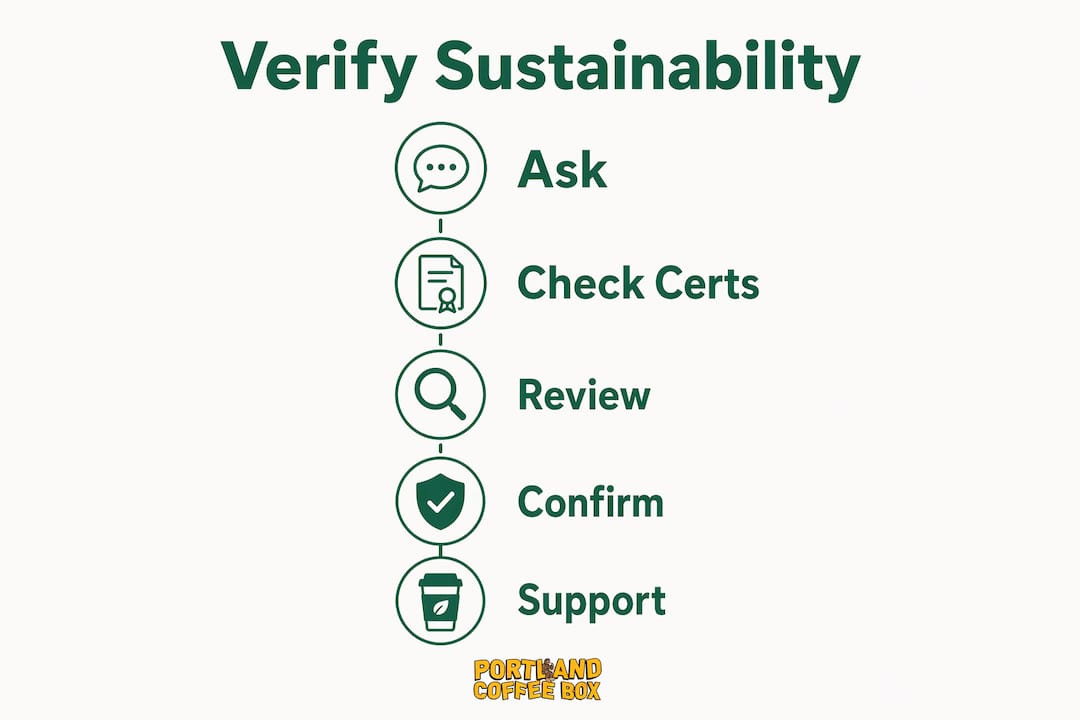
An indie roaster earns your support when it can answer three questions clearly: Where did this coffee come from? When was it roasted? What sustainability commitments does the company actually keep? Roasters who dodge these questions with vague language about “sourcing relationships” or “eco-friendly practices” are not the ones you want. The best indie coffee brands publish specific answers, not marketing promises.
The specialty coffee industry uses recognized frameworks to separate credible claims from noise. The Global Coffee Platform’s Coffee SR Code covers environmental responsibility, labor rights, community impact, and transparency. Roasters aligned with this framework, or an independently verified equivalent, give you a real audit trail. That audit trail is what separates a trustworthy sourcing story from a feel-good label.
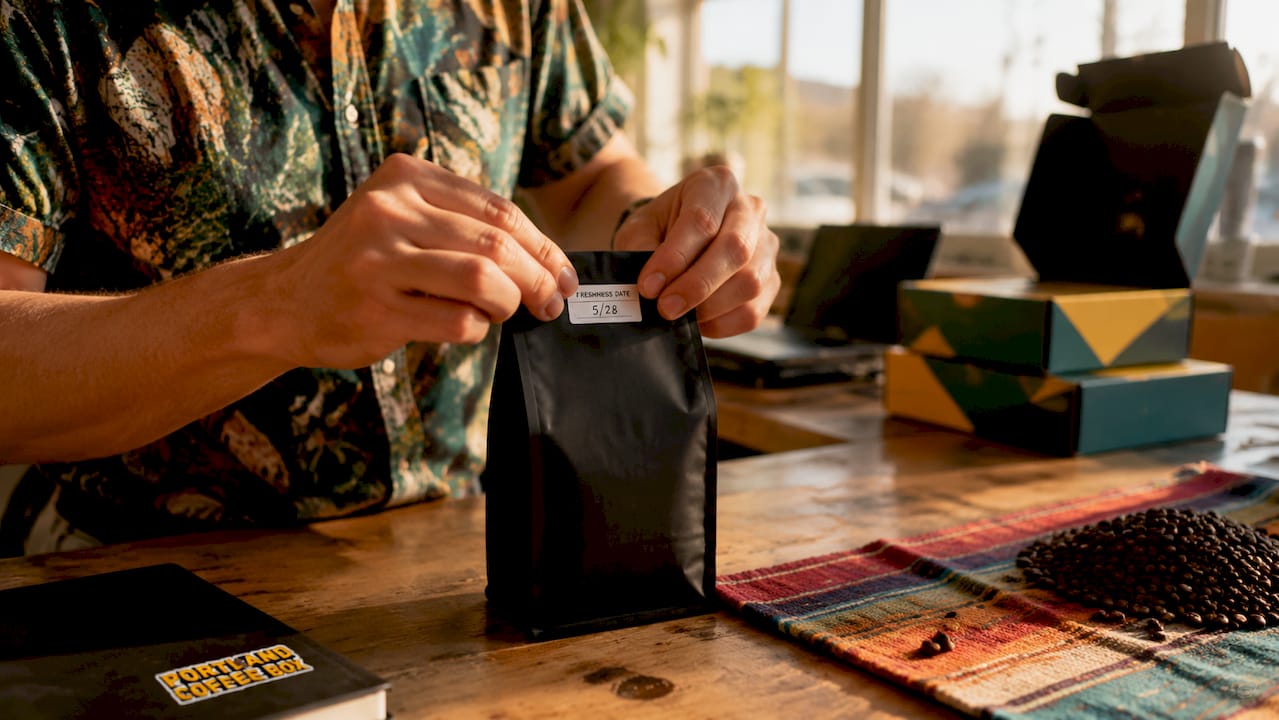
Freshness is the third pillar. Small-batch roasting means nothing if the coffee sits in a warehouse for two months before it reaches you. Top small batch roasters publish their roast dates and ship within days. When you see a roaster commit to a specific freshness window in writing, that commitment signals operational discipline, not just good intentions.
Most roasters claim sustainability. The critical difference is whether those claims are self-reported or externally verified. Self-reported claims cost nothing to make and nothing to break. External verification requires a roaster to submit to audits, meet measurable standards, and maintain documentation that a third party reviews.
HACOFCO CONNECT is one independently verified certification equivalent to the Global Coffee Platform’s Coffee SR Code. It covers four dimensions: environmental stewardship, labor rights, community engagement, and supply chain transparency. ICT Coffee uses this framework to build sourcing narratives grounded in farm relationships rather than spot market purchases. That combination of certification and direct farm ties creates the most defensible sustainability story in the industry.
When you evaluate an indie roaster’s sustainability claims, look for these signals:
Pro Tip: Ask a roaster directly: “What third-party organization verifies your sustainability practices?” A confident, specific answer is a green flag. A vague or defensive response tells you everything.
Freshness is the most honest signal of a roaster’s commitment to quality. A roaster who ships stale coffee does not respect the product, regardless of how beautiful the bag looks. The best independent coffee shops and direct-to-consumer roasters treat freshness as a non-negotiable promise, not a nice-to-have.
Warsaw-based Trigger Roastery offers a concrete model. Trigger publishes a “max 14 days from roast” guarantee and runs weekly drops so customers always receive coffee at peak flavor. That published constraint creates accountability. Trigger cannot quietly ship old stock without breaking a public promise. That is exactly the kind of operational transparency you should expect from any artisan coffee roaster worth your money.
Here is how to evaluate freshness before you buy:
Pro Tip: Published freshness windows give you a measurable standard to hold a roaster to. If a bag arrives outside that window, you have grounds to ask why. Roasters who honor those windows consistently are the ones worth a long-term subscription.
Curated local lists are the fastest starting point for discovery, but they are only a starting point. Portland’s indie roaster scene includes standouts like Coava, which offers seasonal single origins, and Push x Pull, which specializes in fruit-forward naturals and honey-process coffees. Water Avenue is another Portland name worth knowing for its direct-trade sourcing and consistent quality. These roasters represent the kind of distinctive profiles that make local discovery lists genuinely useful.
Subscription services extend that discovery nationwide. Bon Appétit’s 2026 roundup of best coffee subscriptions highlights names like Folk Coffee Club, Coffee Project New York, and Onyx Coffee Lab as models for both single-roaster and multi-roaster clubs. Each serves a different discovery style. Multi-roaster subscriptions expose you to a wider range of profiles. Single-roaster clubs let you go deep on one producer’s seasonal offerings.
| Discovery method | Best for | Validation step |
|---|---|---|
| Local curated lists | Finding regional standouts fast | Check roast dates and sourcing pages individually |
| Multi-roaster subscriptions | Broad flavor exploration | Confirm each featured roaster’s freshness policy |
| Single-roaster subscriptions | Depth and seasonal tracking | Review the roaster’s certification and farm sourcing |
| Direct roaster websites | Maximum transparency | Read the FAQ, sourcing story, and roast date policy |
After you find a roaster through any of these channels, validate before you commit. Local discovery lists are best used as starting points. Checking individual roaster pages for roast dates, sourcing details, and certification claims is the step most coffee enthusiasts skip. That step is what separates a good find from a great one.
You can also browse roaster profiles on Portland Coffee Box to see curated bios and sourcing stories for the roasters featured in each monthly box. It is a practical shortcut for validating multiple roasters at once.
Buying a single bag is a transaction. Building a subscription is a relationship. Coffee subscriptions give indie roasters predictable revenue, which lets them plan farm orders, maintain quality controls, and invest in better sourcing relationships. That predictability matters more to a small roaster than a one-time sale ever could.
Meaningful support goes beyond the purchase itself. Here is how to make your coffee spending count:
Pro Tip: When you find a roaster whose values align with yours, check whether they have a roaster application or community program. Some indie roasters actively seek coffee enthusiasts as brand advocates, which deepens the relationship beyond a simple purchase.
Supporting verified indie roasters also reaches further than your cup. When roasters maintain direct farm relationships backed by frameworks like the Coffee SR Code, the financial benefits flow to farmers more directly. That connection between your subscription and a farmer’s livelihood is real, and it is one of the most compelling reasons to prioritize verified sourcing over convenience.
Supporting indie roasters effectively requires verified sustainability, published freshness standards, and deliberate discovery through curated lists and subscriptions rather than brand recognition alone.
| Point | Details |
|---|---|
| Verify sustainability claims | Look for third-party certifications like HACOFCO CONNECT, not self-reported eco labels. |
| Demand published freshness windows | Roasters who state a maximum days-from-roast policy hold themselves accountable to quality. |
| Use local lists as starting points | Curated lists like Portland’s indie roaster guides are useful, but validate sourcing and roast dates individually. |
| Subscribe for meaningful impact | Regular subscriptions give indie roasters predictable revenue that supports better sourcing and farmer relationships. |
| Combine discovery methods | Pair local curated lists with multi-roaster subscriptions to build a well-rounded, verified rotation. |
The word “indie” stopped meaning much to me about three years into paying close attention to the specialty coffee world. Every roaster with a kraft paper bag and a hand-stamped logo called itself independent. The ones who actually earned that label were the ones who could tell me exactly where their coffee came from, when it was roasted, and who verified their sustainability claims.
The freshness piece surprised me most. I assumed that buying from a small roaster automatically meant fresher coffee. It does not. I have received bags from well-regarded indie names that were roasted five weeks before they arrived. That coffee was not bad, but it was not what small-batch roasting is supposed to deliver. The roasters who publish a specific freshness window, the way Trigger Roastery does with its 14-day policy, are the ones who actually mean it.
Sustainability claims took even longer to learn to read. The language around “ethical sourcing” and “sustainable farming” is so common now that it has lost almost all signal value. What I look for now is a named framework, a third-party audit, and a specific farm relationship. When a roaster can point to all three, I trust the story. When they can only point to their own website copy, I keep looking.
The Portland indie roaster scene gave me a useful education in this. Portland has roasters who do all of this right and roasters who coast on the city’s reputation. Learning to tell the difference made me a better coffee enthusiast and a more intentional buyer. That skill travels. You can apply it to any city, any subscription, any bag.
— Cody Salane
Portland Coffee Box curates each monthly box from Portland’s top craft roasters, selecting for freshness, sourcing transparency, and seasonal variety. Every roaster featured in the box has been vetted for quality and small-batch integrity, so you are not starting from scratch each time you want to find something worth drinking.
Subscriptions come in one, two, three, and four bag options, with free shipping on every order. The three-bag subscription is the most popular starting point for coffee enthusiasts who want real variety without committing to a single roaster. Portland Coffee Box is also a 1% For the Planet member, so a portion of every subscription supports environmental causes. Read more about the roasters behind each box at Portland Coffee Box.
An indie roaster is an independently owned coffee roasting company that operates outside large commercial chains or corporate ownership. The term carries the most meaning when paired with verified sourcing, small-batch production, and transparent freshness practices.
Look for third-party verified certifications like HACOFCO CONNECT or alignment with the Global Coffee Platform’s Coffee SR Code. Self-reported claims without an external audit are not independently verified.
Start with curated local or industry lists, then validate each roaster individually by checking roast dates, sourcing pages, and certification details. Subscription services like multi-roaster clubs are also a reliable way to encounter vetted indie options.
Roast date tells you exactly how fresh the coffee is. Best-by dates are set by the roaster and can obscure how long ago the coffee was actually roasted. Roasters who publish roast dates, like Trigger Roastery’s published freshness guarantee, give you a clear quality benchmark.
For indie roasters, subscriptions provide predictable revenue that supports better sourcing and farm relationships. For you, they deliver consistent freshness and structured discovery across roasters you might not find on your own.


