


-
Products
-
About Us
-
Roasters
-
Gifts
Brewing consistent coffee between meetings is fully achievable when you pair the right method with smart preparation and quality beans. The AeroPress, French press, and compact automatic machines are the three tools busy professionals rely on most for fast, repeatable results. Manual immersion methods like AeroPress deliver grit-free, high-quality coffee in about 90–120 seconds. That speed matters when your next calendar block is 10 minutes away and you need your head clear before it starts.
Consistent coffee brewing, in a professional context, means producing the same flavor, strength, and temperature every single time regardless of how rushed you feel. The enemy of consistency is improvisation. When you eyeball your grounds, skip preheating, or grab whatever water is in the kettle, the result changes every day. Consistency comes from locking in three variables: grind size, coffee-to-water ratio, and brew time.
Short, structured coffee breaks outperform back-to-back meetings for sustained focus and energy. That finding reframes the coffee break entirely. It is not a distraction from your schedule. It is part of what makes the schedule work.
The methods that deliver speed and consistency for professionals are AeroPress, French press, and single-serve automatic brewers. Each has a distinct profile. AeroPress is the fastest and most forgiving. French press is slower but produces a rich, full-bodied cup with minimal equipment. Single-serve automatics offer one-button convenience at the cost of some flavor control. Knowing which fits your workflow is the first decision to make.
Choosing the right brewer is not about personal preference alone. It is about matching the tool to your time window and workspace.
Single-serve brewers like the AeroPress Go operate with one-button simplicity in 90 seconds. That speed makes them ideal for solo remote workers who want a reliable cup without thinking. The tradeoff is that pod-based machines limit your bean selection and produce more waste. Manual methods give you full control over every variable and work with any specialty bean you choose.
For office settings, a small batch brewer or French press covers multiple people without requiring individual setups. The French press produces 2–4 cups in 4–6 minutes with almost no cleanup complexity. That makes it a strong choice for small teams sharing a break room.
Portable brewers with precision temperature control, like the IKAPE Kapo K2 Pro, deliver consistent extraction even when you are working from a hotel room or a co-working space. Self-heating units remove the variable of inconsistent water temperature, which is one of the most common causes of bitter or weak coffee. For professionals who travel frequently, a portable brewer is not a luxury. It is the only way to maintain your standard away from home.
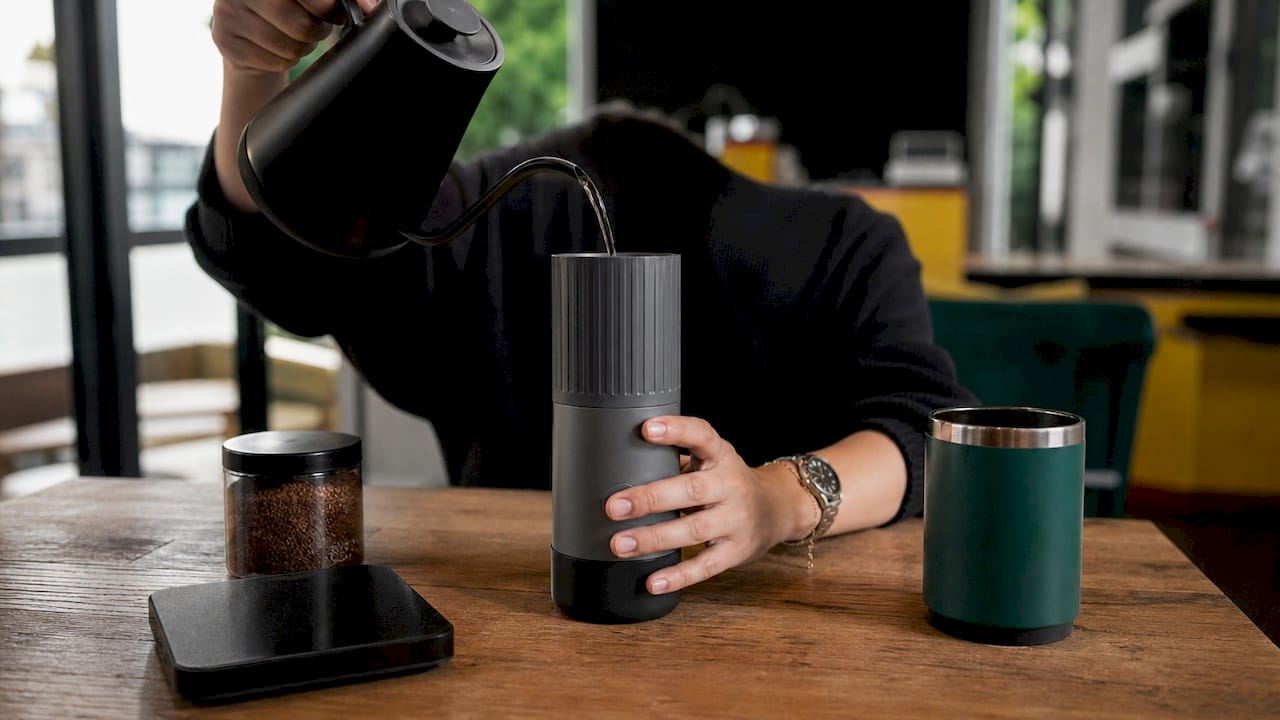
A quality burr grinder and a small digital scale round out the essential kit. Pre-ground coffee loses flavor within days of opening. Grinding fresh and weighing your dose removes two of the biggest sources of inconsistency.
| Method | Brew Time | Consistency | Ease of Use | Cleanup |
|---|---|---|---|---|
| AeroPress Go | 90–120 seconds | Very High | Easy | Fast |
| French Press | 4–6 minutes | High | Easy | Moderate |
| Single-Serve Auto | 90 seconds | High | Very Easy | Very Fast |
| Drip Machine | 8–12 minutes | Moderate | Very Easy | Moderate |
| Portable Espresso | 2–3 minutes | High | Moderate | Fast |
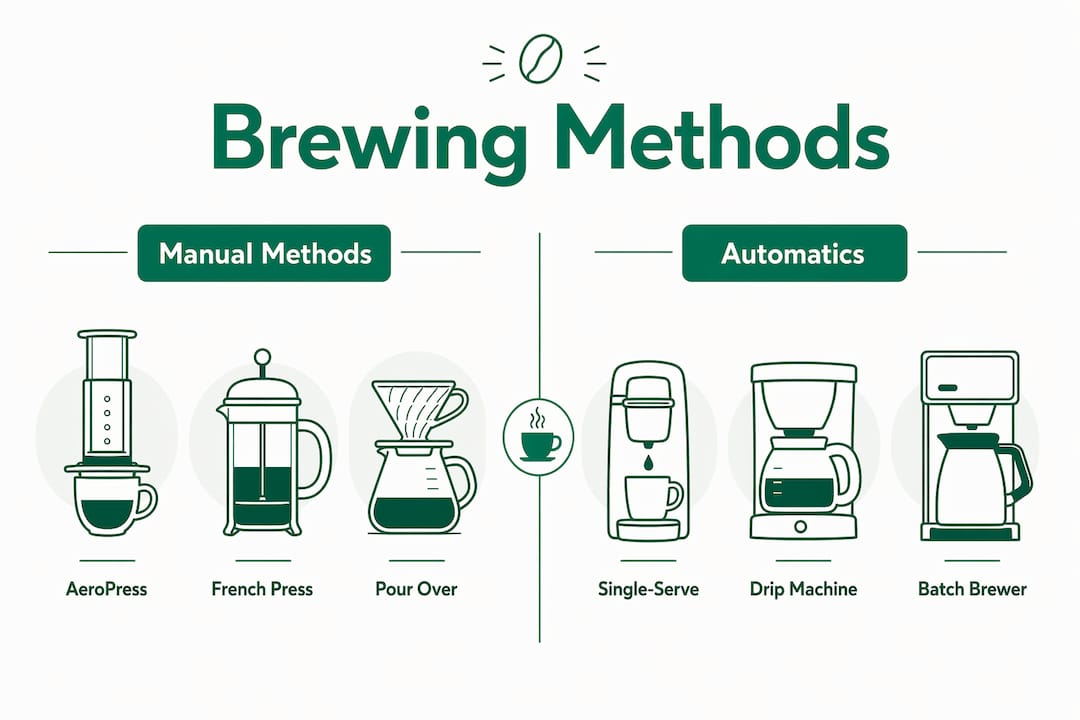
Pro Tip: Buy a second AeroPress filter cap and keep one pre-loaded with a paper filter so you can start brewing the moment the kettle boils.
Pre-measuring coffee and having equipment ready before you brew cuts your total time down to about 2 minutes. That preparation step is the single biggest time-saver available to you. Most people skip it and then wonder why their coffee takes longer than expected.
Here is the setup checklist that works for any method:
Grind size matters more than most people realize. A medium-fine grind works for AeroPress. A coarse grind suits French press. Using the wrong grind for your method produces either bitter over-extraction or weak under-extraction, and no amount of timing adjustment fully corrects it.
Pro Tip: Store your pre-measured doses in small labeled mason jars. One jar per brew session means zero measuring under pressure.
Speed and quality are not opposites. The methods below are proven, repeatable, and fast enough to fit inside a 10-minute break.
Preparation steps like warming the AeroPress and pre-weighing your dose bring total brew time to about 2 minutes. That includes cleanup. The AeroPress puck pops out cleanly into a trash can in one motion.
Standard drip machines take 8–12 minutes for a full pot. French press cuts that to 4–6 minutes with richer flavor and no paper filter waste.
When you are brewing for a team, the ratio changes. Use 60 grams of coffee per liter of water to maintain strength and flavor at scale. Pour the finished brew into a thermal server immediately. Thermal servers preserve freshness for up to 2 hours without the bitterness that comes from sitting on a hot plate.
| Method | Total Time | Yield | Complexity |
|---|---|---|---|
| AeroPress | 2 minutes | 1 cup | Low |
| French Press | 5 minutes | 2–4 cups | Low |
| Batch Brew | 12–15 minutes | 8–12 cups | Moderate |
Pro Tip: Set a phone timer the moment you pour water. Guessing steep time is the fastest way to ruin a French press.
Inconsistency in taste almost always traces back to one of four causes: wrong grind size, off-temperature water, stale beans, or rushed timing. Identifying which one is affecting your cup takes less than a minute of honest reflection.
Batch brewing with correct ratios and thermal servers avoids the bitterness that comes from leaving coffee on a hot plate. This is the most common office mistake and the easiest to fix.
Pro Tip: Rinse your AeroPress or French press with hot water immediately after each use. A 20-second rinse prevents oil buildup that makes your next cup taste stale.
Most professionals treat coffee as a background habit. You fill a mug, drink it at your desk while reading emails, and barely register the taste. That approach misses something real.
Freshly brewed coffee shared during a break supports trust and proactive collaboration in ways that a rushed meeting rarely does. The act of making something well, even something as small as a cup of coffee, signals care and attention. Clients and colleagues notice that.
From my own experience working with specialty roasters and remote teams, the professionals who brew intentionally between meetings are not spending more time on coffee. They are spending the same 5 minutes more deliberately. They come back to their desks with a better cup and a clearer head. That is not a coincidence.
The tools that make this possible are not expensive or complicated. An AeroPress Go, a small burr grinder, a digital scale, and fresh beans from a quality roaster cover everything you need. The coffee rituals that travel professionals rely on prove that consistency does not require a full café setup. It requires a repeatable process and beans worth brewing.
View your coffee break as a purposeful pause, not a gap in your schedule. The 5 minutes you spend brewing well are the 5 minutes that make the next 90 minutes sharper.
— Portlandcoffeebox
Brewing consistent coffee between meetings requires three fixed variables: grind size, coffee-to-water ratio, and brew time, supported by quality beans and minimal but reliable equipment.
| Point | Details |
|---|---|
| AeroPress is the fastest method | It produces a high-quality cup in 90–120 seconds with easy cleanup. |
| Pre-measuring saves the most time | Weighing your dose in advance cuts total brew time to about 2 minutes. |
| Batch brewing needs a thermal server | Use 60g per liter and pour into a thermal server to avoid bitterness. |
| Grind size drives flavor consistency | Match grind to method: medium-fine for AeroPress, coarse for French press. |
| Fresh beans are non-negotiable | Specialty coffee tastes best within 2–4 weeks of the roast date. |
The best brewing technique in the world cannot rescue stale beans. That is the part of the equation most professionals overlook when they focus on equipment and timing.
Portlandcoffeebox sources small-batch beans from Portland’s top craft roasters, curated for quality, variety, and seasonality. Each monthly box is matched to your preferred roast level, whether you brew with an AeroPress, French press, or batch brewer. The four-bag subscription keeps a steady rotation of fresh, roast-dated beans arriving at your door so you never reach for a stale bag on a busy Monday. Free shipping is included on every order. Explore the full subscription options and find the plan that fits your brewing rhythm.
The AeroPress brews a full cup in 90–120 seconds. Pre-measuring your dose and pre-warming the brewer the night before brings total time, including cleanup, to about 2 minutes.
Use 17 grams of coffee per 250ml of water for a single AeroPress cup. For batch brewing, use 60 grams per liter to maintain consistent strength across multiple cups.
Day-to-day variation almost always comes from inconsistent dosing, water temperature changes, or stale beans. A digital scale and a thermometer eliminate the two most common causes immediately.
Yes, but pre-ground coffee loses flavor within days of opening. If grinding at work is not possible, buy smaller bags and use them within one week of opening for the best results.
Pour finished coffee into a thermal server immediately after brewing. A quality thermal server preserves flavor and freshness for up to 2 hours without the bitterness that a hot plate causes.
Article generated by BabyLoveGrowth


