


-
Products
-
About Us
-
Roasters
- Gifts
Farm to cup coffee is a supply chain model where a single brand controls every major stage of the coffee journey: growing, harvesting, processing, roasting, and delivery directly to you. No importers. No commodity brokers. No warehouse delays. One entity, one chain, complete accountability at every step.
That sounds simple, but it’s extraordinarily rare. Less than 1% of coffee brands globally own or directly operate their farms, making farm-to-cup coffee extremely rare. They globally own or directly operate the farm where their beans are grown. Most coffee, even the excellent stuff sold at specialty shops, passes through exporters, importers, and distributors before it reaches a roaster. Each handoff adds time and distance between the bean and your cup.
True farm to cup requires:
This is also where farm to cup parts ways with direct trade coffee. Direct trade is meaningful: a roaster buys green beans straight from a farmer, skipping brokers and often paying a premium. But the roaster still doesn’t own or operate the farm. Farm to cup goes further, placing the growing stage inside the same organization that roasts and ships your coffee.
Portland Coffee Box is built around these principles. Every bag in a Portland Coffee Box subscription comes from Portland’s top craft roasters, curated for freshness, traceability, and the kind of quality that only a short, accountable supply chain can deliver.
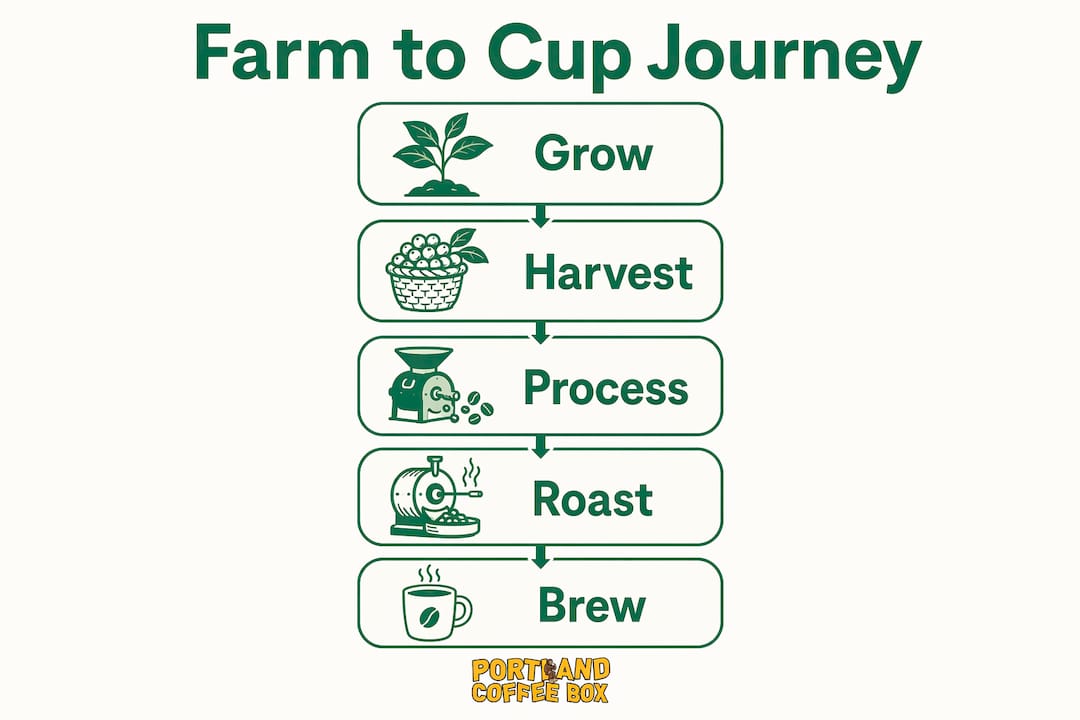
Coffee starts as a seedling. Nursery-grown plants spend their first months in shaded beds, watered carefully until their roots are strong enough for permanent planting. From there, coffee trees take approximately 3–5 years to bear fruit, which means every farm-to-cup operation carries years of investment before a single cherry is ready to pick.
When harvest time arrives, the method chosen shapes everything that follows:
Ripeness at harvest is the first major quality decision in the entire chain. An overripe cherry and a green one taste worlds apart, and selective picking is the only way to keep that gap from reaching your mug.
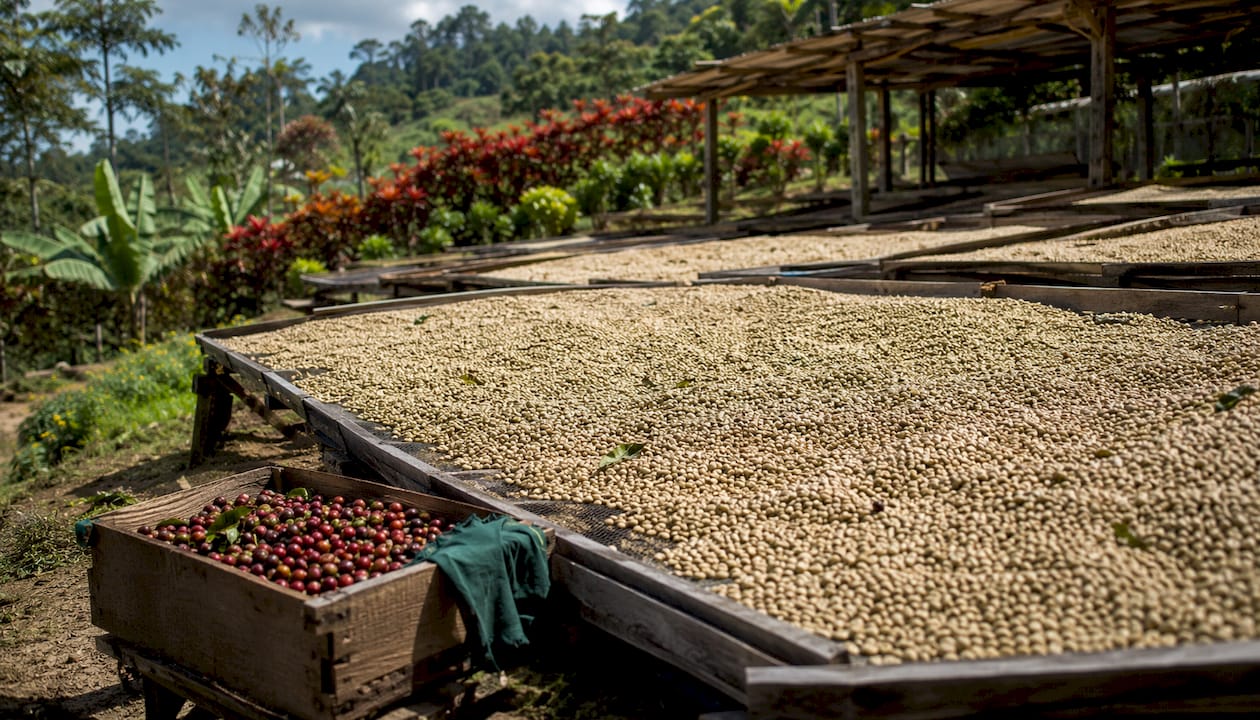
Once cherries are picked, processing begins immediately. Speed matters because the fruit degrades fast. The three main methods each steer the bean’s flavor in a distinct direction:
After drying, beans must reach 10–12% moisture for safe storage and shipping. Too wet and they mold; too dry and they go brittle. Milling then strips the dried parchment layer, and sorting removes defective beans by size, density, and defect count. This unglamorous step is a huge part of why specialty-grade coffee costs more. You can explore how each processing method shapes flavor in much more depth if you want to go further.
Green coffee beans smell like grassy hay and taste like nothing you’d recognize. Roasting is the transformation. Inside the drum, beans climb past 350°F and the Maillard reaction kicks in, browning sugars and proteins and building hundreds of flavor compounds. Where the roaster stops determines the roast level and the entire character of your cup:
Freshness after roasting matters enormously. Coffee is a perishable product, and the window between roast and peak flavor is short. Grinding accelerates this degradation because ground coffee exposes more surface area, releasing aromatics into the air more quickly. Grind right before you brew.
Brewing is the final step, influenced mainly by the coffee-to-water ratio, water temperature, and extraction time, which vary depending on the brewing method.
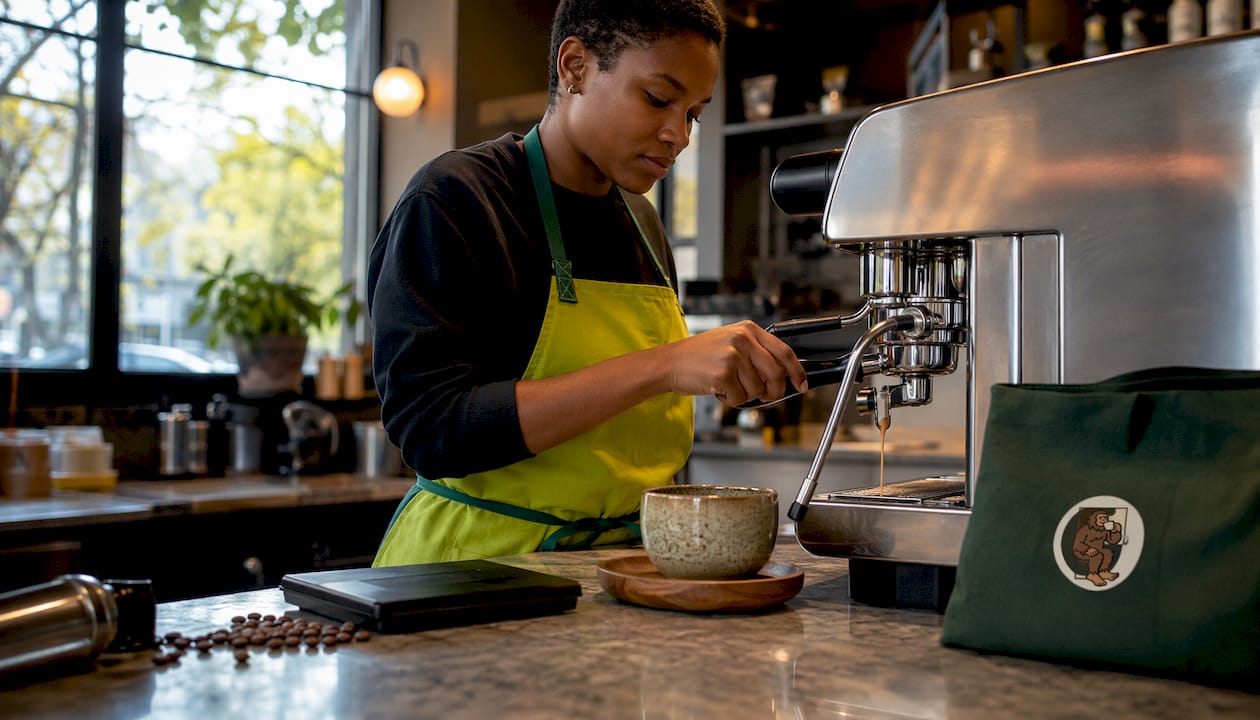
Match your grind size to your method: coarse for French press, medium for drip, fine for espresso. Wrong grind size is the most common reason a great bag of beans produces a disappointing cup.
The flavor advantage of true farm to cup coffee comes from control at every decision point. When the same organization picks the cherry, processes the lot, and roasts the bean, there’s no room for quality to slip through the cracks between handoffs.
Pro Tip: When evaluating whether a coffee is genuinely farm to cup, look for a roast date on the bag, a named farm or estate in the origin notes, and a direct explanation of the processing method. Vague “sourced from” language without farm-level detail is usually a sign the brand is using the term loosely.
The supply chain challenges are real too. Growing coffee requires capital for farmland, years of expertise, processing infrastructure, and the patience to wait several years for a tree to produce. Weather, pests, and crop failure are constant risks. That’s exactly why less than 1% of coffee brands achieve true farm to cup status. The ones that do have made a long-term commitment to a specific piece of earth, and that commitment shows up in the cup.
Specialty coffee and farm to cup are closely linked, but they’re not the same thing. Specialty coffee is defined by the Specialty Coffee Association as a coffee or coffee experience recognized for its distinctive attributes, resulting in significantly higher value in the marketplace. The SCA’s framework goes beyond a single score to include sensory quality, consistency, sustainability, and the impact on everyone in the value chain.
In practical terms, specialty coffee scores 80 or above on the 100-point scale used by certified Q Graders. Coffees scoring 85–89.99 are graded Excellent; those scoring 90–100 are Outstanding. To even reach the cupping stage, a green coffee must have no more than 5 defects per 350 grams of milled beans. That’s a tight standard, and it’s why specialty grade represents a small segment of global coffee production.
Farm to cup supply chains are particularly well-suited to hitting and holding that bar. When one organization controls cultivation, processing, and roasting, quality control is continuous rather than fragmented across multiple companies with different incentives. Short supply chains also preserve the traceability that specialty certification demands: the farm name, the elevation, the varietal, the harvest year. Commodity coffee carries none of that record.
The SCA’s Coffee Value Assessment (CVA) reinforces this connection. It evaluates coffee across four dimensions: physical characteristics (defect count, moisture content, bean size), sensory descriptors (aroma, flavor, body, acidity), consumer preference, and extrinsic factors like variety, processing method, origin, and sustainability practices. A farm to cup operation, by definition, has direct answers to all four. Understanding how coffee grades are evaluated can help you read those answers on any bag you pick up.
Portland Coffee Box curates beans from Portland’s finest craft roasters, all of whom operate with the transparency and quality standards that specialty certification demands. Each box is a direct line to that community: small-batch, freshly roasted, and chosen for the kind of flavor complexity that only a short, accountable supply chain can produce.
Farm to cup coffee means one brand controls every stage from growing to delivery, and less than 1% of coffee brands worldwide achieve this level of ownership and traceability.
| Point | Details |
|---|---|
| Farm to cup requires farm ownership | True farm to cup means the brand owns or directly operates the farm, not just sources from one. |
| Less than 1% of brands qualify | Less than 1% of coffee brands globally own their farm, making this model genuinely rare. |
| Processing method shapes flavor before roasting | Washed, natural, and honey processing each produce distinct flavor profiles set before the roaster touches the bean. |
| Specialty coffee scores 80+ on a 100-point scale | Q Graders evaluate green and roasted coffee; scoring 80 or above earns specialty grade status. |
| Short supply chains support specialty quality | Farm to cup’s direct control over every stage makes consistent specialty-grade quality far easier to achieve and maintain. |
Portland Coffee Box delivers Portland’s craft coffee culture straight to your door, every month. Each box is packed with freshly roasted, small-batch beans from the city’s best local roasters, curated for quality, variety, and the kind of transparency that farm to cup values demand. Light, medium, and dark roasts. Free shipping on every order. And as a proud 1% For the Planet member, a portion of every purchase goes directly to environmental causes.
Whether you’re deepening your appreciation for the full farm to cup process or simply want café-quality beans without leaving home, Portland Coffee Box is where that journey starts.


