


-
Products
-
About Us
-
Roasters
- Gifts
Buying local roasters matters because every dollar you spend at an independent roastery keeps more money circulating in your community, puts fresher beans in your cup, and supports a more sustainable food system. Local coffee sourcing is the specialty coffee industry’s term for choosing roasters who operate within your region, maintain direct farmer relationships, and roast in small batches close to the point of sale. When you choose local over mass-produced, you are making a decision that ripples outward, touching jobs, ecosystems, and the cultural fabric of your neighborhood. Portland Coffee Box was built on exactly this belief.
Local spending creates a multiplier effect that national chains simply cannot replicate. Spending at a local independent business results in approximately 68% of that money staying in the local economy, compared to just 43% at national chains. That gap represents real jobs, real tax revenue, and real resilience for your community.
The mechanics are straightforward. A local roaster buys green beans, pays a local delivery driver, hires a neighborhood barista trainer, and sources packaging from a nearby printer. Each of those payments cycles back into the same local economy. A national chain routes those same dollars to a distant corporate headquarters, a centralized warehouse, and a national logistics network.
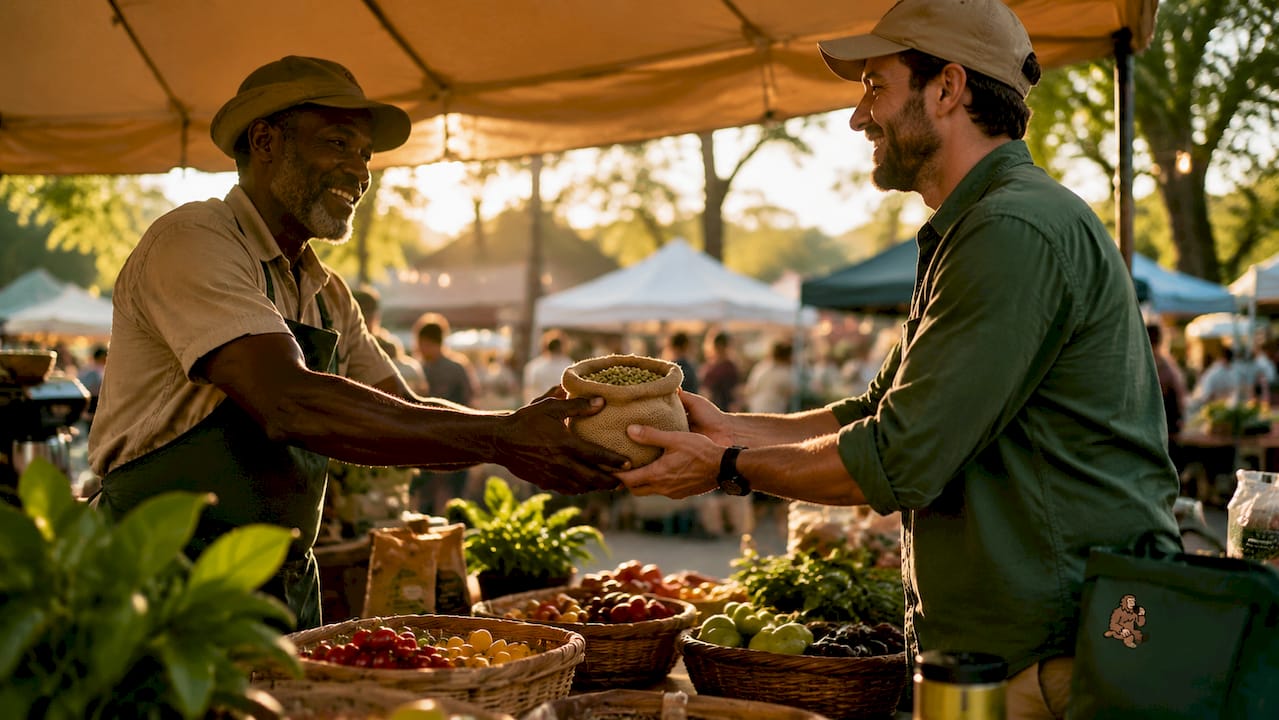
The benefits of buying local coffee brands extend beyond the roaster itself. Local roasters often supply independent cafes, farmers markets, and specialty grocery stores in the same region. That web of relationships creates a self-reinforcing local economy where buying local roasted coffee for your office or home supports an entire ecosystem of small businesses.
Consider what happens when a local roaster thrives:
The importance of local roasters to regional economic health is not abstract. It is the difference between a neighborhood that retains its character and one that hollows out into chain stores.
The short answer is yes, and the reason is freshness. Local roasters roasting to order means beans reach consumers at peak flavor, before the degassing process depletes the aromatic compounds that give specialty coffee its complexity. Mass-produced coffee often sits in warehouses for months before it reaches your cup.
Freshness is only part of the story. Small-batch roasting offers more nuanced flavor profiles through precision temperature control and roast profile experimentation that industrial high-volume operations cannot match. A local roaster can adjust a single batch mid-roast based on the smell and color of the beans. A factory roaster runs thousands of pounds per hour on a fixed program.
Pro Tip: Check the roast date printed on the bag. Specialty coffee tastes best within two to four weeks of roasting. If a bag has no roast date, that is a red flag about freshness.
One common misconception is worth correcting. Coffee beans are rarely grown locally in the continental United States. What makes a roaster “local” is not where the beans are grown. It is where they are roasted, how carefully they are handled, and how quickly they reach you. Understanding small-batch roasting advantages helps you see why the roasting process itself is the quality variable that matters most.
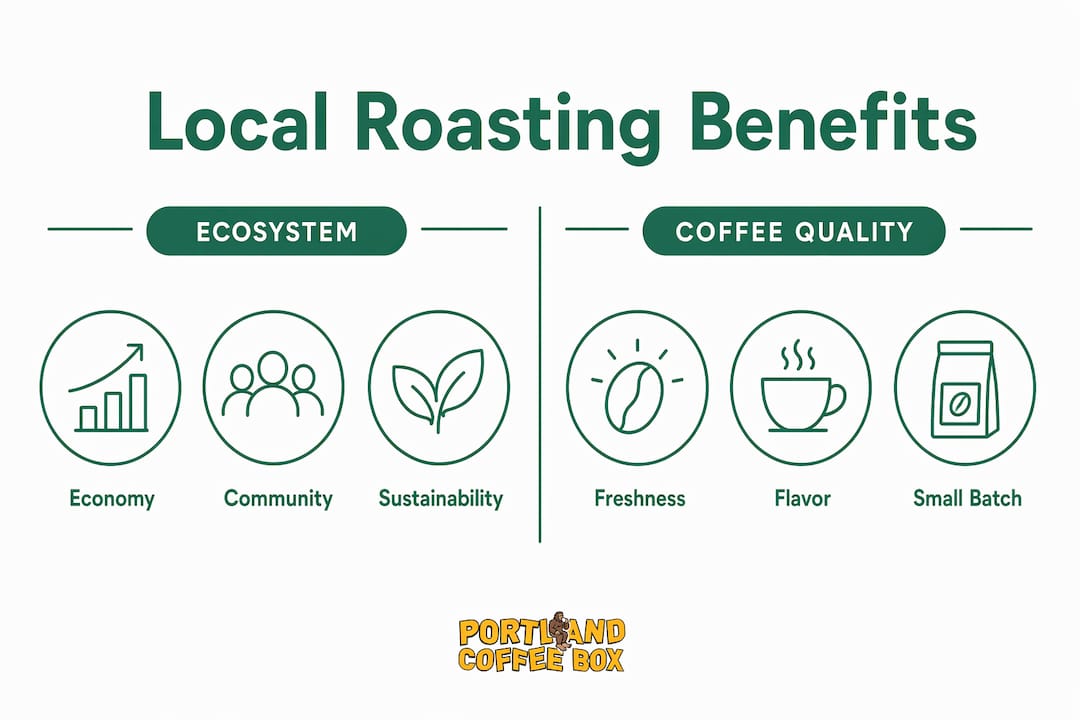
The benefits of local coffee quality come down to these factors:
Local coffee sourcing reduces carbon emissions at every stage of the supply chain. Localized supply chains and smaller roasting setups significantly lower carbon emissions compared to mass-produced coffee with complex global logistics. Fewer miles traveled means less fuel burned and less packaging needed to protect beans over long transit times.
Small-batch production also addresses the waste problem that plagues industrial coffee. Supporting local roasters reduces overproduction because small-batch production aligns more closely with actual consumer demand. Industrial roasters overproduce to fill distribution pipelines, and unsold inventory gets discarded. Local roasters roast what they have orders for.
Pro Tip: Ask your local roaster whether they compost spent coffee grounds or partner with local farms for soil amendment. Many independent roasters run zero-waste programs that large chains never bother with.
The sustainability benefits extend upstream to farming. Local roasters who source directly from farms often pay above commodity prices, which gives farmers the financial stability to invest in shade-grown, organic, or regenerative farming practices. That connection between your morning cup and a healthier farm ecosystem is a direct result of choosing local. Local food sourcing and local coffee sourcing share the same logic: shorter chains mean more accountability at every link.
| Factor | Local roasters | Mass-market roasters |
|---|---|---|
| Transportation distance | Short, regional networks | Global logistics chains |
| Batch size | Small, demand-driven | High-volume, forecast-driven |
| Waste | Minimal overproduction | Significant unsold inventory |
| Farmer relationships | Direct, long-term | Commodity market pricing |
| Carbon footprint | Reduced at multiple stages | Higher across full supply chain |
Local roasters are cultural anchors, not just coffee suppliers. Local roasters serve as cultural hubs hosting events and collaborating with artists, musicians, and artisans in ways that multinational coffee companies never replicate. A neighborhood roastery that hosts a monthly cupping event or features a local painter on its walls is doing something a chain store cannot manufacture.
The relationships local roasters build extend in every direction. They partner with nearby bakeries, supply beans to independent bookshops, and sponsor community fundraisers. Each of those connections strengthens the social fabric of a neighborhood and gives residents a reason to stay local rather than default to a chain.
“Supporting local roasters integrates consumers into a community-focused coffee culture that promotes sustainable practices and shared values. When you buy from an independent roaster, you are not just purchasing coffee. You are participating in a living, breathing community ecosystem.”
The contrast with multinational brands is stark. A global coffee corporation optimizes for consistency and volume. A local roaster optimizes for relationship and craft. That difference shows up in how they treat their staff, their neighbors, and their customers. Exploring small roasters in community life reveals just how deeply these businesses shape the neighborhoods they call home.
Ownership is the defining characteristic of a genuine independent roaster. Ownership control, not size, defines an independent roaster. A locally controlled roaster makes its own decisions about sourcing, pricing, and community involvement, regardless of how large it grows. A franchise or chain-owned operation, even one with a local-sounding name, routes those decisions to a distant parent company.
Here is what to look for when evaluating whether a roaster is genuinely independent:
Pro Tip: Browse a roaster’s indie roaster profiles before you buy. Authentic independent roasters publish their sourcing stories, roast dates, and farmer relationships openly. Vague marketing language about “quality” with no specifics is a warning sign.
Avoid being misled by labels. The word “local” appears on packaging from businesses that roast in a different state and simply distribute locally. The test is always ownership, roasting location, and community accountability.
Supporting local roasters delivers measurable economic, quality, and environmental benefits that mass-market coffee cannot match, making it the most impactful choice for consumers who care about community and craft.
| Point | Details |
|---|---|
| Economic multiplier effect | Local spending keeps approximately 68% of money in the community versus 43% at national chains. |
| Freshness and flavor | Small-batch roasting and roast-to-order practices deliver coffee at peak aroma and complexity. |
| Environmental impact | Shorter supply chains reduce carbon emissions and small-batch production minimizes waste. |
| Community and culture | Independent roasters host events, support local artists, and build neighborhood identity. |
| Identifying true independents | Look for local ownership, named sourcing relationships, and visible small-batch roasting operations. |
I have spent years tasting coffee from both ends of the spectrum, from supermarket bags with no roast date to freshly roasted single-origins from roasters who know the farmer’s name. The difference is not subtle. It is the difference between a flat, stale cup and one that actually makes you stop and pay attention.
What surprised me most was not the flavor gap. It was the community gap. Every local roaster I have visited knows its regulars, supports a cause, and treats its staff like people rather than labor costs. That culture produces better coffee because it produces better decisions at every step of the process.
The environmental argument convinced me completely once I understood the waste math. Industrial roasters overproduce because their distribution model demands it. Local roasters roast what they sell. That single difference eliminates an enormous amount of waste before it ever starts.
My honest advice: stop treating your coffee purchase as a commodity decision. It is a community decision. The roaster you choose either keeps money and culture alive in your neighborhood or sends it somewhere else. Choosing local is one of the simplest ways to align your daily habits with your values around sustainability and community. The cup tastes better too.
— Cody Salane
Portland Coffee Box was built to make supporting local, independent roasters effortless, no matter where you live in the country. Every monthly box features fresh, small-batch beans handpicked from Portland’s top craft roasters, curated for quality, variety, and seasonality.
Each subscription ships free and arrives with beans roasted close to your delivery date, so you get the freshness that local roasting is known for. Portland Coffee Box is also a 1% For the Planet member, donating a portion of every order to environmental causes. Whether you want to sample one bag or stock up with four, there is a subscription size that fits your routine. Claim your free bonus bag and taste the difference that genuine local roasting makes, or explore the four-bag subscription for the full Portland coffee experience delivered monthly.
Local independent businesses retain approximately 68% of spending within the local economy, compared to 43% at national chains. That gap funds local jobs, services, and tax revenues that strengthen your community.
Yes. Local roasters roast to order and print the exact roast date on every bag, ensuring beans reach you at peak flavor. Mass-market coffee often sits in warehouses for months before sale.
Shorter supply chains reduce transportation emissions, and small-batch production minimizes overproduction and waste. Many independent roasters also maintain direct farmer relationships that support sustainable farming practices.
Local ownership and decision-making authority define a true independent roaster. The key markers are a visible roasting operation, named sourcing relationships, small-batch production, and active community involvement.
Yes. Portland Coffee Box ships fresh, small-batch beans from Portland’s top independent roasters nationwide, with free shipping on every order and flexible subscription sizes to match your needs.


