


-
Products
-
About Us
-
Roasters
- Gifts
The signs you need better coffee beans show up before you even take your first sip. Your nose catches a flat, cardboard-like smell when you open the bag. Your brew tastes dull, bitter, or one-dimensional no matter how carefully you dial in your grinder. These are not brewing errors. They are quality signals, and learning to read them is the fastest way to transform what ends up in your cup. The specialty coffee world calls this sensory evaluation, and it starts with three core indicators: aroma, bloom behavior, and flavor complexity.
Aroma is the single fastest quality indicator you have. Fresh beans release rich, complex scents the moment you open the bag, filling the room with notes of caramel, stone fruit, roasted nuts, or dark chocolate depending on the roast profile. Stale beans, by contrast, smell faint, musty, or like cardboard. That difference is not subtle once you know what to look for.
The science behind it is straightforward. Coffee beans contain volatile aromatic oils that degrade when exposed to oxygen. As those oils break down, the complex origin-derived scents disappear and are replaced by flat or rancid notes. Aroma intensity directly correlates with the volatile compounds available for extraction during brewing. Weak aroma means weak flavor, every time.
Signs your beans have lost their aroma:
Pro Tip: Smell your beans immediately after opening the bag, before grinding. If the scent does not hit you within two seconds, the beans are past their prime.
Proper storage slows aroma loss significantly. Keep beans in an airtight container away from light, heat, and moisture. Avoid the freezer unless you are storing a large batch you will not open for weeks, since repeated temperature changes accelerate oxidation.
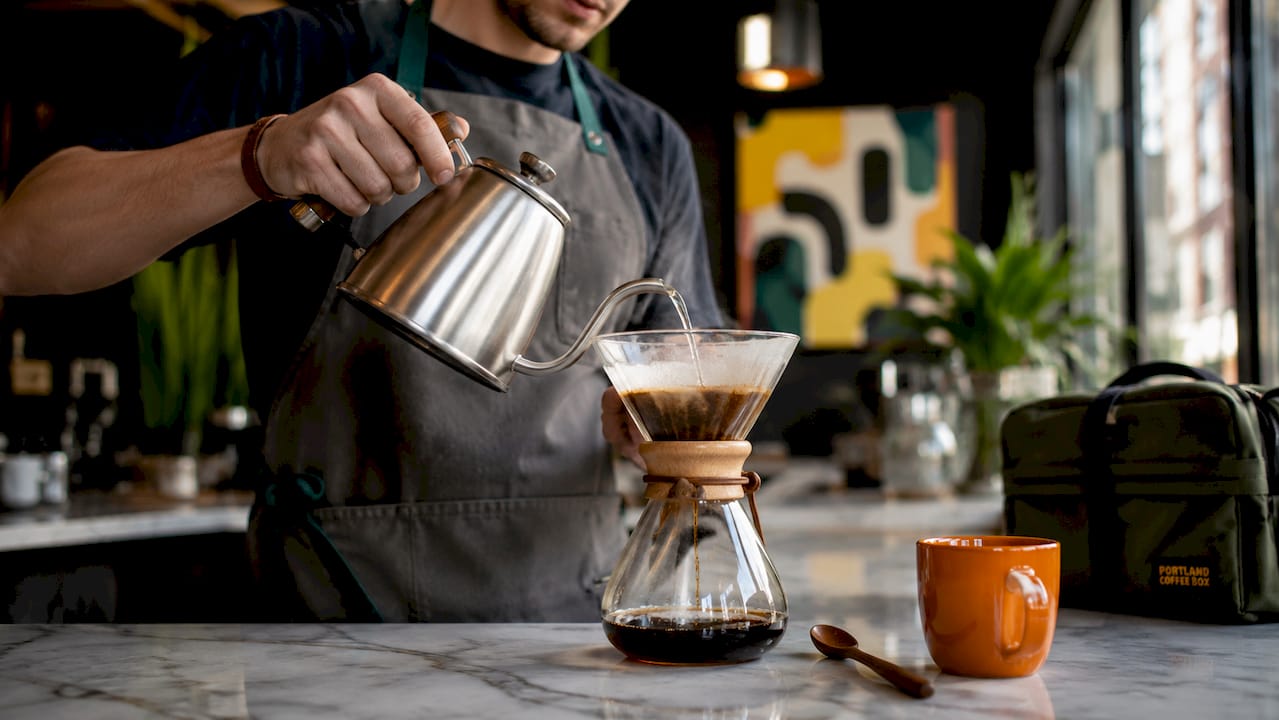
The bloom test is one of the most practical freshness checks a home brewer can run. When you pour hot water over fresh grounds during a pour-over or French press brew, trapped CO2 escapes rapidly and causes the grounds to bubble and rise. Fresh beans emit strong bubbling and expansion during this 30-second bloom phase. Stale beans sit flat, with water draining straight through like sand in a sieve.
The CO2 in fresh beans is not just a visual cue. It carries volatile aromatics and acids that contribute directly to flavor complexity. When those gases are gone, the flavor compounds they would have carried into your cup are gone too.
How to run the bloom test at home:
Pro Tip: If your grounds look completely flat during the bloom, your beans are likely more than three to four weeks past their roast date. Check the bag for a roast date, not a “best by” date.
Peak freshness occurs 7–21 days post-roast, after the initial degassing has stabilized but before significant oxidation sets in. Buying beans with a printed roast date is the clearest way to know where you stand in that window.
High-quality beans produce a clean, balanced cup with detectable sweetness, brightness, and body. Stale or poor-quality beans produce flat, bitter, or sour brews that lack any of that complexity. The difference is not a matter of brewing skill. It is a matter of what the bean had to offer in the first place.
Oxidation is the main culprit behind flavor degradation. As beans age, their natural acids and sugars break down, leaving behind a one-dimensional bitterness. Understanding how coffee processing impacts flavor helps you recognize that origin character and processing method set the ceiling for what a bean can deliver. Stale beans never reach that ceiling.
Flavor red flags that point to low-quality or stale beans:
Many coffee defects, including quakers and roast faults, produce sour, burnt, or musty tastes that no brewing method can correct. Quakers are underdeveloped beans that survive roasting without fully caramelizing. They taste sour and grainy, and they are a reliable sign of inferior sourcing or poor roasting quality.
You can learn a lot about bean quality before you grind a single gram. Fresh, well-roasted beans have a visible sheen from their natural oils, especially on medium and dark roasts. Oxidation causes beans to lose their natural sheen and moisture, leaving them looking dull, dry, and chalky. Brittle beans that crumble under light pressure have lost structural integrity from moisture loss and age.
| Feature | Fresh beans | Stale or low-quality beans |
|---|---|---|
| Surface appearance | Glossy, oily sheen visible | Dull, dry, chalky surface |
| Color consistency | Even, uniform roast color | Uneven, blotchy, or faded |
| Texture | Firm, dense, slight resistance | Brittle, crumbly, or hollow |
| Smell on inspection | Rich, immediate aroma | Faint, musty, or no scent |
| Mold or patches | None | White, green, or gray fuzzy spots |
Visible mold on beans requires discarding the entire batch. White, green, or gray fuzzy patches indicate mold growth, and mycotoxins can spread to beans that look clean. Do not pick out the moldy ones and brew the rest. The risk is not worth it.
Texture also affects grind quality. Brittle beans grind unevenly, producing a mix of fine powder and coarse chunks. That inconsistency leads to uneven extraction, which shows up as a muddy, bitter, or sour cup regardless of your brewing technique.
A quality grinder paired with fresh, dense beans produces a consistent grind with minimal effort. When beans are old, brittle, or poorly processed, they shatter unpredictably. You will notice more fine particles coating the inside of your grinder, more static, and a grind texture that looks uneven even on a consistent setting.
This is a subtle but reliable sign. Dense, fresh beans resist the burrs evenly and produce a uniform particle size. If you have not changed your grinder settings but your extraction time has shifted noticeably, the beans are the most likely variable. Fresh beans from a quality roaster grind predictably every time.
Flavor consistency is a hallmark of well-sourced, properly roasted beans. If your cup tastes noticeably different from one morning to the next without any change in your brewing variables, the beans are inconsistent. This happens with low-grade commercial blends that use variable filler beans to hit a price point, and it happens with beans that have been sitting too long and are oxidizing unevenly.
Specialty-grade beans, sourced from single origins or carefully constructed blends, deliver a predictable flavor profile across the bag. When you find a bag that tastes great on day one and flat by day ten, the roast date is almost certainly the issue. Freshness is not a luxury feature. It is the baseline for consistency.
A roast date is the most basic transparency a quality roaster offers. Without one, you have no way to know whether the beans are three weeks or three months past their peak. “Best by” dates are not a substitute. They tell you when the roaster expects the beans to be acceptable, not when they were at their best.
Buying beans within the 7–21 day post-roast window is the standard practice among specialty roasters. If a bag lacks a roast date entirely, that absence signals a roaster who is not prioritizing freshness. It is one of the clearest indicators that it is time to switch coffee brands.
Pre-ground coffee loses its aromatic compounds faster than whole beans. Grinding just before brewing preserves aroma and flavor that dissipate within minutes of grinding. Pre-ground coffee sold in standard packaging has often been ground days or weeks before you open the bag. By the time it reaches your cup, the most volatile flavor compounds are gone.
Switching to whole beans and grinding fresh is the single most impactful habit change for better coffee quality. You do not need an expensive grinder to see the difference. Even a basic burr grinder produces a noticeably fresher cup compared to pre-ground. Understanding what freshly roasted coffee means for your cup makes this habit shift feel less like an inconvenience and more like a natural upgrade.
Specialty coffee is graded and described using a flavor wheel developed by the Specialty Coffee Association. High-quality beans from distinct origins carry identifiable notes: Ethiopian naturals taste of blueberry and jasmine, Colombian washed beans often show red apple and caramel. If every bag you buy tastes like generic “coffee” with no distinguishable character, the beans are either stale, over-roasted to mask defects, or sourced from commodity-grade lots.
Learning to recognize coffee flavor profiles is a skill that builds quickly with practice. Start by buying single-origin beans from a roaster who prints tasting notes on the bag. Then brew them fresh and see how closely your palate matches the description. That exercise alone will recalibrate your expectations for what good coffee actually tastes like.
The clearest signs you need better coffee beans are sensory: weak aroma, flat bloom, dull flavor, and brittle texture all point to beans that have aged past their peak or were never high quality to begin with.
| Point | Details |
|---|---|
| Aroma is the first test | Fresh beans smell rich and complex; stale beans smell faint, musty, or like cardboard. |
| Bloom behavior reveals freshness | Strong bubbling during the bloom means active CO2 and fresh volatile compounds. |
| Flavor complexity is non-negotiable | Quality beans produce balanced sweetness, acidity, and body; stale beans taste flat or bitter. |
| Roast date matters | Buy beans within 7–21 days post-roast for peak flavor and aroma. |
| Whole beans grind fresher | Grinding just before brewing preserves aromatic compounds that pre-ground coffee loses quickly. |
A perspective from Cody Salane
The advice I give most often is the simplest: smell your beans before you brew. Not after grinding, not mid-pour. The moment you open the bag. If that first hit of aroma does not stop you in your tracks, the beans are already working against you.
I spent years adjusting grind size, water temperature, and brew ratios trying to fix cups that were never going to taste good. The beans were the problem every time. Once I started buying from small-batch local roasters with printed roast dates and switched to grinding whole beans fresh each morning, the improvement was immediate and obvious.
The other habit that changed everything was paying attention to the bloom. A flat bloom is not a minor detail. It is the bean telling you it has nothing left to give. Trust that signal.
Storage matters more than most people realize. An airtight container at room temperature, away from direct sunlight, extends freshness meaningfully. The freezer is a last resort, not a routine. And buying smaller quantities more frequently beats buying in bulk every time.
— Cody Salane
Portland Coffee Box sources small-batch beans from Portland’s top craft roasters and ships them fresh to your door every month. Each box is curated for quality, variety, and seasonality, with light, medium, and dark roasts available across flexible subscription sizes of one, two, three, or four bags. Free shipping is included on every order.
Right now, new subscribers can claim a free bonus bag of coffee with their first order. If you want to start with a solid everyday selection, the three-bag coffee box gives you real variety from Portland’s craft roasting community, delivered fresh with roast dates you can actually trust. Portland Coffee Box is also a 1% For the Planet member, so every subscription supports environmental causes alongside your morning ritual.
Stale beans smell faint, musty, or like cardboard when you open the bag, and they produce a flat bloom with no bubbling during brewing. Flavor will be dull, bitter, or sour with no distinct origin notes.
Peak freshness falls between 7 and 21 days post-roast, after initial degassing stabilizes but before significant oxidation sets in. Always look for a printed roast date on the bag.
No brewing method fully compensates for stale or low-quality beans. Adjusting grind size or water temperature can reduce harshness slightly, but the missing aromatic compounds cannot be restored once they are gone.
Inconsistent flavor across a bag usually points to uneven bean quality, oxidation progressing through the bag, or commodity-grade beans blended from variable sources. Specialty-grade beans from a quality roaster deliver a consistent profile throughout the bag.
Pre-ground coffee loses volatile flavor compounds within minutes of grinding, so it is almost always less fresh than whole beans ground immediately before brewing. Grinding just before brewing is the most reliable way to preserve aroma and flavor.


