


-
Products
-
About Us
-
Roasters
- Gifts
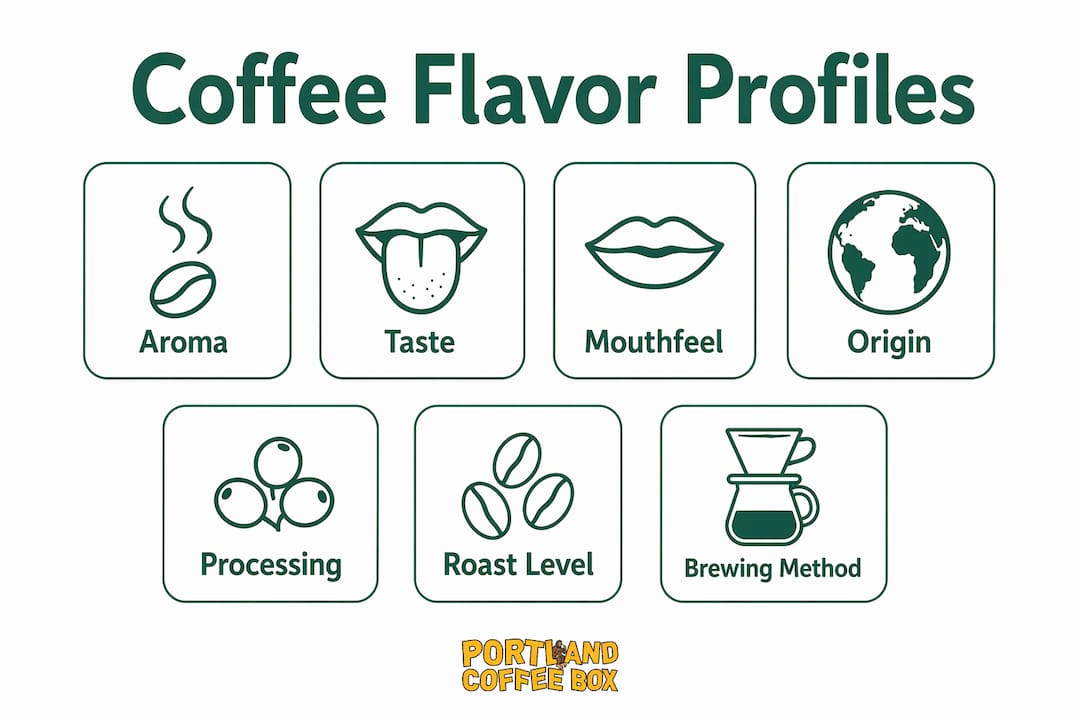
A coffee flavor profile is defined as the complete sensory impression of a coffee, combining its aroma, taste, and mouthfeel into a single, identifiable character. The Specialty Coffee Association (SCA) formalized this concept through its Coffee Taster’s Flavor Wheel, which organizes flavor perception into nine major categories and serves as the global industry standard. Every cup you drink carries a flavor profile shaped by where the beans were grown, how they were processed, how they were roasted, and how you brewed them. Understanding what is coffee flavor profile means understanding the full story behind every sip.
A coffee flavor profile is the sum of all sensory signals your brain receives when you drink coffee. Those signals come from three distinct dimensions: aroma (what you smell), taste (what your tongue detects), and mouthfeel (the physical texture and weight of the liquid). Together, these dimensions form what coffee professionals call the cup’s character.
The SCA developed its Coffee Taster’s Flavor Wheel to give tasters a shared vocabulary for describing these dimensions. The wheel organizes flavor perception from broad outer categories down to precise inner notes. A taster might start at “Fruity” on the outer ring, then narrow inward to “Berry,” and finally land on “Blueberry” as the specific descriptor.
The nine major categories on the SCA wheel are:
The wheel’s concentric organization trains tasters to move from general to specific. This structure is what makes the wheel so useful. You do not need to identify “lemon verbena” on your first try. Recognizing “citrus” is already a meaningful and accurate observation.
Coffee flavor results from a combination of varietal, origin, processing, roasting, and brewing. No single factor controls the outcome. Each one adds a layer to the final profile.
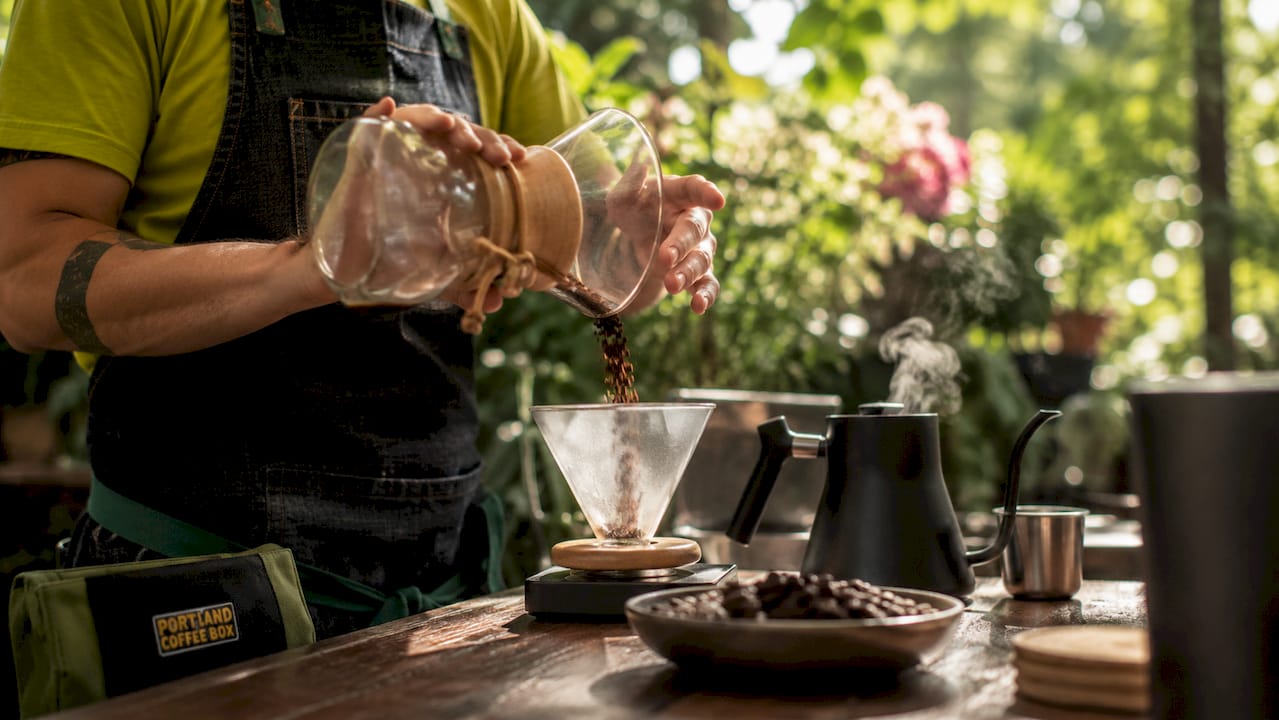
Where a coffee grows shapes its baseline flavor. Ethiopian coffees are known for bright, floral, and fruity notes, often with jasmine and blueberry. Brazilian coffees tend toward nutty, chocolatey, and low-acid profiles. Colombian coffees frequently land in the middle, with caramel sweetness and mild citrus. These patterns come from soil composition, altitude, rainfall, and the specific coffee varietal planted.
How a coffee cherry is processed after harvest dramatically changes the bean’s sweetness and body. Washed (or wet) processing strips the fruit away before drying, producing cleaner, brighter cups with more pronounced acidity. Natural (or dry) processing leaves the fruit on the bean during drying, which adds sweetness, body, and fruity complexity. Honey processing falls between the two, leaving some fruit mucilage on the bean for a balanced result. The Portland Coffee Box guide to coffee processing explains how each method translates directly into what you taste.
Roasting does not create flavor but reveals and balances the flavors already present from origin and processing. Light roasts preserve the bean’s original character, keeping floral and fruity notes intact. Medium roasts develop sweetness and body while softening acidity. Dark roasts shift the profile toward roasted, bitter, and smoky notes, which can mask the bean’s origin character entirely. Understanding small-batch roasting helps you see why roast precision matters so much in specialty coffee.
Brewing method changes how flavors are extracted and perceived. Pour-over brewing highlights clarity and acidity, making it ideal for light roasts with complex origin notes. French press produces a heavier body with more oils in the cup, which rounds out bitterness. Espresso concentrates all flavor dimensions, amplifying both sweetness and intensity. Cold brew extracts slowly at low temperature, producing a smooth, low-acid cup with muted brightness.
Pro Tip: Try the same bag of coffee brewed as a pour-over and as a French press on the same morning. The contrast will teach you more about body and acidity than any article can.
Experts recommend a five-step process for identifying coffee flavors at home to build a reliable personal flavor library. The steps are straightforward, and you do not need professional equipment to follow them.
Flavor perception is largely driven by smell, accounting for about 80% of what you perceive as flavor. That number explains why step three matters so much. The retronasal aroma pathway, from the back of your mouth through your nasal cavity, is where most flavor recognition actually happens.
One common mistake is confusing acidity with sourness. Acidity in specialty coffee is perceived as brightness or liveliness, similar to the clean tartness of a citrus fruit. Sourness, by contrast, usually signals under-extraction or a brewing problem. Recognizing the difference changes how you evaluate every cup.
Pro Tip: Keep a simple tasting journal. Write down three words after each cup: one for aroma, one for taste, one for finish. After a month, you will notice patterns that sharpen your palate faster than any formal training.
Tasting notes are directional pointers that indicate flavor families rather than literal ingredients. When a roaster writes “blueberry and dark chocolate” on a bag, they are not adding those ingredients. They are describing the flavor direction your palate will likely detect.
Roasters identify these notes under controlled cupping conditions, tasting coffee at room temperature with standardized water and grind settings. Home brewing often produces different flavor perception than these controlled environments because brewing variables and temperature shift which flavors dominate. This is why you might taste “caramel” where the bag says “honey.” Both are in the sweet family, and both are correct reads.
Here is how common flavor families map to real cup experiences:
| Flavor family | What it feels like in the cup | Common origins |
|---|---|---|
| Fruity | Bright, juicy, sometimes tangy | Ethiopia, Kenya, Burundi |
| Floral | Delicate, perfumed, aromatic | Ethiopia, Yemen, Panama |
| Nutty/Cocoa | Warm, round, comforting | Brazil, Colombia, Peru |
| Sweet | Smooth, caramel-like, gentle | Guatemala, Honduras, Costa Rica |
| Roasted | Bold, bitter, smoky | Dark roasts across all origins |
Identifying the broad family is more important than detecting the exact nuance. Knowing a coffee is “fruity and bright” tells you everything you need to decide whether you will love it. Pinpointing “lychee versus passion fruit” is a skill that develops over years, not sessions.
The Portland Coffee Box roaster profiles show how different craft roasters describe their coffees, which gives you a real-world reference for how tasting notes translate across origins and roast levels.
A coffee flavor profile is the combined sensory impression of aroma, taste, and mouthfeel, shaped by origin, processing, roast level, and brewing method, with smell accounting for 80% of what you actually perceive.
| Point | Details |
|---|---|
| Flavor profile definition | Aroma, taste, and mouthfeel combine to form a coffee’s complete sensory character. |
| SCA Flavor Wheel | Nine major categories organize flavors from broad families down to precise tasting notes. |
| Origin drives baseline flavor | Ethiopian coffees trend fruity and floral; Brazilian coffees trend nutty and chocolatey. |
| Smell dominates perception | About 80% of flavor perception comes from retronasal aroma, not the tongue. |
| Tasting notes are directional | Notes point to flavor families, not literal ingredients; broad recognition matters more than exact identification. |
Most coffee enthusiasts I know go through the same phase. They read a bag that says “jasmine, peach, and brown sugar,” then spend the entire cup hunting for jasmine. They never find it, feel like they are missing something, and wonder if specialty coffee is just marketing.
The truth is that most enthusiasts feel this way, and roasters know it. Tasting notes are written under ideal cupping conditions that most home setups cannot replicate. Chasing exact notes is the wrong goal.
What actually matters is balance, mouthfeel, and whether the aroma aligns with the flavor. Experts emphasize evaluating these three markers as the real indicators of coffee quality. A cup that smells like fruit and tastes like fruit is a well-made coffee, regardless of whether you can name the specific fruit.
My advice is to start with the broad question: is this coffee bright or heavy, sweet or bitter, clean or complex? Those three questions will tell you more about a coffee’s character than any attempt to isolate a single note. The pleasure of coffee tasting comes from building your own internal reference library over time, not from passing a test.
— Cody Salane
Portland has one of the most vibrant specialty coffee scenes in the United States, and the flavor profiles coming out of its craft roasters reflect that depth and passion.
Portland Coffee Box curates fresh, small-batch beans from Portland’s top local roasters and ships them directly to your door every month. Each box is selected for quality, variety, and seasonality, so you get to experience a genuine range of flavor profiles across light, medium, and dark roasts. Whether you are building your tasting vocabulary or simply want café-quality beans at home, the three-bag subscription gives you enough variety to taste the difference between origins and roast levels side by side. Free shipping is included on every order, and Portland Coffee Box is a proud 1% For the Planet member.
A coffee flavor profile is the complete sensory character of a coffee, defined by its aroma, taste, and mouthfeel. It is shaped by origin, processing method, roast level, and brewing technique.
The SCA Coffee Taster’s Flavor Wheel defines nine major flavor categories: Fruity, Floral, Nutty/Cocoa, Spices, Sweet, Sour/Fermented, Green/Vegetative, Roasted, and Other.
Follow a five-step process: smell the dry grounds, smell the wet aroma, slurp to aerate, evaluate body and acidity, then note the finish. Keeping a short tasting journal accelerates your palate development.
Roasters write tasting notes under controlled cupping conditions at room temperature. Home brewing variables like water temperature, grind size, and extraction time shift which flavors dominate, producing a different but equally valid experience.
Acidity in specialty coffee is a positive quality that adds brightness and liveliness, similar to citrus. Sourness is a negative quality that usually signals under-extraction or a brewing problem.


 formalized this concept through ...&media=//portlandcoffeebox.com/cdn/shop/articles/1782640981064_Woman-tasting-and-smelling-coffee-at-home_600x.jpg?v=1782901219)