


-
Products
-
About Us
-
Roasters
-
Gifts
Ethical coffee matters because the choices you make at the point of purchase directly affect farmers’ livelihoods, labor conditions, and the ecosystems where coffee grows. The short version: every cup connects you to a global supply chain where fair pay, safe working conditions, and land stewardship either happen or they don’t, and your buying power helps determine which.
The top reasons ethical sourcing matters:
The rest of this article unpacks each of those reasons with evidence, explains what certifications actually guarantee (and where they fall short), and gives you a practical checklist for buying with confidence.
“Ethically sourced” combines three things: fair economic terms for producers, safe and dignified labor conditions, and farming practices that protect ecosystems. No single label captures all three perfectly, which is why the term is best understood as a spectrum rather than a binary pass/fail.
In practice, genuine ethical sourcing looks like traceability to a named farm or cooperative, a published price premium above the commodity floor, shade-grown or agroforestry production methods, and a documented commitment to no child or forced labor. Voluntary sustainability standards now cover a substantial and growing share of global production, reflecting real industry momentum. But coverage does not equal depth: a coffee can carry a certification and still fall short on traceability or living income.
The strongest signal is transparency. When a roaster publishes what they paid, names the farm, and describes the farming system, you can evaluate the claim independently. That’s the standard worth holding.
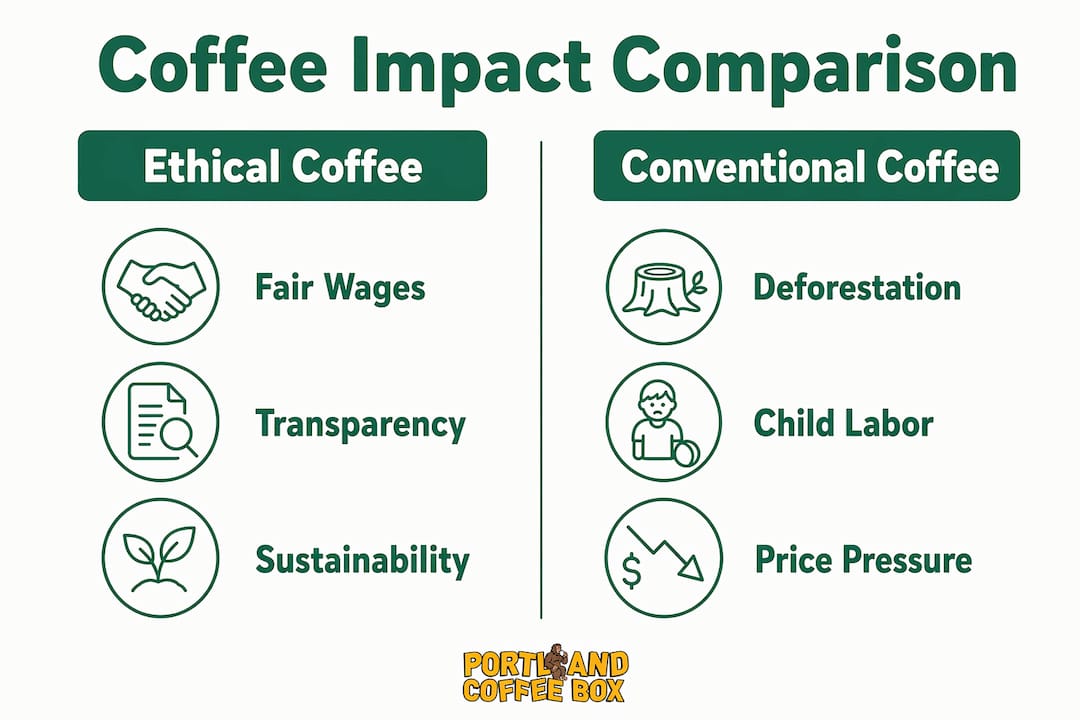
The structural reality of coffee pricing is stark. The 2026 Coffee Barometer finds that roughly a notable share of the retail cost of coffee is effectively subsidized by farmers’ families through unpaid labor, while wealth accumulates at the consumption end of the chain through format premiums, shareholder distributions, and tax structures that route profits through low-tax jurisdictions. Even when commodity prices spike, thin margins, rising input costs, and climate vulnerability leave producers’ livelihoods unresolved.
The 2026 Coffee Barometer: “Sustainability cannot be built on permanently cheap coffee.” The report calls for a fundamental redesign of procurement models so that value and risk are genuinely shared with producers, not just managed through farm-level interventions.
Child labor is a persistent consequence of that pricing gap. When farm income falls below the cost of living, families pull children into the harvest. The U.S. Department of Labor’s list of goods produced by child labor includes coffee from multiple producing countries, a reminder that the problem is documented and ongoing, not theoretical.
Gender inequity compounds the picture. Women perform roughly 70% of farm labor but own only 20–30% of farms and earn about 40% less revenue than their male counterparts. Closing that gap matters practically: farms with better gender equity tend to show improved yields and quality outcomes, because women who control income reinvest it in farm inputs and household nutrition.
Cooperatives and direct-trade relationships are the governance structures that most reliably shift this dynamic. They give producers collective bargaining power, access to training, and longer-term price agreements that allow real planning.
Pro Tip: When evaluating a roaster’s sourcing claims, look for named cooperatives or farms rather than just country of origin. A roaster who can tell you the co-op’s name and the price premium paid is operating at a different level of accountability than one who lists only “Ethiopia, washed.”
Coffee is identified as a significant driver of deforestation, and the relationship between price and land clearing is counterintuitive: when prices rise, some farmers clear more forest to plant more coffee, accelerating the problem rather than solving it. Conventional sun-grown production also relies heavily on synthetic inputs, contributing to pesticide runoff, soil degradation, and loss of the natural pest-control services that healthy forest canopy provides.
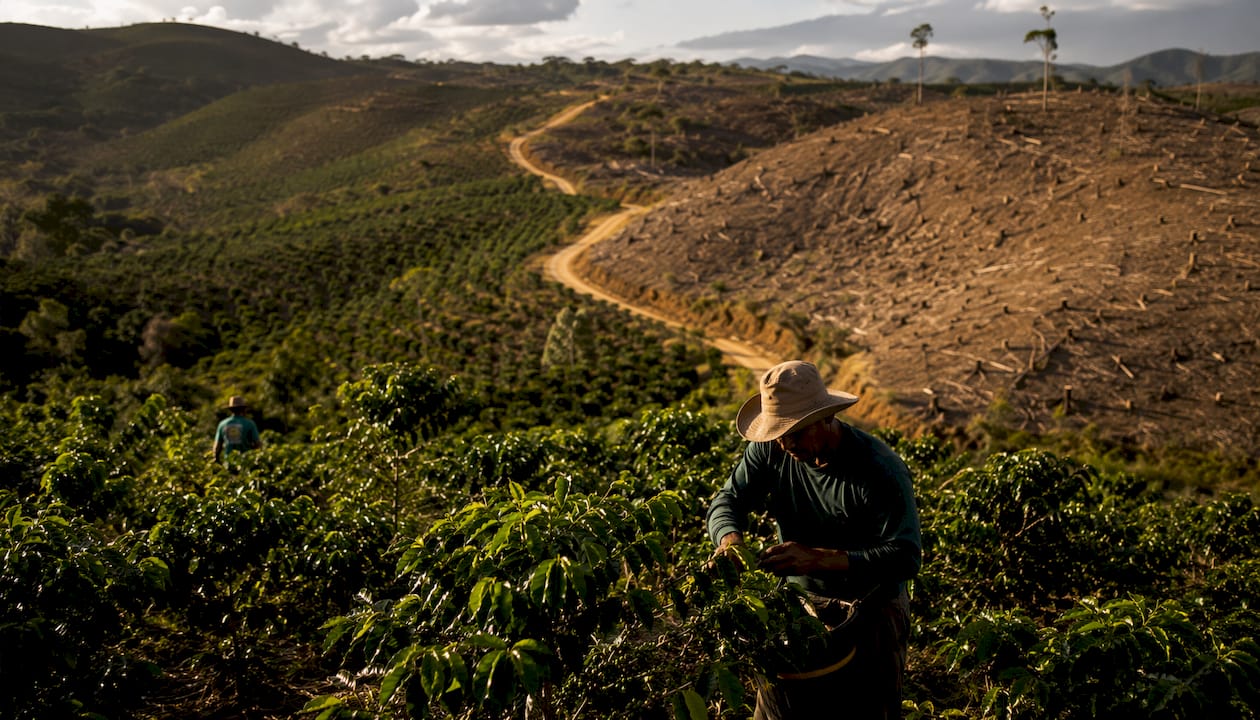
The alternative is well-documented. Shade-grown coffee, grown under a diverse forest canopy using agroforestry principles, can support substantially more biodiversity than conventional sun-grown production. That multiplier reflects real ecosystem services: carbon storage, water retention, natural pest control, and habitat for migratory birds and pollinators.
Key environmental benefits of agroforestry and regenerative practices:
Climate change is already shrinking the land area suitable for arabica production. That makes the long-term case for regenerative sourcing models not just ethical but practical: a supply chain built on exploited land and underpaid farmers is a fragile one.
Etelle Higonnet of Coffee Watch puts it plainly: regenerative agroforestry is “great for forests and great for farmers,” and the current cheap-coffee consumption model ties directly to both child labor and environmental harm.
Certifications provide a useful baseline, but no single label guarantees freedom from deforestation, child labor, poverty wages, or union-busting. Research on sustainability initiatives shows mixed evidence on whether global certification schemes deliver consistent social and environmental outcomes, and notes that local, producer-led initiatives often produce more authentic results because they address place-specific risks.
Here’s what the major labels primarily cover:
“No single certification guarantees freedom from issues such as deforestation, child labor, union-busting, and poverty wages.” — Coffee Watch
The 2026 Coffee Barometer flags a troubling trend: “greenhushing,” where companies quietly reduce public reporting to avoid scrutiny, substituting outcome data with process descriptions. Of fifteen major companies assessed, not one discloses its pricing structures, contract durations, or premiums paid above the commodity price. That opacity is itself a red flag.
The practical answer is to combine signals: Bird Friendly plus a published living-wage commitment, or organic plus named-farm traceability, tells a more complete story than any single label alone.
Ethical coffee typically costs more, and that premium has a real destination: living income support, processing infrastructure investment, traceability systems, and the longer-term relationships that allow farmers to plan. When a roaster pays a meaningful premium above the commodity floor, it enables the labor-intensive quality practices, careful ripe picking, precise drying, and attentive processing, that produce better-tasting coffee. Ethical sourcing and cup quality are not in tension; they tend to move together.
| Consumer action | Impact on farmers | Environmental impact | Traceability | Price/cost | Practicality to verify |
|---|---|---|---|---|---|
| Choose certified Fair Trade | Minimum price floor, community funds | Some environmental standards | Partial | Moderate premium | Easy: look for seal |
| Buy shade-grown / Bird Friendly | Supports farm income diversification | High: biodiversity, carbon, water | Moderate | Moderate–high premium | Easy: Bird Friendly seal |
| Buy from traceable lots (named farm/co-op) | Direct accountability for pay and conditions | Depends on farming system | High | Variable | Medium: ask roaster |
| Support roasters with long-term sourcing relationships | Stable income, planning horizon for farmers | Encourages investment in land health | High | Often specialty pricing | Medium: check roaster site |
| Avoid mass commodity brands with no disclosure | Minimal to none | Unknown | None | Lowest price | Easy: no seal, no story |
Farm-to-cup traceability is the single most powerful lever a consumer has, because it makes every other claim verifiable.
Translating values into a purchase decision comes down to five questions you can ask before you buy:
Coffee Watch’s buying guidance anchors these five points in deforestation-free sourcing, living income commitments, and reduced pesticide use as the core criteria for genuinely ethical purchasing.
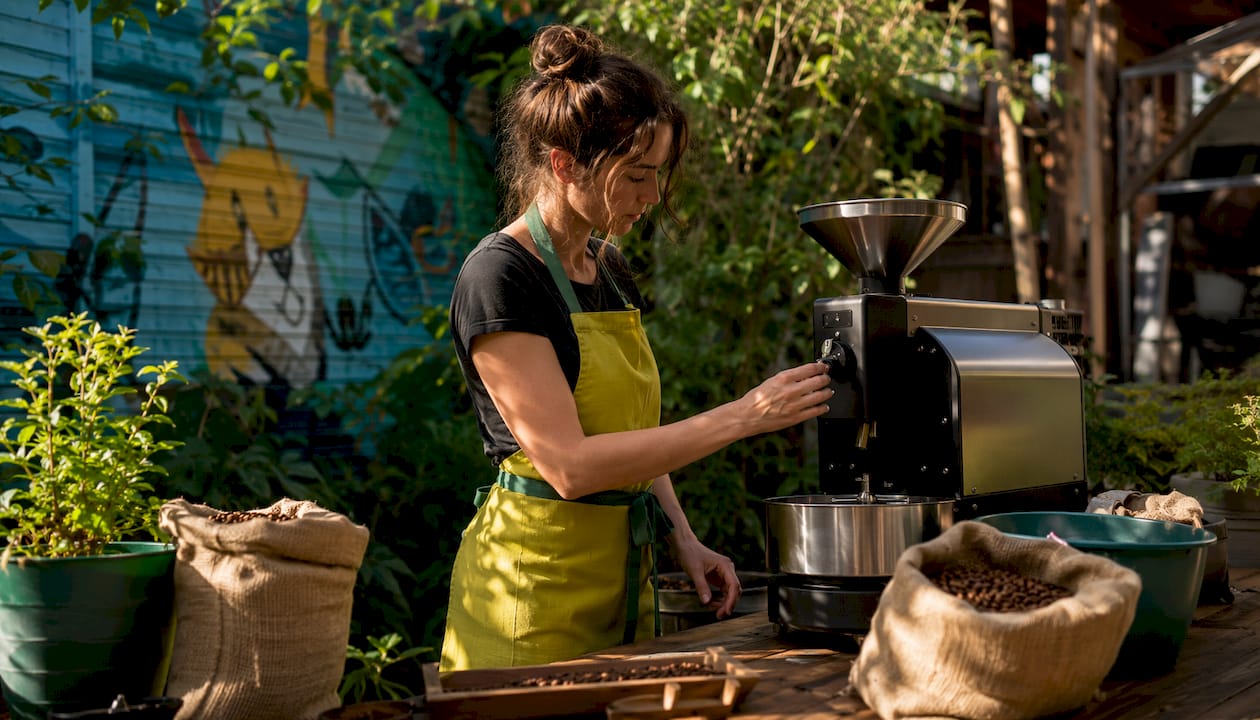
Portland Coffee Box applies these principles by curating exclusively from Portland’s small-batch craft roasters, who are evaluated on sourcing transparency and community relationships. You can browse roaster profiles to see how individual roasters approach origin sourcing and producer relationships. Supporting indie roasters with transparent sourcing is one of the most direct ways a subscription can shift purchasing leverage toward better outcomes at origin.
Ethical coffee matters because it connects every purchase to real outcomes for farmers, ecosystems, and long-term supply chain resilience — and conscious buyers have more leverage than they realize.
| Point | Details |
|---|---|
| Structural pricing harms farmers | 10% of retail coffee cost is subsidized by farmers’ unpaid labor, per the 2026 Coffee Barometer. |
| Shade-grown multiplies biodiversity | Shade-grown coffee supports roughly 19 times more biodiversity than conventional sun-grown production. |
| No single label is enough | Combining signals (e.g., Bird Friendly plus living-wage commitment) gives a more complete picture than any one certification. |
| Traceability is the strongest signal | Named-farm or co-op sourcing with published pricing allows independent verification of ethical claims. |
| Portland Coffee Box | Curates from Portland’s small-batch roasters evaluated on sourcing transparency; subscriptions available in one, two, three, or four bags. |
There’s a version of the ethical coffee conversation that stays comfortably abstract: certifications, carbon footprints, supply chain theory. But the 2026 Coffee Barometer makes it concrete in a way that’s hard to set aside. Ten percent of what you pay for a bag of coffee is effectively a subsidy extracted from farming families through unpaid labor. That’s not a systemic abstraction; it’s a specific transfer of value away from the people doing the hardest work.
What strikes me most about the research is how consistently the evidence points away from single-label solutions and toward relationships. The roasters who know their farmers by name, who publish what they paid, who return to the same cooperative year after year — those are the ones actually moving the needle. Certifications matter as a floor, but the ceiling is set by the roaster’s willingness to be accountable.
Portland Coffee Box’s focus on Portland’s craft roaster community reflects that logic. Small-batch roasters operating at the local level tend to have shorter, more visible supply chains. They can’t hide behind corporate sustainability reports. Their sourcing is either transparent or it isn’t, and their customers are close enough to ask. That accountability is worth something, and it’s worth paying a little more for.
Putting these values into practice is easier than it sounds. Portland Coffee Box curates fresh, small-batch beans from Portland’s top craft roasters, each selected for quality, variety, and sourcing integrity. Every monthly box supports local roasters who maintain direct, transparent relationships with producers, the kind of accountability the research consistently points to as the most meaningful lever a consumer has.
Choose the subscription size that fits your household: the One Bag Coffee Box is a low-commitment entry point, the Two Bag Coffee Box suits most households, and the Three Bag Coffee Box or Four Bag Coffee Box keeps a serious coffee household or small office stocked with variety. New subscribers can also grab a free bonus bag of coffee to start. Portland Coffee Box is a 1% For the Planet member, donating a portion of every subscription to environmental causes. Start your subscription and put your coffee habit to work for the people and places behind every cup.


