


-
Products
-
About Us
-
Roasters
-
Gifts
The local coffee ecosystem is defined as the integrated network of growers, importers, roasters, cafés, and consumers that together shape how coffee moves from a farm to your cup. Understanding this network means seeing your morning coffee as the product of dozens of relationships, decisions, and values. 95% of the world’s coffee is grown by smallholder farmers who face real market and climate risks every season. That single fact reframes every cup you drink as something deeply personal and political. Portland Coffee Box exists precisely because these connections matter, and because great coffee tells a story worth knowing.
The local coffee ecosystem explained at its most fundamental level is a chain of five interdependent actors: smallholder farmers, importers, roasters, cafés, and consumers. Remove any one of them, and the whole system weakens. Each player carries a distinct responsibility that shapes the flavor, ethics, and economics of what ends up in your cup.
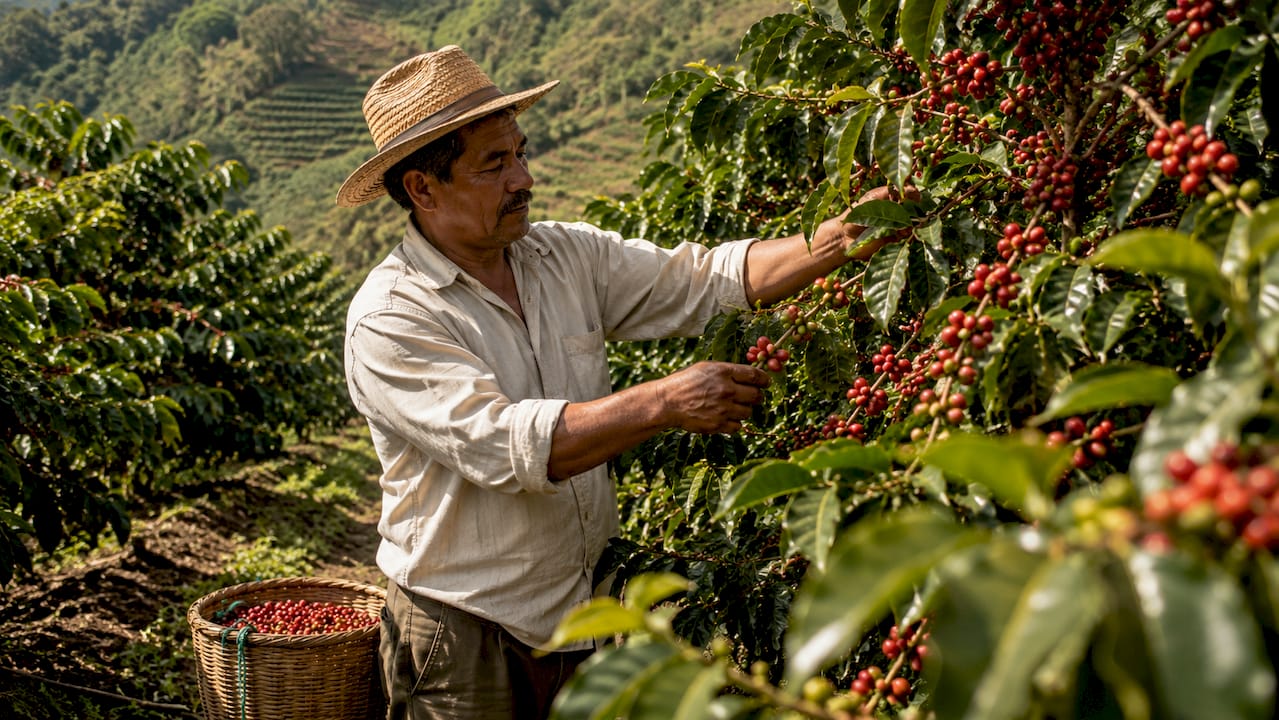
Smallholder farmers are the foundation of the entire coffee supply chain. They grow coffee on small plots of land, often under challenging conditions, using knowledge passed down through generations. These farmers make daily decisions about harvesting, processing, and soil care that directly determine the quality and character of the bean. Local coffee farming practices vary widely by region, altitude, and tradition, which is why two coffees from different farms in the same country can taste completely different.
Importers act as key coordinators linking producers with roasters, holding critical quality, origin, and pricing information. They are often the locus of transparency and ethics in specialty coffee supply chains. A skilled importer does not just move bags of green coffee. They verify farm practices, negotiate fair prices, and communicate origin stories to roasters who then pass that narrative to you.
Roasters translate raw green coffee into the aromatic, flavorful beans you buy. Small-batch roasting prioritizes traceability and quality over volume, allowing roasters to honor the farmer’s work rather than mask it. The roaster’s craft is where science and sensory artistry meet. Their choices about heat, time, and technique determine whether a bean’s natural sweetness, acidity, or body shines through.
Local cafés are community hubs, not just retail points. They host conversations, introduce customers to new origins, and create the social rituals that give coffee its cultural weight. Small roasters in community life play a role that goes far beyond selling bags of beans. They build neighborhood identity and keep coffee culture grounded in place.
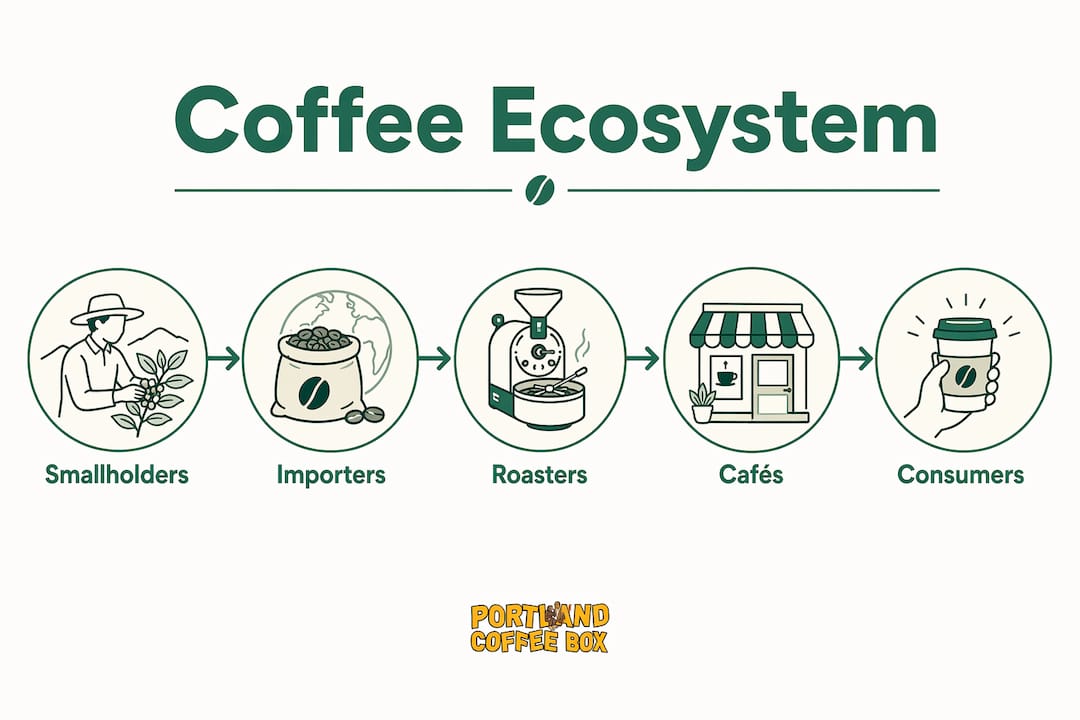
| Actor | Primary function | Community impact |
|---|---|---|
| Smallholder farmer | Grows and harvests coffee | Sustains rural livelihoods and land stewardship |
| Importer | Coordinates quality and traceability | Connects global producers to local markets |
| Roaster | Develops flavor and origin narrative | Anchors local craft and economic value |
| Café | Serves and educates consumers | Creates social space and neighborhood cohesion |
| Consumer | Drives demand and purchasing choices | Shapes market incentives through buying behavior |
Pro Tip: Ask your local café or roaster where their green coffee comes from. A roaster who can name the farm and the importer is one who takes the full ecosystem seriously.
Sustainability is not a marketing label in the coffee world. It is a structural requirement for the ecosystem’s survival. The coffee industry invested $200 million in 2026 specifically targeting farmer livelihoods and regenerative practices. That scale of investment reflects how serious the threat is, not how solved the problem already is.
Community coffee sustainability rests on three pillars that must work together:
Smallholder farmers face a compounding set of pressures. Climate change shifts rainfall patterns and introduces new pests. Market volatility can wipe out a season’s income overnight. Successful coffee ecosystems balance immediate economic pressures on farmers with long-term ecological and social sustainability. That balance is hard to achieve and easy to break.
“Sustainability requires balancing economic equity for farmers with ecological restoration. It is a multi-year process, not a single-season decision. The ecosystems that persist are the ones where every actor, from importer to consumer, treats that balance as a shared responsibility.”
Pro Tip: Choose coffee with verifiable farm-level traceability. When a roaster lists the farm name, the region, and the processing method, that transparency signals a supply chain built on real relationships, not just certifications.
Coffee culture in communities has shifted decisively from convenience to experience. The best local coffee scenes today are not just places to grab a quick cup. They are spaces where people learn, connect, and celebrate craft. Austin was recognized as the best US city for coffee in 2026, with community-focused cafés embedded in residential neighborhoods rather than concentrated in commercial districts. That model reflects a broader truth: the most vibrant coffee ecosystems grow where people actually live.
Community coffee scenes build their identity through shared rituals and events:
Cultural complexity adds richness to local coffee ecosystems. Traditional regional coffee cultures like Malaysia’s kopitiam style persist alongside new specialty coffee experiences rather than being replaced by them. This coexistence is a sign of a healthy ecosystem, not a contradiction. It means the community has room for both heritage and innovation.
Consumer demand is shifting from simply buying coffee to seeking education, experience, and genuine connection within the ecosystem. Cafés that respond to this shift become anchors of neighborhood cohesion. They give regulars a reason to return that goes beyond the quality of the espresso.
Pro Tip: Attend at least one public cupping event at a local roaster. The experience of tasting five coffees side by side, with a roaster explaining each one, changes how you understand every cup you drink afterward.
The economic impact of a thriving local coffee ecosystem is felt at every level, from the farm to the neighborhood. Premium specialty coffee markets price a single cup between $2.20 and $2.70 USD, where experience and origin storytelling are what justify that price. That pricing model only works when the full story, from farm to roaster to barista, is credible and compelling.
Relational contracts between roasters and farmers promote resilience and shared benefits over transactional buying. This matters economically because it keeps value inside the supply chain rather than extracting it at every stage. When a roaster pays a farmer a premium based on a multi-year relationship, that premium stays in the farming community, funds better practices, and produces better coffee the following season.
Local roasters and cafés also keep profits circulating within communities. A locally owned café that sources from a regional roaster who works with a domestic importer creates a chain of economic activity that benefits the neighborhood directly. That is how coffee impacts local economy in a way that a global chain cannot replicate.
| Economic factor | Effect on local ecosystem |
|---|---|
| Specialty pricing ($2.20–$2.70 per cup) | Supports premium wages and quality investment at every stage |
| Relational sourcing contracts | Builds farmer income stability and long-term quality |
| Local roaster spending | Keeps revenue circulating within the community |
| Consumer traceability demand | Incentivizes transparency and fair practices upstream |
The benefits of local coffee sourcing extend beyond economics. Consumers who understand where their coffee comes from make more intentional purchases. They support indie roasters worth supporting and push the market toward higher standards for everyone.
A thriving local coffee ecosystem requires smallholder farmers, transparent importers, craft roasters, community cafés, and informed consumers to work together with shared values and long-term commitment.
| Point | Details |
|---|---|
| Smallholders power the supply chain | 95% of coffee is grown by smallholder farmers who need stable relationships to thrive. |
| Importers hold the transparency layer | Importers coordinate quality and origin data, making ethical sourcing possible at scale. |
| Sustainability requires all three pillars | Economic equity, environmental stewardship, and social responsibility must work together. |
| Culture drives community resilience | Experiential cafés and local traditions build the social bonds that sustain coffee ecosystems. |
| Consumer choices shape the market | Buying traceable, locally sourced coffee directly incentivizes fair practices upstream. |
I have spent years tasting coffee from dozens of cities and talking with roasters who obsess over single farms. The thing that strikes me most is how fragile the whole system looks up close, and how resilient it becomes when the right relationships are in place.
Most coffee enthusiasts focus on the cup. That is natural. But the cup is the last step in a process that started months or years earlier, on a hillside farm where a family made decisions about soil, shade trees, and harvest timing. When those decisions are supported by fair prices and honest relationships, the coffee is almost always better. That is not a coincidence.
What I find genuinely exciting about 2026 is that consumers are asking better questions. They want to know the farm, the importer, and the roaster. That curiosity is the most powerful force in the ecosystem. It rewards transparency and punishes shortcuts. The cities and communities that build strong local coffee cultures, where roasters, cafés, and consumers are genuinely connected, produce coffee scenes that outlast trends.
The uncomfortable truth is that most of us underestimate our own influence. Every purchase is a vote for a particular kind of supply chain. Choosing a locally roasted, traceable coffee over a generic option is not a small gesture. It is a direct signal to every actor in the ecosystem about what you value.
— Cody Salane
Portland, Oregon has one of the most celebrated local coffee ecosystems in the country, built on decades of craft roasting, community investment, and a genuine passion for origin-driven coffee. Portland Coffee Box captures that ecosystem and delivers it nationwide, one carefully curated box at a time.
Each monthly subscription features fresh, small-batch beans handpicked from Portland’s top local craft roasters, selected for quality, variety, and seasonality. Portland Coffee Box is a 1% For the Planet member, meaning every subscription contributes to environmental causes that protect the farming communities behind your coffee. The three-bag subscription is the most popular option for enthusiasts who want real variety across roast profiles and origins. Free shipping is included on every order.
A local coffee ecosystem is the integrated network of farmers, importers, roasters, cafés, and consumers that together determine how coffee is grown, traded, roasted, and experienced in a specific community or region.
Smallholder farmers produce 95% of the world’s coffee, making them the foundation of the entire supply chain. Their economic stability and farming practices directly determine coffee quality and long-term supply.
Purchasing from local roasters keeps revenue circulating within the community, supports fair pricing for farmers through relational contracts, and incentivizes transparency across the full supply chain.
Sustainability in the coffee supply chain means balancing fair economic returns for farmers, regenerative land practices, and social responsibility standards, all maintained consistently over many years rather than as one-time efforts.
Attend cupping events, ask roasters about their sourcing relationships, and choose coffees with verifiable farm-level traceability. Consumer curiosity is the single most powerful driver of positive change in local coffee ecosystems.


