


-
Products
-
About Us
-
Roasters
-
Gifts
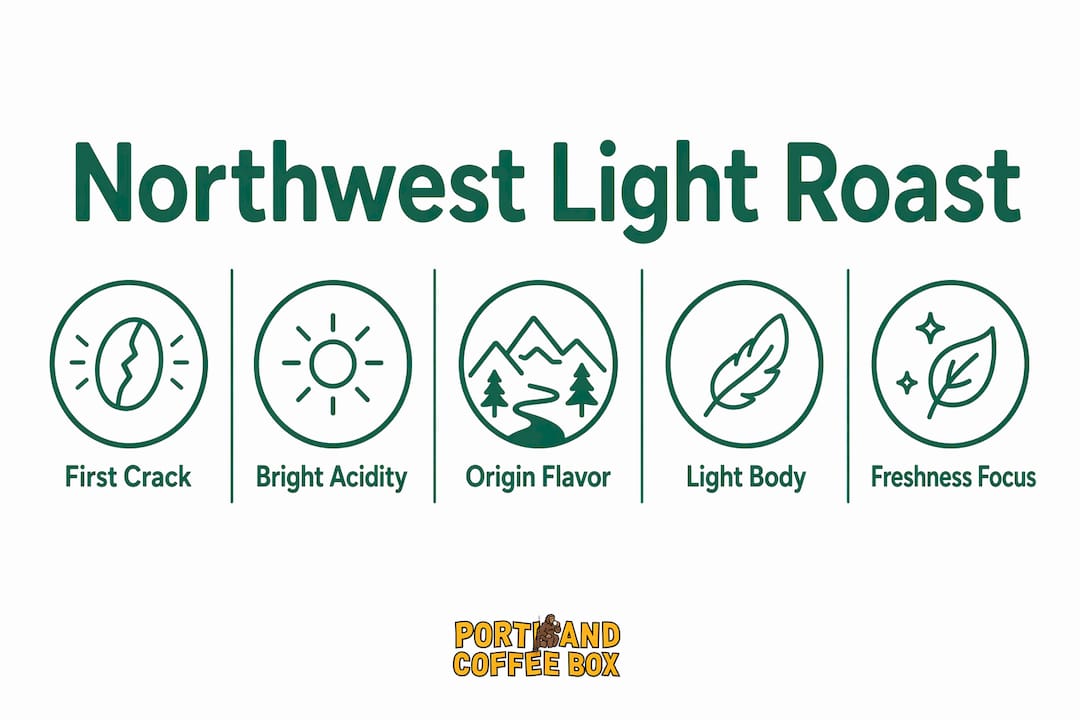
Northwest light roast style coffee stops the roast at or just after “first crack,” the audible pop that signals the bean has reached its first stage of expansion. The result is a cup that tastes like the bean itself, not the roast. You get bright, fruit-forward acidity, floral aromatics, and a delicate, tea-like body that darker roasts simply cannot offer. The beans stay dry on the surface, dense in texture, and free of the surface oils you see on a French roast. Here is what defines this style at a glance:
Precise brewing is non-negotiable here. The same qualities that make this style so expressive also make it unforgiving of sloppy technique.
The technical fingerprint of this style lives in a narrow temperature window and a short roast timeline that demands real skill to navigate. Understanding those parameters helps you appreciate why the cup tastes the way it does.
That last point is worth sitting with. A skilled roaster working in the Northwest style is essentially betting everything on the quality of the green coffee. There is no safety net.
The flavor profile of this style is where things get genuinely exciting. Pull a well-brewed cup and you are tasting the farm, the altitude, the processing method, and the harvest season, not the drum.
Light roast flavor centers on high acidity, floral and fruity aromatics, and minimal bitterness. Common tasting notes include:
Caffe Vita’s Nor’Wester blend is a useful reference point for what a Northwest light roast can achieve. It combines Ethiopian coffee for orange acidity, Colombian for sweetness and stone fruit, and Indonesian for a silky mouthfeel, landing on a cup described as clean, fruit-forward, and approachable. That balance of brightness and sweetness is exactly what the style aims for.
The contrast with darker roasts is stark. Where a dark roast leads with roast character, bitterness, and body, a Northwest light roast leads with clarity. You taste where the coffee came from, not how long it sat in the drum.

The Northwest did not always drink light. For decades, the regional default was dark, bold, and smoky. Roasters in Portland and across the wider Northwest roasted one way, and the culture followed. That began shifting as the specialty coffee movement took hold and consumers started asking harder questions about where their beans came from and how they were treated.
Today, the Northwest specialty coffee scene prizes origin transparency, freshness, and small-batch craft above almost everything else. The Nordic roasting philosophy, which prioritizes letting the bean speak rather than the roast, found a natural home here. Portland in particular became a hub for roasters who source with intention, roast with precision, and build community around the cup.
That community dimension matters. Craft roasters in the Northwest tend to operate with a tight feedback loop between roaster and drinker, sharing tasting notes, hosting cuppings, and educating customers on what makes a light roast different from what they grew up drinking. Portland Coffee Box grew out of exactly that culture, connecting enthusiasts nationwide with fresh, small-batch beans from local Portland roasters who live and breathe this style.
The shift from dark to light has not been a rejection of tradition so much as an expansion of it. Roasters like North by Northwest Coffee Roasters in the Willamette Valley still honor artisan practice and community values while embracing a broader roast spectrum. INW Coffee in the Inland Northwest air-roasts ultra-specialty beans with Q-scores of 86 and above, a commitment to quality that the Nordic style demands. The culture sustaining this movement is one of craft, curiosity, and genuine pride in the region’s coffee identity.
Light roast coffee is the most rewarding style to brew well and the most punishing to brew carelessly. The same density and porosity that preserve all that origin flavor also make extraction harder than with darker, more porous beans.
Here is where most people go wrong, and how to fix it:
Pro Tip: If your light roast tastes sour, adjust your grind finer and extend brew time before assuming the coffee is the problem. Sourness in light roast is almost always under-extraction, not the roast level itself.
The brewing consistency guide from Portland Coffee Box goes deeper on dialing in variables for specialty beans. For a broader look at how light roast compares to other styles across the full spectrum, the light vs. dark roast breakdown is worth reading alongside this one.
If this style has you curious, the most direct path to experiencing it is through the roasters who have built their craft around it.
Portland Coffee Box curates fresh, small-batch beans from Portland’s top local craft roasters every month, handpicked for quality, variety, and seasonality. Every box ships free nationwide, and subscriptions flex to fit how much coffee you actually drink. The Two Bag Coffee Box is a great starting point for enthusiasts who want to taste two distinct roaster profiles side by side. For those who want to go deeper into micro-lot territory, the Two Bag Micro Lot Box focuses on ultra-specialty single-origin coffees where the Nordic light roast style truly shines. Prefer more variety? The Four Bag Coffee Box covers the full roast spectrum, light through dark, from Portland’s most celebrated roasters. There is also a Three Bag Coffee Box and a One Bag Coffee Box for those who want to start smaller. Portland Coffee Box is also a 1% For the Planet member, so every subscription supports environmental causes alongside great coffee. Browse all subscription options and find the one that fits your palate.
Northwest light roast style preserves origin flavor by stopping the roast at first crack, producing bright, fruit-forward cups that demand high-quality beans and precise brewing to reach their full potential.
| Point | Details |
|---|---|
| Roast stops at first crack | The roast ends at 180–205°C, preserving 60–70% of chlorogenic acids and the bean’s original character. |
| Flavor reflects origin, not roast | Expect bright acidity, floral aromatics, and fruit notes rather than roast-driven bitterness. |
| Bean quality is non-negotiable | Specialty-grade beans are required; light roasting exposes every defect a darker roast would hide. |
| Brewing demands precision | Use a burr grinder, near-boiling water, and a finer grind to avoid sourness from under-extraction. |
| Portland Coffee Box | Curates fresh small-batch Northwest light roasts from local Portland craft roasters, shipped nationwide. |


