


-
Products
-
About Us
-
Roasters
-
Gifts
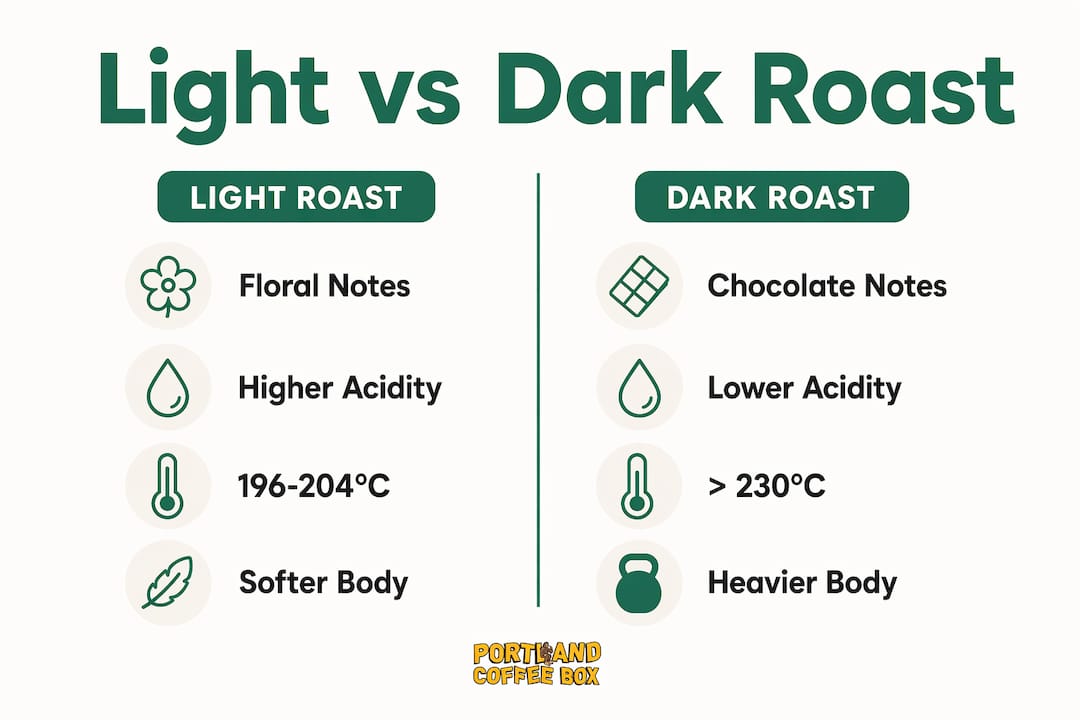
Light vs dark roast explained comes down to one thing: how long the beans stay in the roaster. Light roasts stop at or just after first crack, around 196–204°C, while dark roasts push through second crack at 224–230°C or higher. That temperature difference rewrites the bean’s chemistry, flavor, acidity, and even how you should brew it. Whether you reach for a bright Ethiopian pour-over or a bold French press, understanding roast levels helps you get more from every cup. Portland Coffee Box curates small-batch beans across all roast levels, so this guide covers everything you need to choose with confidence.
Roast level is the single biggest driver of flavor profile differences in your cup. Light roasts preserve the bean’s origin character because the shorter roast time leaves delicate compounds intact. You taste what the soil, altitude, and processing gave the bean: floral notes, citrus brightness, stone fruit, and a tea-like body.
Dark roasts tell a different story. As beans push through second crack, origin flavors fade and roast-created compounds take over. The result is smoky, bittersweet, chocolatey, and caramel-forward flavors with a heavier body and low acidity. Dark roasts mask origin the way a heavy sauce masks the flavor of a delicate fish. You taste the cooking process more than the ingredient itself.
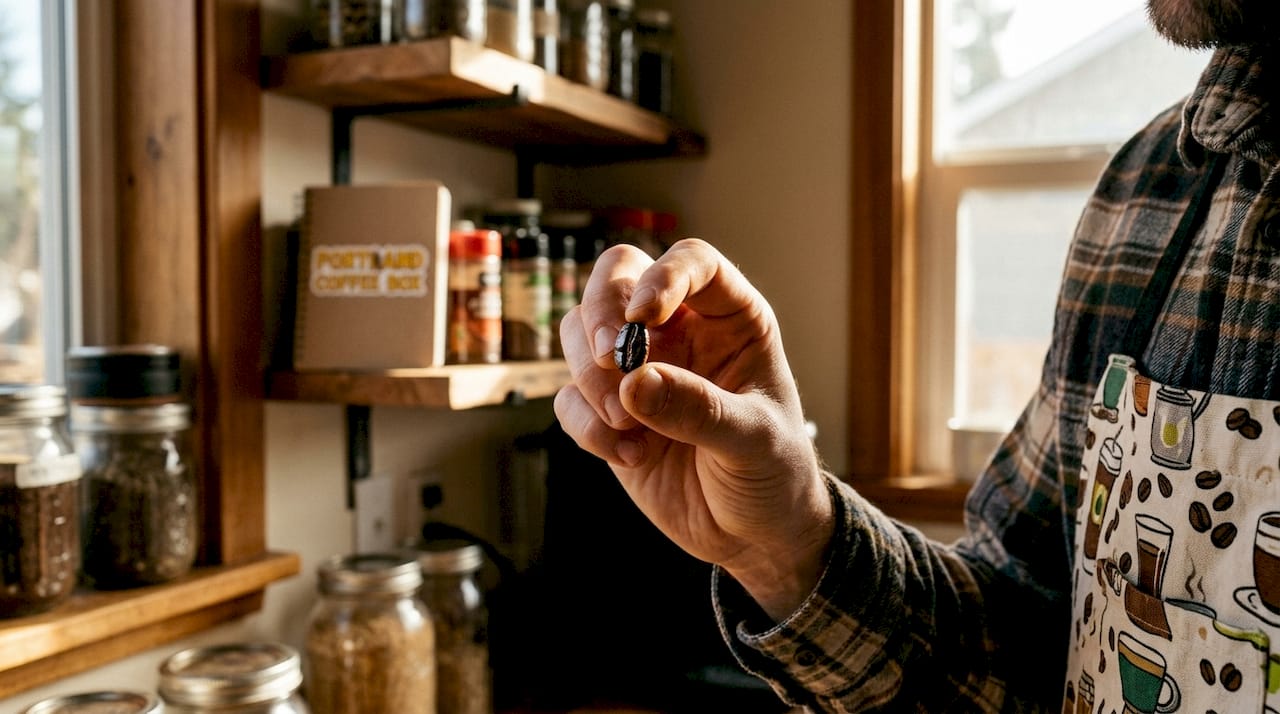
The chemistry behind this shift involves three key changes. First, chlorogenic acids break down during extended roasting, which reduces acidity. Second, sugars caramelize and then carbonize, creating that signature dark roast bitterness. Third, oils migrate to the bean’s surface during dark roasting, which is why dark roast beans look shiny and feel slightly tacky.
Pro Tip: Check your beans visually before brewing. Dry, matte surfaces signal a light roast. Oily, glossy surfaces confirm a dark roast. This tells you immediately how to adjust your grind and water temperature.
| Characteristic | Light roast | Dark roast |
|---|---|---|
| Flavor notes | Floral, citrus, fruit, tea-like | Chocolate, caramel, smoke, bittersweet |
| Acidity | High, bright | Low, muted |
| Body | Light to medium | Full, heavy |
| Bean surface | Dry, matte | Oily, glossy |
| Roast marker | Just after first crack | Through second crack |
The caffeine question is one of the most common misconceptions in coffee. Roasting slightly reduces caffeine, so light roasts technically contain marginally more caffeine by weight. That means the bold, intense flavor of a dark roast does not equal more caffeine.
The practical difference is almost negligible. Caffeine varies under 5–10% between roast levels when measured by weight. When you measure by volume, using a standard scoop, the difference evens out further because dark roast beans are less dense after losing mass during roasting. A scoop of dark roast beans weighs less than a scoop of light roast beans, which means the caffeine per cup ends up roughly equal.
Roast level affects more than flavor. It changes how your stomach responds to coffee.
If you drink coffee black and have a sensitive stomach, a medium or dark roast is worth trying before reaching for antacids.
Brewing light and dark roasts requires different parameters because the beans are physically different after roasting. Light roast beans are denser and less soluble, which means they need more heat and time to extract properly. Dark roast beans are more porous and extract quickly, making them more forgiving if your technique is off.
For light roasts, water temperature should sit between 94–96°C (201–205°F). Grind finer than you would for a dark roast, and extend your brew time slightly. Brewing at lower temperatures with a coarse grind produces sour, thin, underdeveloped coffee from a light roast bean. Precise technique matters with light roasts. Tightening your grind by one or two steps and raising water temperature by 1–2°C can completely change the cup.
For dark roasts, pull back on water temperature to 88–92°C and use a coarser grind. High heat and fine grinding over-extract dark roasts quickly, producing harsh bitterness rather than the smooth, bold flavor you want. Dark roasts are more forgiving to brew, which is one reason they dominate commercial espresso programs.
Pro Tip: For light roast pour-over, try a 1:15 coffee-to-water ratio at 95°C with a medium-fine grind. For dark roast French press, use a 1:12 ratio at 90°C with a coarse grind and a 4-minute steep.
| Parameter | Light roast | Dark roast |
|---|---|---|
| Water temperature | 94–96°C (201–205°F) | 88–92°C (190–198°F) |
| Grind size | Medium-fine to fine | Medium-coarse to coarse |
| Brew time | Longer | Shorter |
| Best methods | Pour-over, AeroPress, drip | Espresso, French press, cold brew |
| Milk drinks | Less common | Excellent pairing |
Dark roasts also pair beautifully with plant-based milks. If you enjoy oat, almond, or soy in your cup, a guide to plant milks can help you match the right milk to your roast for the best texture and flavor balance.
The right roast is the one that matches how you drink coffee and what you want from it. Roast preference reflects personality and desired experience more than objective quality. Neither roast is better. They are just different.
Palate adaptation is real. Switching from dark to light roast often takes several cups before your palate stops reading the acidity as sourness and starts recognizing it as complexity. Give yourself at least a week of consistent brewing before deciding a roast is not for you.
The most practical approach is to experiment with one variable at a time. Keep your brewing method constant and change only the roast level. That isolation lets you taste the roast’s actual contribution without other variables muddying the comparison. Portland Coffee Box subscriptions make this easy by delivering multiple roast profiles from Portland’s top craft roasters each month, so you can taste the full spectrum without committing to a single bag.
Understanding your coffee flavor preferences also helps. If you gravitate toward fruity, acidic flavors in other foods and drinks, light roast will likely click faster. If you prefer rich, bitter, or chocolatey flavors, dark roast is your natural home.
Light and dark roast coffees differ fundamentally in roast temperature, flavor chemistry, caffeine density, and brewing requirements, making roast selection a practical decision as much as a personal one.
| Point | Details |
|---|---|
| Roast temperature defines the cup | Light roasts stop near 196–204°C; dark roasts push past 224°C, rewriting flavor entirely. |
| Caffeine is nearly equal per cup | Volume-based scoops equalize caffeine; the difference by weight is under 5–10%. |
| Stomach sensitivity favors dark roast | Dark roasts produce less acidity and more stomach-protective compounds than light roasts. |
| Brewing parameters must match the roast | Light roasts need higher heat and finer grinds; dark roasts extract well at lower temperatures. |
| Palate adaptation takes time | Switching roast levels requires several cups before your taste buds recalibrate fully. |
I have tasted thousands of cups across every roast level, and the most common mistake I see is people treating roast preference as a hill worth dying on. Light roast enthusiasts dismiss dark roast as burnt. Dark roast loyalists call light roast sour and weak. Both camps are missing the point entirely.
Roast level is a tool, not a verdict. A masterfully roasted dark coffee from a Portland craft roaster can be as nuanced and intentional as the most delicate light roast Ethiopian natural. The roaster made a deliberate choice about what experience to create. Your job as the drinker is to understand what that choice means and decide if it matches what you want from that cup.
What I have found actually works is treating medium roast as a calibration point. When someone tells me they hate light roast, I hand them a well-made medium roast from a quality roaster. Nine times out of ten, they love it. That experience recalibrates their palate and opens the door to exploring lighter profiles over time. Gatekeeping roast preferences helps no one. Curiosity and a willingness to brew carefully are what separate good coffee drinkers from great ones.
— Cody Salane
Knowing the difference between roast levels is one thing. Tasting that difference in your own kitchen is where real understanding happens.
Portland Coffee Box sources small-batch beans from Portland’s top craft roasters, handpicking light, medium, and dark roasts that represent the best of each profile. Every monthly box is curated for quality, variety, and seasonality, so you experience the full range of what roast development can do. The three-bag subscription is the most popular choice for enthusiasts who want to compare roast levels side by side without committing to a single style. Free shipping is included on all orders, and Portland Coffee Box donates a portion of every sale to environmental causes as a 1% For the Planet member.
Light roast stops at first crack (196–204°C) and preserves origin flavors like fruit and florals. Dark roast pushes through second crack (224–230°C+) and develops roast-driven flavors like chocolate, caramel, and smoke.
Light roast has marginally more caffeine by weight, but the difference is under 5–10%. When measured by volume using a standard scoop, caffeine content per cup is roughly equal between roast levels.
Dark roast produces significantly less acidity and more N-methylpyridinium, a compound that may reduce stomach acid. People with GERD or sensitive stomachs generally tolerate dark roast better than light roast.
Pour-over, AeroPress, and drip brewing suit light roast best. These methods use higher water temperatures (94–96°C) and allow the bean’s delicate origin flavors and bright acidity to come through clearly.
Dark roasts are best within 2–3 weeks of roasting because surface oils oxidize quickly. Light roasts stay fresh for 4–6 weeks thanks to their dry bean surface, which resists oxidation longer.


