


-
Products
-
About Us
-
Roasters
-
Gifts
Tracking coffee brew variables at home is the practice of measuring and recording key factors like dose, grind size, water temperature, and brew time to produce a consistent, flavorful cup every session. Without this practice, you are essentially brewing blind, relying on guesswork rather than repeatable technique. The industry term for this process is “brew parameter logging,” and it sits at the heart of specialty coffee culture. Whether you pull espresso shots or brew pour-over, the same principle applies: control your variables, and you control your cup. Portland Coffee Box has seen this firsthand with the enthusiasts we serve across the country.
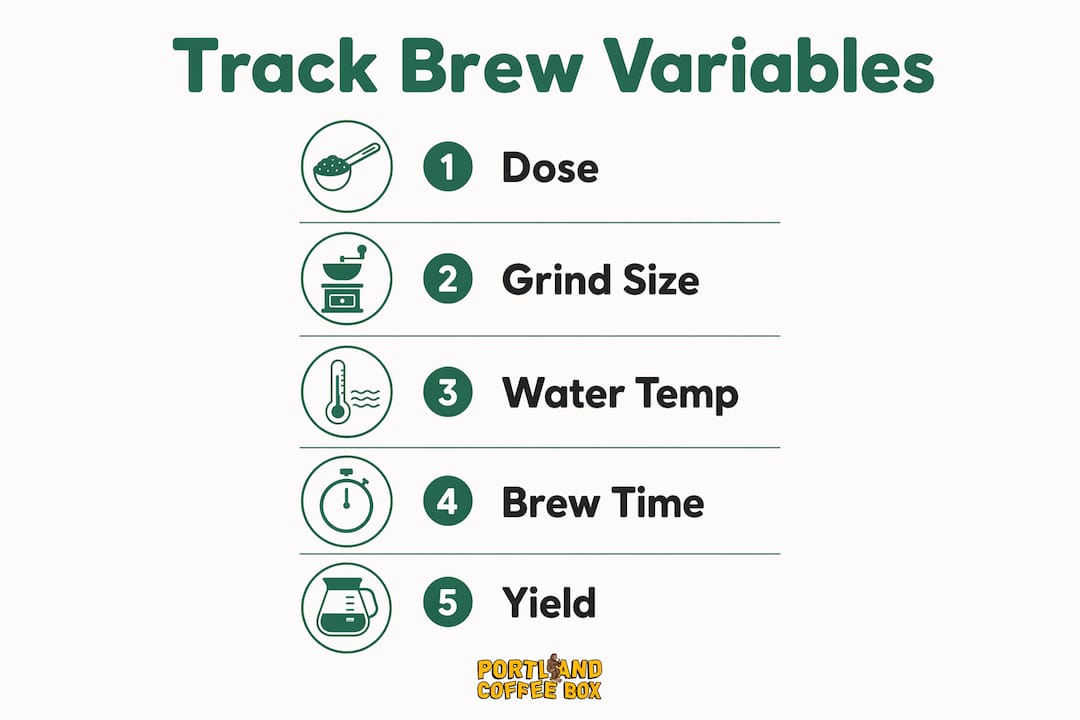
The essential variables to track in coffee brewing are dose, yield, grind size, water temperature, and total extraction time. Each one pulls on the flavor in a different direction, and changing even one shifts the entire balance of the cup.
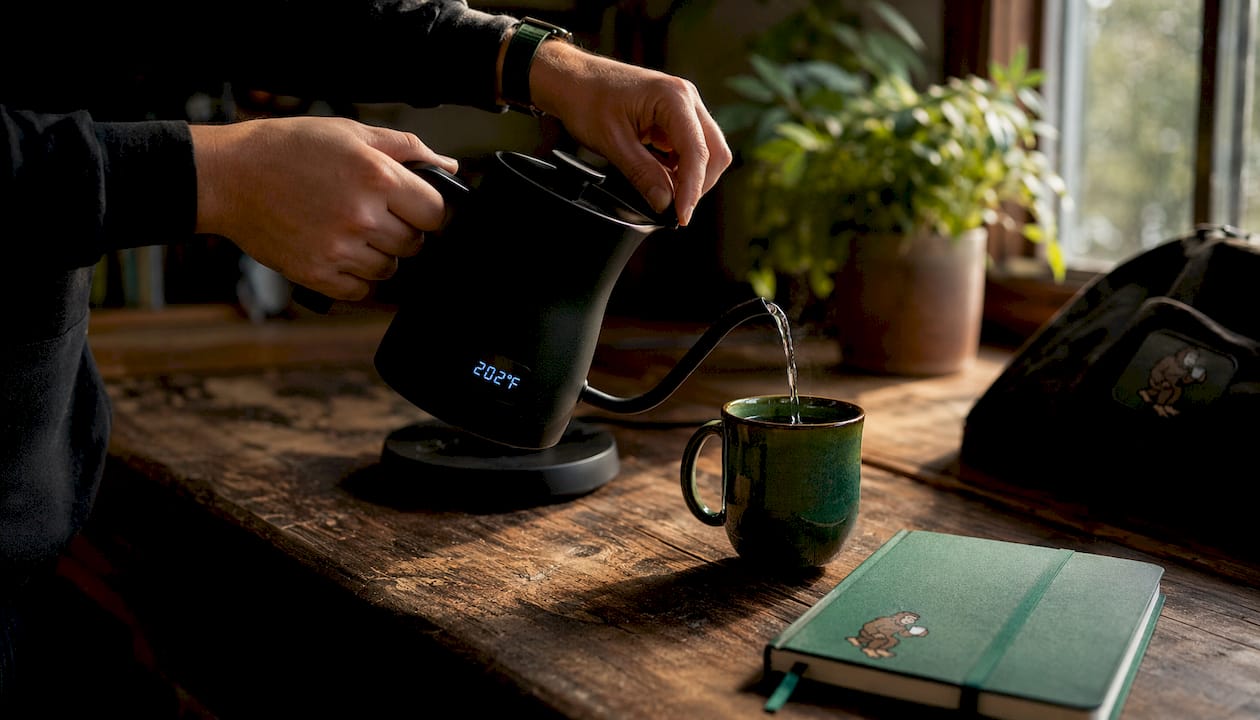
Water temperature is the variable most home brewers underestimate. The specialty coffee industry targets 195–205°F (90–96°C) for most methods. Water below that range under-extracts the coffee, producing a sour, thin cup. Water above it over-extracts, pushing out bitter, harsh compounds.
Brew ratios differ significantly by method. Pour-over targets a 1:12 to 1:17 coffee-to-water ratio by weight. Espresso runs much tighter, at 1:2 to 1:2.5. These ranges are not arbitrary. They reflect decades of sensory testing by the Specialty Coffee Association and professional baristas worldwide.
Grind size controls how fast water moves through the coffee bed. A finer grind slows flow and increases extraction. A coarser grind speeds flow and reduces it. Brew time and grind size work together directly: fine grinds need less time, coarse grinds need more.
| Variable | Pour-Over Target | Espresso Target |
|---|---|---|
| Water temperature | 195–205°F | 195–205°F |
| Brew ratio | 1:12 to 1:17 | 1:2 to 1:2.5 |
| Brew time | 3–4 minutes | 25–35 seconds |
| Dose precision | ±0.5g | ±0.1g |
| Grind size | Medium to coarse | Fine |
Pro Tip: Start by locking in your dose and water temperature, then adjust grind size one step at a time. Changing one variable per session gives you a clear cause-and-effect picture.
Digital scales accurate to 0.1 grams and a reliable timer are the two most important tools for any home brewer. Measuring by weight rather than volume removes the single biggest source of inconsistency in home brewing. A kitchen scale that costs under $30 does the job for pour-over. Espresso demands tighter tolerances, so a scale with 0.1g resolution matters more there.
A thermometer or temperature-controlled kettle removes the guesswork from water temperature. Variable-temperature kettles let you set an exact target and hold it, which is far more reliable than estimating by feel or waiting a fixed number of seconds after boiling.
Modern apps have changed what is possible for home brewers. Apps with Bluetooth scale integration deliver real-time flow rate data during a shot, something a standard scale cannot show on its own. AI coaching features in these apps give specific, data-based suggestions like “try 2 clicks coarser,” which cuts down on wasted beans and failed shots.
For brewers who prefer to keep their data private, self-hosted apps like Kissa run on a Raspberry Pi or home NAS without any cloud dependency. They offer AI shot analysis and grind dial-in guidance while keeping all your brew logs local. This approach is gaining traction among enthusiasts who want full control over their data.
Specialized hardware takes tracking even further. Bluetooth pressure sensors and flow-rate scales capture pressure curves and timing data that a standard scale cannot measure. These tools are best suited for dedicated espresso enthusiasts who want to understand what is happening inside the portafilter during extraction.
Pro Tip: Use apps that log roast dates and send freshness alerts. Brewing with stale beans undermines every other variable you track, no matter how precise your technique.
Recording your brew data consistently is what separates hobbyists who improve from those who plateau. A simple brew journal works well. A dedicated app works better. Either way, the goal is the same: capture enough detail to spot patterns across sessions.
Log these fields for every brew:
Recording tasting notes alongside brew variables is what makes the data useful. Numbers alone tell you what changed. Flavor notes tell you whether the change was an improvement. Without both, you are logging data without learning from it.
Organize your logs by bean and method. A bag of Ethiopian natural processed coffee will behave differently than a Colombian washed coffee, even at identical settings. Grouping sessions by bean lets you build a recipe for each coffee rather than chasing a single universal setting.
The most common mistake in brew logging is changing multiple variables between sessions. If you adjust grind size and water temperature at the same time, you cannot know which change moved the flavor. Discipline here pays off faster than any tool upgrade.
AI-powered espresso journals now analyze your logged data and suggest specific adjustments, reducing the trial-and-error cycle significantly. Manual analysis works too, especially if you review your last five sessions before brewing and look for a trend in your tasting notes.
Most brewing problems trace back to three sources: inconsistent grind size, fluctuating water temperature, and dose inaccuracies. Identifying which one is causing the problem requires the same discipline as logging: change one thing at a time.
Common issues and their fixes:
Controlling one variable, usually grind size, while keeping all others constant is the most effective way to dial in espresso. This approach gives you a clear signal: the shot changed because grind changed, not because three things shifted at once.
Over-extraction and under-extraction both result from imbalanced variables. The good news is that once you understand which direction each variable pulls flavor, you can correct problems in one or two sessions rather than weeks of frustration.
Pro Tip: Calibrate your grinder and clean your equipment on a regular schedule. Residue buildup and burr wear change grind consistency over time, which makes your logged settings unreliable.
Tracking brew parameters with precision, from dose and grind size to water temperature and extraction time, is the single most reliable path to consistent, flavorful coffee at home.
| Point | Details |
|---|---|
| Track the right variables | Dose, yield, grind size, water temperature (195–205°F), and brew time are the core parameters. |
| Use weight, not volume | A 0.1g-accurate digital scale removes the biggest source of inconsistency in home brewing. |
| Change one variable at a time | Adjusting a single parameter per session reveals clear cause-and-effect relationships in flavor. |
| Log tasting notes with data | Numbers show what changed; flavor notes reveal whether the change was an improvement. |
| Bean freshness matters | Stale beans undermine every other variable, so track roast dates alongside brew parameters. |
By Cody Salane
When I started logging my espresso shots, I expected the data to be the hard part. It was not. The hard part was resisting the urge to change everything at once when a shot tasted off. That single discipline, changing one variable per session, cut my dial-in time from weeks to days with a new bean.
I use a combination of a Bluetooth-connected scale and a simple notebook. The scale captures real-time flow rate data during the shot. The notebook holds my tasting notes, because I find that writing flavor impressions by hand makes me pay closer attention than typing them into an app. Both methods work. The combination works better.
The insight that surprised me most: bean freshness matters more than equipment. I have pulled mediocre shots on a high-end machine with stale beans, and excellent shots on a modest setup with freshly roasted coffee. Tracking roast dates in your log is not optional. It is the foundation everything else sits on.
AI coaching tools have genuinely shortened the learning curve for home brewers. Getting a suggestion like “try 2 clicks coarser” based on your actual logged data is more useful than any general guide. That said, no app replaces the sensory feedback of tasting your coffee with full attention. Use the technology, but trust your palate too.
— Cody Salane
Tracking your brew parameters only delivers its full reward when the beans in your grinder are worth tracking. Portland Coffee Box sources small-batch, freshly roasted specialty coffee from Portland’s top craft roasters and ships it nationwide with free delivery.
Each monthly subscription box arrives with beans selected for variety, roast profile, and seasonality, giving you a rotating set of coffees to dial in and explore. Whether you prefer a single two-bag subscription to keep things focused or a four-bag subscription to test multiple roast profiles side by side, Portland Coffee Box gives your tracking practice the raw material it deserves. Fresh beans, real craft, and a community that loves coffee as much as you do.
The core variables are dose, yield, grind size, water temperature, and brew time. Water temperature should fall between 195–205°F for most brewing methods.
Use a digital scale accurate to 0.1 grams for dose and yield, a thermometer or temperature-controlled kettle for water temperature, and a timer for brew time. Weight-based measurement is more accurate than volume.
Pour-over targets a 1:12 to 1:17 coffee-to-water ratio by weight. Espresso targets a much tighter 1:2 to 1:2.5 ratio. Both ranges reflect standard specialty coffee guidelines.
Yes. Apps with Bluetooth scale integration provide real-time flow rate data, and AI coaching features suggest specific grind or dose adjustments based on your logged sessions, reducing wasted beans and failed shots.
Bean freshness is the most common hidden variable. Coffee brewed from beans more than four to six weeks past roast date will taste flat regardless of technique. Log your roast dates alongside your brew parameters to catch this issue early.


