


-
Products
-
About Us
-
Roasters
-
Gifts
Home coffee quality is a direct productivity input for remote workers, not a lifestyle luxury. 58% of employed Americans now work remotely at least one day per week, which means the kitchen counter has become the new office coffee station. That shift makes the importance of coffee quality more relevant than ever. A rich, well-brewed cup does more than deliver caffeine. It creates a sensory ritual that signals your brain to shift from home mode into work mode, sharpening focus and stabilizing mood before the first meeting of the day. Understanding why home coffee quality matters remotely is the first step to building a better workday from the ground up.
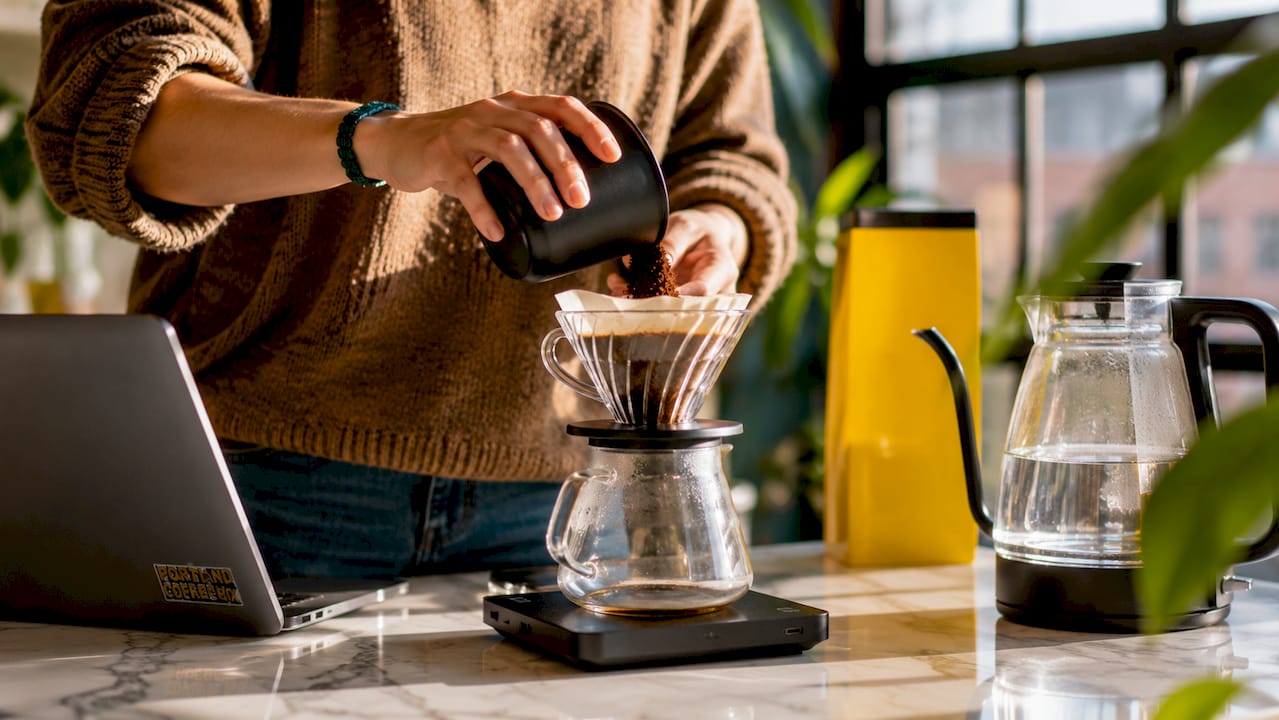
Coffee quality shapes remote productivity through two channels: chemistry and ritual. Caffeine is the obvious driver, but the flavor, aroma, and satisfaction of a genuinely good cup do something caffeine alone cannot. They create a reliable sensory cue that separates work time from home time, a boundary that remote workers struggle to establish without a commute.
“Rich coffee flavor and a reliable morning ritual enhance motivation and mental clarity during remote work hours.” — Simple Mondays
Research on cognitive performance consistently links positive sensory experiences to improved mood and focus. A flat, bitter cup brewed from stale beans delivers caffeine but strips away the ritual reward. That reward matters because it reinforces the habit loop that gets you to your desk and keeps you there.
The social dimension of coffee also plays a role. Buffer, the remote-first tech company, offers employees a $250 monthly stipend for coffee shop work specifically to support mental health and productivity. The fact that a company pays that much for the coffee shop experience tells you something real about what a quality coffee environment is worth.
Remote workers who invest in their home coffee setup report three consistent benefits:
Coffee quality is a multiplicative effect across every stage from farming to your cup. Five stages each performing at 95% quality yield roughly 77% final quality. Drop one stage to 70% and the final result falls to around 65%. That math means one weak link, whether it is stale beans, poor water, or a dirty grinder, pulls the whole experience down.
Fresh, high-quality beans matter more than expensive equipment. Stale beans produce bitter, flat coffee regardless of the machine you use. Buying freshly roasted, small-batch beans and using them within two to four weeks of the roast date is the single highest-return upgrade most remote workers can make. You can read more about the science behind this at Portland Coffee Box’s guide on freshly roasted beans.
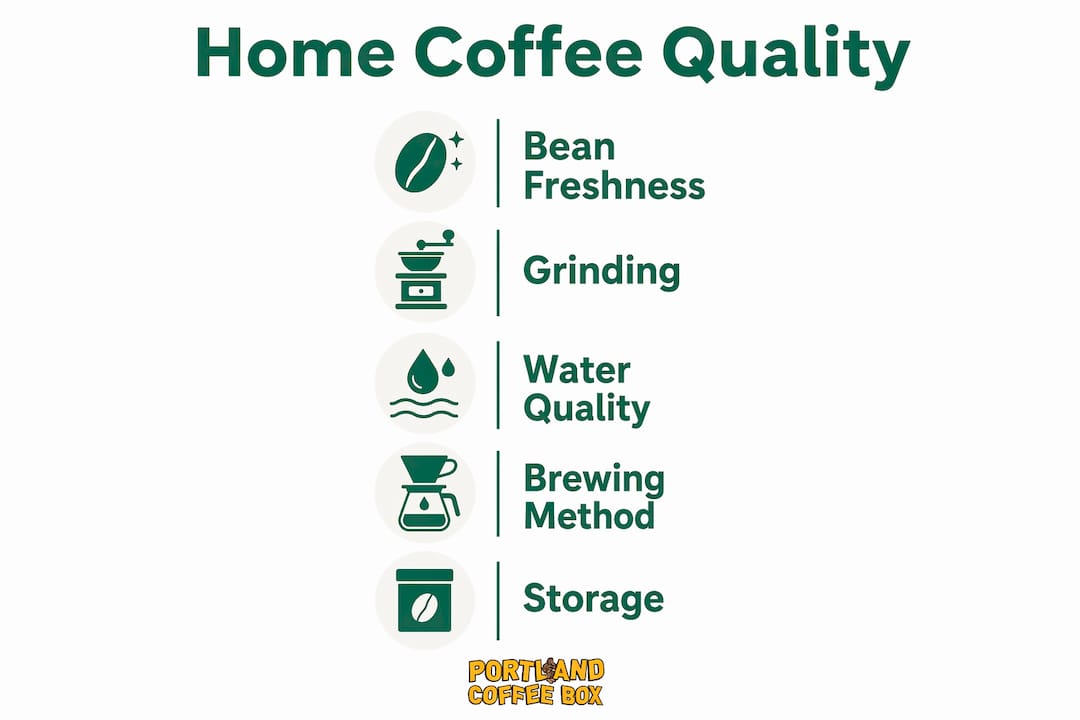
Pro Tip: Store whole beans in an airtight, opaque container at room temperature, away from heat and light. Avoid the freezer for beans you use daily. Grind only what you need right before brewing to preserve volatile aromatics.
The brewing method you choose shapes both flavor and workflow. Here is how the most common home methods compare for remote workers:
| Brewing method | Flavor profile | Brew time | Best for remote workers |
|---|---|---|---|
| Pour-over (e.g., Hario V60) | Clean, bright, nuanced | 4–5 minutes | Morning ritual, mindful start |
| French press | Full-bodied, rich | 4 minutes | Batch brewing, low equipment cost |
| Single-serve (e.g., Keurig, Nespresso) | Consistent, convenient | Under 2 minutes | Between meetings, speed priority |
| AeroPress | Smooth, versatile | 2–3 minutes | Compact setup, travel-friendly |
| Drip machine (e.g., Technivorm) | Balanced, hands-off | 6–8 minutes | Larger households, passive brewing |
Single-serve and pour-over options each serve a different remote work need. Single-serve wins on speed between back-to-back calls. Pour-over wins as a mindful morning ritual that sets the tone for the day. Many remote workers keep both.
Water quality is the overlooked variable. Coffee is roughly 98% water, so filtered water produces a noticeably cleaner cup. A simple countertop filter like a Brita or a dedicated kettle with a built-in filter costs far less than a new grinder and delivers a meaningful flavor improvement.
An ergonomic coffee station reduces interruptions and protects your flow state. Placement matters more than most remote workers realize. A station within ten to fifteen feet of your desk means a two-minute break instead of a five-minute drift that turns into checking your phone, folding laundry, or losing your train of thought entirely.
Pro Tip: Use a dedicated cart or a defined countertop zone for your coffee setup. Keeping everything in one place, beans, grinder, kettle, and cups, cuts prep time and removes the mental friction of hunting for supplies mid-morning.
A well-organized station also supports the ritual itself. When your setup is clean, stocked, and ready, the act of making coffee feels intentional rather than chaotic. That intentionality is part of what makes the ritual work as a productivity cue.
Practical elements that make a real difference:
Good lighting is not just about aesthetics. Proper task lighting at your coffee station, and at your desk, reduces the visual fatigue that accumulates over a full workday. Cappuccino Oracle’s research on remote work coffee setups identifies lighting and spatial organization as two of the most underrated factors in home office comfort.
Café coffee often tastes better than home coffee for three structural reasons: professional equipment, trained baristas, and beans dialed in for high-volume consistency. A commercial espresso machine operating at precise pressure and temperature produces results that most home setups cannot fully replicate. That gap is real, but it is narrowing.
The café experience also offers social connection and a change of scenery, both of which benefit remote workers’ mental health. Buffer’s $250 monthly coffee shop stipend exists precisely because those environmental benefits are measurable. The problem is that laptop-free policies are spreading across urban cafés, driven by the friction between long-stay remote workers and café revenue models. Some shops gain table turnover by restricting laptops. Others lose the remote worker foot traffic that sustained them through the post-pandemic years.
| Factor | Home coffee | Café coffee |
|---|---|---|
| Taste ceiling | High with quality beans and technique | Higher with professional equipment |
| Cost per cup | Low ($0.50–$2.00 estimated) | High ($4.00–$7.00 typical) |
| Convenience | Highest, no travel required | Moderate, depends on proximity |
| Social connection | Low unless intentionally created | High |
| Productivity environment | Fully controlled | Variable, noise and policy dependent |
| Laptop access | Always available | Increasingly restricted |
Quality home coffee can replicate many of the café’s functional benefits. A great cup brewed from freshly roasted beans, prepared with care, delivers the sensory ritual and the flavor reward. What it cannot replicate is the ambient social energy. For that, the best approach is to treat café visits as a deliberate weekly reset rather than a daily dependency, and invest in making your home setup genuinely excellent for the other four days.
Home coffee quality is a measurable productivity input for remote workers, not a preference. The ritual, the flavor, and the ergonomics of your setup all shape how well you work.
| Point | Details |
|---|---|
| Coffee quality shapes focus | A satisfying sensory ritual creates the mental boundary between home and work mode. |
| Bean freshness outranks equipment | Fresh, small-batch beans brewed simply beat expensive machines using stale coffee. |
| Multiplicative quality effect | Every stage from roasting to brewing compounds, so one weak link degrades the whole cup. |
| Station placement protects flow | A coffee station within reach of your desk cuts interruptions and preserves concentration. |
| Home can rival the café | Quality beans, good technique, and an organized setup close most of the gap with café coffee. |
The ritual is the point. I spent two years chasing equipment upgrades before I realized my morning coffee was never really about the machine. It was about the five minutes of intentional, sensory focus before opening a single tab. When I switched to freshly roasted, small-batch beans and stopped buying whatever was on sale at the grocery store, my mornings changed more than any standing desk or noise-canceling headphone ever did.
The biggest mistake I see remote workers make is treating coffee as a background task. They fill a pod, hit a button, and drink whatever comes out while scrolling email. That approach delivers caffeine but throws away the ritual value entirely. The ritual is what tells your nervous system that work has started.
My honest recommendation: start with the beans, not the gear. A pour-over brewer costs under $30. A bag of freshly roasted, single-origin coffee from a craft roaster costs roughly the same as two café lattes. The combination produces a cup that is genuinely worth pausing for, and that pause is what makes the difference in how your workday begins.
You do not need a perfect setup on day one. Improve one variable at a time. Better beans first. Then water quality. Then grind consistency. Each step compounds, exactly the way coffee quality itself does across the production chain.
— Cody Salane
Remote workers deserve coffee that actually supports the way they work. Portland Coffee Box curates fresh, small-batch beans from Portland’s top craft roasters every month, delivering light, medium, and dark roasts straight to your door with free shipping on every order.
Whether you want to try a single bag or build a full subscription, Portland Coffee Box makes it easy to keep genuinely great coffee in your home office. Start with a free bonus bag to taste the difference that fresh, craft-roasted beans make. Or choose a three-bag subscription for a rotating selection of Portland’s finest roasters delivered monthly. As a 1% For the Planet member, every order also supports environmental causes you can feel good about.
Yes. Quality coffee creates a sensory ritual that signals the brain to shift into a focused work state, improving motivation and mental clarity beyond what caffeine alone provides.
Bean freshness is the single most impactful variable. Fresh beans brewed simply outperform stale beans in any expensive machine, delivering better flavor and a more satisfying ritual.
Pour-over methods like the Hario V60 suit mindful morning rituals, while single-serve systems like Nespresso work best between meetings when speed matters more than craft.
Home coffee wins on cost, convenience, and control. Café coffee wins on social connection and ambiance, but laptop-free café policies are making cafés less reliable as daily workspaces.
Store whole beans in an airtight, opaque container at room temperature. Grind only what you need before each brew to preserve freshness and protect the aromatic compounds that make quality coffee taste the way it should.


