


-
Products
-
About Us
-
Roasters
-
Gifts
Instant coffee is brewed coffee that has been dehydrated into a soluble powder, crystal, or concentrate and reconstituted with hot water. That’s the short answer. For specialty enthusiasts, the longer answer matters more: instant coffee is engineered for convenience and shelf life, not for preserving the delicate terroir, seasonal aromatics, or nuanced acidity you chase in a small-batch pour-over.
TL;DR:
Instant coffee starts as roasted, ground beans brewed into a strong liquid extract, then clarified, concentrated, and dried into a shelf-stable solid. The process strips away everything that can’t survive dehydration.
The core production steps:
Spray-drying vs. freeze-drying:
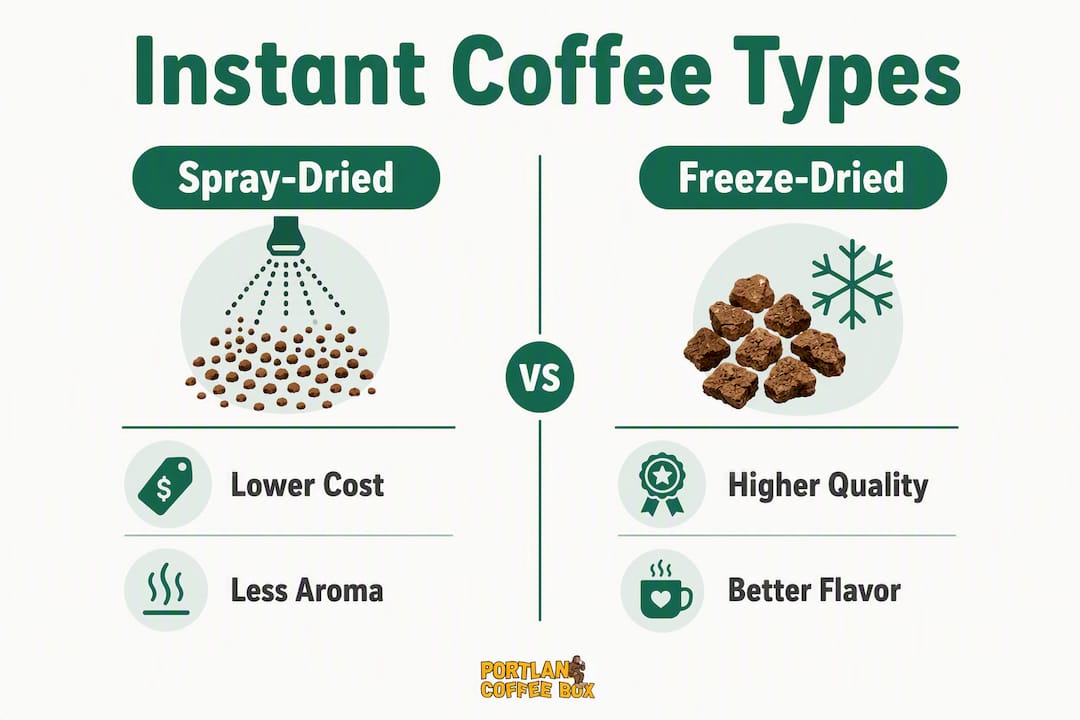
Spray-drying pumps liquid extract through a nozzle into a multi-story tower of very hot air. The water evaporates almost instantly, leaving fine powder. It’s fast and cheap, but the high temperatures accelerate volatile loss. Freeze-drying freezes the extract into a solid slab, then removes water through sublimation under vacuum at low temperatures. The result is larger, porous granules with better flavor retention — but the process costs more and typically requires higher-quality input beans to justify the investment.
Pro Tip: When you see “freeze-dried” on a jar, it genuinely signals a higher-quality process. It’s not just marketing language — the low-temperature sublimation cycle preserves more of the aromatic compounds that spray-drying burns off.
Some manufacturers capture volatile aroma fractions during extraction and reintroduce them just before filling, partly compensating for what the drying process removes.
The sensory gap between instant and a well-pulled specialty brew isn’t a matter of preference. It’s chemistry. Spray-drying’s thermal stress strips a significant portion of the volatile aromatic compounds responsible for floral, fruity, and bright citrus notes. What survives tends to be the heavier, more heat-stable compounds — which skew bitter and flat.
Beyond aroma, the manufacturing process removes the insoluble solids and most of the oils that contribute body and mouthfeel. A freshly brewed cup of a well-sourced Ethiopian natural carries oils and suspended micro-particles that coat the palate. Instant coffee, stripped of those elements, feels thinner and less layered.
What food-engineering experts note: Extreme thermal processing optimizes shelf life but significantly alters the sensory profile by stripping volatile aromatics — the very compounds that define a coffee’s origin character.
A few other sensory trade-offs worth knowing:
One honest caveat: people raised on instant coffee often find freshly brewed specialty coffee surprisingly bright or acidic. Their palate calibrated to instant’s standardized, bitter-forward profile. That’s not a flaw in either product — it’s a learned taste. But if you’re reading this, you’re probably already past that stage.
| Format | Process | Flavor/Complexity | Convenience | Shelf Life | Price per Cup | Best Use-Case |
|---|---|---|---|---|---|---|
| Spray-dried powder | Hot-air drying | Low | Highest | 2+ years | Lowest | Office, travel, baking |
| Freeze-dried granules | Sublimation | Moderate | High | 2+ years | Moderate | Daily use, camping |
| Agglomerated instant | Spray-dried + steam | Low–moderate | High | 2+ years | Low–moderate | Improved solubility needs |
| Liquid concentrate | Liquid extraction | Moderate | Very high | Weeks–months (refrigerated) | Higher | Cold drinks, RTD recipes |
| Single-serve sachets | Freeze- or spray-dried | Varies | Highest | 2+ years | Moderate–high | Travel, gifting |
Packaging matters almost as much as the drying method. Products filled under inert gas in sealed glass or foil-lined sachets hold their aroma longer than those in loosely sealed plastic jars. Once opened, moisture is the enemy — more on that below.
Instant coffee rewards a little care. The standard approach — dump powder into hot water and stir — works, but a few small adjustments make a real difference.
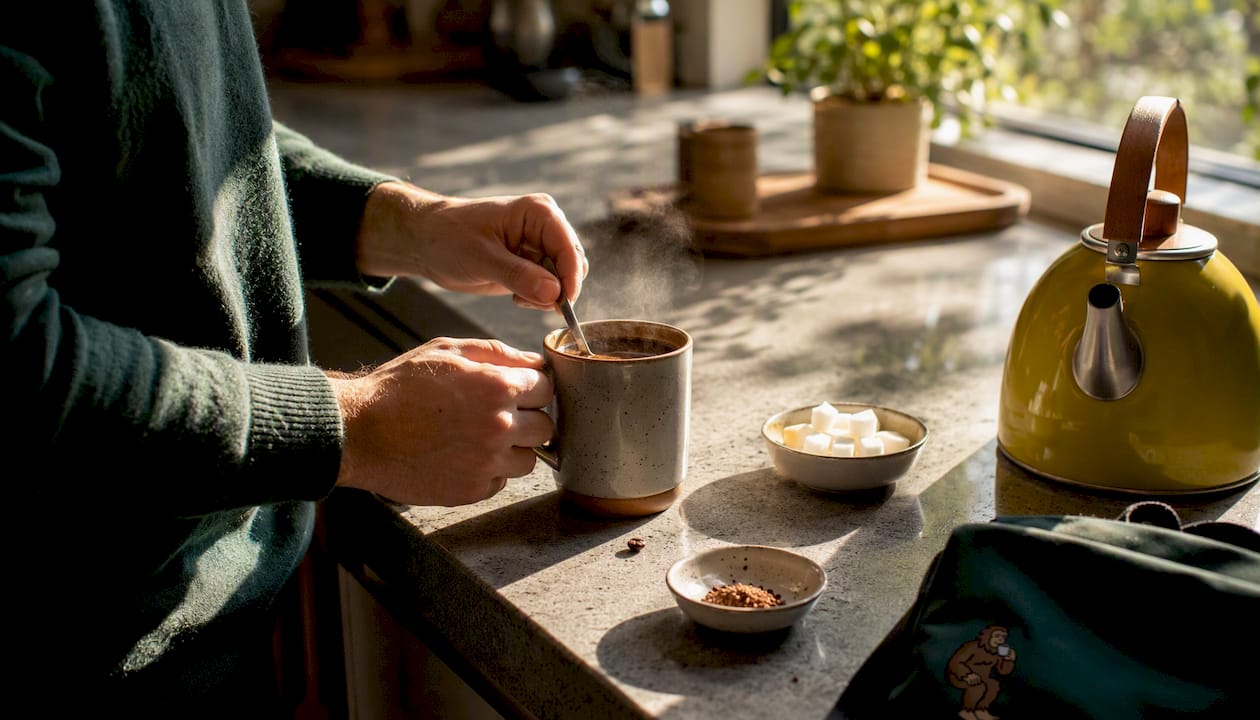
Basic ratio: 1–2 teaspoons of instant coffee per 8 oz of water. Start at 1.5 tsp and adjust from there. Freeze-dried granules are denser, so lean toward 1 tsp to start.
Step-by-step for the best possible cup:
Pro Tip: A tiny pinch of salt (less than ⅛ tsp per cup) suppresses bitterness without adding any detectable saltiness. It’s an old barista trick that works just as well with instant.
For iced versions, dissolve the powder in 2 oz of hot water first, then pour over ice. Trying to dissolve instant directly in cold water leaves undissolved clumps and a muddy flavor.
Instant coffee has a real place in a specialty enthusiast’s life — just a specific one. The honest use-cases:
Where instant doesn’t make sense for an enthusiast: your morning ritual, a weekend slow-brew session, or any moment when you actually have five minutes and a grinder. The flavor complexity of a freshly roasted single-origin bean simply cannot be replicated in soluble form.
Pro Tip: If you want convenience without sacrificing much flavor, look for single-origin freeze-dried sachets from specialty roasters. They’re a genuine middle ground for travel days — not a replacement for your home setup, but far better than standard commodity instant.
Instant coffee’s low moisture content of 1–4% is what makes it shelf-stable for two or more years. That’s a meaningful practical advantage over fresh-roasted beans, which peak within 2–4 weeks of roast and degrade noticeably after 6–8 weeks.
| Factor | Instant Coffee | Fresh-Roasted Specialty Beans |
|---|---|---|
| Shelf life (unopened) | 2+ years | — (best flavor: 2–4 weeks post-roast) |
| Storage needs | Airtight, cool, dry | Airtight, away from light and heat |
| Environmental processing | High energy (drying, packaging) | Lower processing; shipping weight higher |
Shelf life note: Once opened, instant coffee should be stored in an airtight container away from humidity. Moisture reactivation clumps the powder and accelerates aroma loss — even a product that’s technically shelf-stable can go stale in weeks if left loosely sealed.
On environmental footprint, the picture is genuinely mixed. Instant’s concentrated format reduces shipping weight and eliminates paper filters and grounds waste. But the industrial drying process is energy-intensive, and multi-layer foil packaging is rarely recyclable. Fresh-roasted farm-to-cup coffee carries its own transport footprint, though compostable packaging and direct-trade sourcing offset some of that.
Yes — and the gap between commodity instant and the best specialty instant products has narrowed meaningfully. But the signals of quality are specific.
What to look for:
What certifications actually mean:
Pro Tip: Buy single sachets or the smallest available jar before committing to a larger purchase. Specialty instant varies widely by roaster and origin — a Kenyan AA freeze-dried sachet from a craft producer will taste dramatically different from a generic supermarket granule.
Instant coffee was invented in 1890 in Invercargill, New Zealand. Early commercial versions reached U.S. consumers in the early 20th century and became a staple during both World Wars, when shelf stability and ease of preparation made it ideal for military rations. By mid-century, soluble coffee had become a dominant format in American homes.
The specialty coffee movement of the 1980s and 1990s gradually shifted consumer expectations toward freshness and origin character, and instant’s market share in the U.S. declined among quality-focused drinkers. Today, a new wave of craft producers is revisiting the format with single-origin freeze-dried products, trying to bring specialty values to a category long defined by commodity sourcing.
“Instant coffee has more caffeine.” Not inherently. Caffeine content depends on the coffee variety and concentration used, not the drying method. A strong cup of fresh-brewed Robusta will outpace most instant products.
“Instant coffee is just low-quality beans.” Historically, yes. Today’s specialty instant producers use the same green coffee grades as craft roasters — the quality difference comes from the processing, not the bean tier.
“Freeze-dried instant tastes just like fresh-brewed.” It’s better than spray-dried, but the volatile loss during even low-temperature processing means the cup will always read flatter than a freshly ground and brewed equivalent. The gap narrows; it doesn’t close.
“Instant coffee never expires.” Its low moisture prevents microbial spoilage, but aroma compounds degrade over time regardless. A two-year-old jar is safe to drink — it just won’t taste like it did when it was fresh.
Instant coffee trades nearly all of its origin character for shelf life and convenience — a worthwhile exchange in specific situations, but not a substitute for freshly roasted specialty beans when flavor is the goal.
| Point | Details |
|---|---|
| What instant coffee is | Brewed coffee dehydrated into soluble powder, crystals, or concentrate; reconstituted with hot water. |
| Freeze-dried vs. spray-dried | Freeze-drying retains more flavor complexity; spray-drying is cheaper but strips more volatile aromatics. |
| Shelf life advantage | Moisture of 1–4% enables stability often exceeding two years, far outlasting fresh-roasted beans. |
| Best use-cases | Travel, camping, baking, and emergency situations where brewing equipment isn’t available. |
| Portland Coffee Box | For flavor-first enthusiasts, a fresh small-batch subscription delivers the terroir and seasonal variety instant coffee cannot. |
Instant coffee is a genuinely useful product. I keep a few freeze-dried sachets in my travel bag and reach for them without apology on early flights or backcountry mornings. But I’d never confuse convenience with quality. The volatile aromatics that make a washed Guatemalan sing — the jasmine, the stone fruit, the clean finish — are precisely what the drying process sacrifices. No amount of aroma reintroduction or premium packaging gets them back.
What strikes me most about the specialty instant conversation is how it reveals what enthusiasts actually value. When someone asks whether a single-origin freeze-dried product is “as good” as fresh-brewed, they’re really asking whether convenience can substitute for craft. Sometimes it can, for a specific moment. But the ritual of grinding fresh beans, the aroma that fills the room, the way a seasonal roast from a Portland craft roaster tells you something about where it came from — that’s not something a jar of soluble powder can replicate, however good the jar is.
If this article convinced you that instant coffee isn’t the answer for your daily cup, Portland Coffee Box is exactly what you’re looking for. Each monthly box features fresh, small-batch beans handpicked from Portland’s top craft roasters, curated for quality, variety, and seasonality — the kind of small-batch brewing experience that instant coffee simply can’t deliver.
Choose the subscription that fits your rhythm:
Free shipping on every order. Browse all options and find your perfect roast at Portland Coffee Box.


