


-
Products
-
About Us
-
Roasters
-
Gifts
Coffee is defined as the single most consumed workplace beverage in the United States, and its role in workplace culture extends far beyond caffeine. Coffee shapes how teams connect, how leaders signal values, and how organizations retain talent. Shared coffee rituals reduce cognitive distance between colleagues, build group trust, and create the informal moments that formal team-building programs rarely replicate. For workplace leaders, understanding coffee’s social and psychological function is the first step toward using it as a deliberate culture tool.
Coffee functions as a social lubricant in professional environments. It lowers the perceived formality of an interaction, making it easier for a junior analyst to speak candidly with a department head. That shift in social register happens naturally around a coffee station, not in a conference room.
Office coffee stations foster cross-department interaction and soften hierarchies, encouraging spontaneous collaboration and relationship building. The physical act of gathering around a shared space creates what organizational psychologists call “weak tie” connections. Those weak ties are the invisible threads that carry information across silos and accelerate problem-solving.
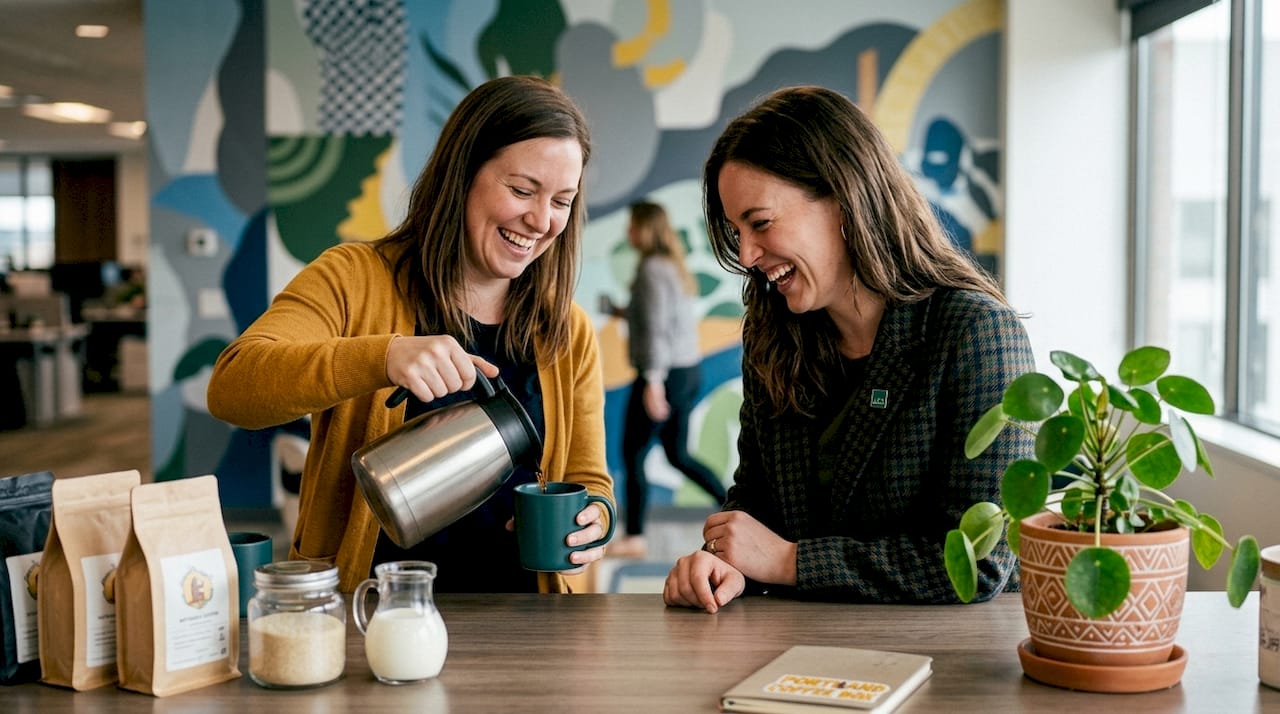
The mechanism goes deeper than proximity. Shared high-quality coffee consumption causes sensory mirroring, a process where aligned sensory experiences reduce cognitive distance and enhance group trust. When a team tastes the same bright Ethiopian light roast before a brainstorming session, they enter a shared sensory state. That alignment speeds rapport and improves collaborative output.
Coffee breaks also serve as a practical substitute for formal team-building events. Professional team-building workshops typically run 2–4 hours and focus on culture over technical skills. A well-designed coffee ritual achieves a similar social outcome in 10 minutes, with no scheduling overhead. That efficiency matters to leaders managing dense calendars.
Here is what coffee does for team dynamics at a practical level:
Pro Tip: Schedule a standing 15-minute coffee gathering at the start of each week. Keep it unstructured. The absence of an agenda is the point. Teams that share informal moments before the workweek begins report stronger communication throughout it.
A 10-minute coffee micro-break is the optimal energy recovery window identified by occupational health research. It resets the brain, lowers burnout risk, and improves focus compared to continuous work. That specific duration matters. A break that is too short does not allow full cognitive recovery. A break that runs too long disrupts task momentum.
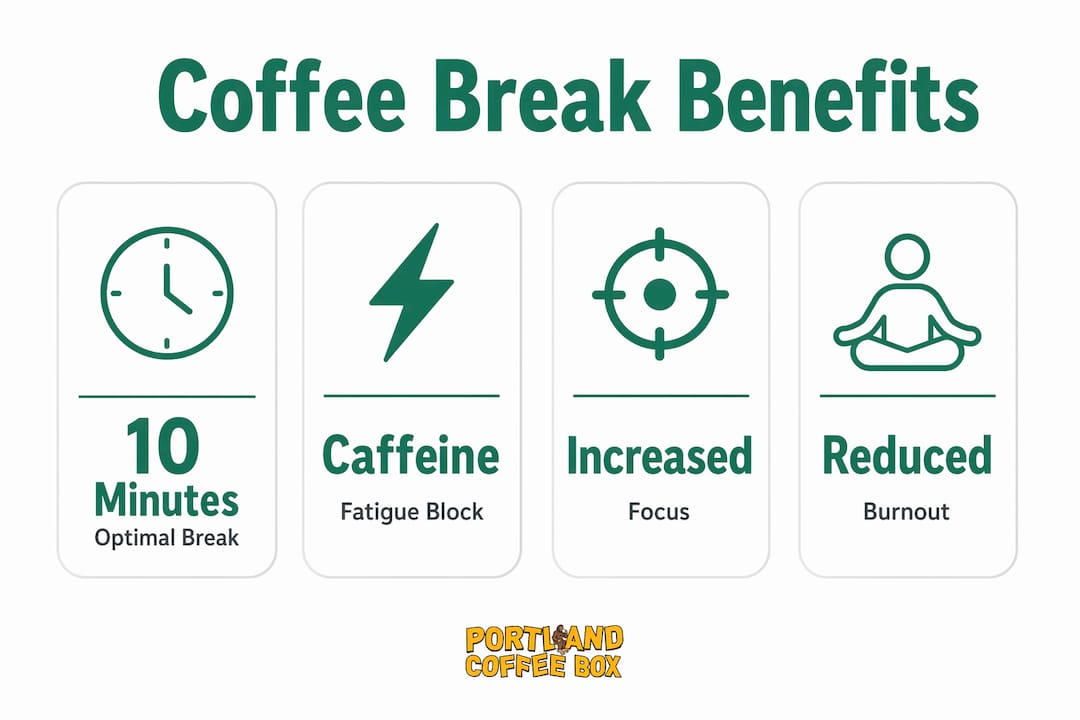
The physiology behind this is straightforward. Caffeine blocks adenosine receptors, the brain’s fatigue signaling system, which increases alertness and sharpens attention. That chemical effect combines with the psychological benefit of stepping away from a task. The result is a measurable improvement in both creativity and sustained concentration when the person returns to work.
The ritual structure of a coffee break amplifies these benefits. A 10-minute micro-break that includes walking to the kitchen, brewing, and drinking signals the brain to transition from focused work mode to recovery mode. That transition prevents the kind of low-grade exhaustion that accumulates across a full workday and eventually becomes burnout.
Coffee breaks also alleviate video call fatigue and promote face-to-face trust-building and belonging, particularly in hybrid work environments. Remote workers who step away from screens for a coffee moment report stronger feelings of connection to their teams. That finding has direct implications for leaders managing distributed workforces.
Structure your team’s coffee breaks for maximum cognitive benefit with these steps:
Statistic callout: Occupational health research identifies 10 minutes as the precise recovery window that prevents burnout accumulation. Teams that skip micro-breaks consistently show higher rates of afternoon error and lower end-of-day output.
Quality coffee amenities signal organizational values and help with recruitment and retention, especially among younger professionals. This is not about luxury. It is about respect. When a company invests in genuinely good coffee, it communicates that it pays attention to the daily experience of its people.
The recruitment signal is particularly strong. Candidates who tour an office and find a well-stocked, thoughtfully curated coffee station read it as evidence of a people-first culture. That impression forms before a single interview question is asked. For leaders competing for talent in tight labor markets, the coffee station is an underused differentiator.
Employee morale benefits from quality coffee in a more immediate way. Good coffee reduces the number of times employees leave the building for a coffee run. Each exit costs roughly 20–30 minutes of productive time and breaks the social fabric of the office. Keeping people in the building with coffee they actually want to drink is a retention mechanism hiding in plain sight.
Ethical sourcing adds another layer of value. Offering locally roasted, ethically sourced coffee reinforces organizational commitments to sustainability and community. For employees who care about those values, the coffee they drink at work becomes a daily reminder that their employer’s stated values are real.
Key factors that determine whether office coffee lifts or undermines morale:
Pro Tip: Survey your team on roast preferences before upgrading your office coffee. A simple three-question form takes five minutes and shows employees their input shapes their environment. That act of asking is itself a morale signal.
Building a genuine office coffee culture requires more than buying a good machine. The most common reason coffee station upgrades fail is that they add administrative burden to existing staff. Dedicated external servicing keeps coffee stations stress-free and prevents the resentment that builds when one employee becomes the unofficial coffee station manager.
The physical design of the coffee space matters as much as the coffee itself. A station tucked in a corner near the supply closet will not generate the cross-departmental mingling that a well-placed, inviting setup creates. Position the coffee area where natural foot traffic from multiple teams converges. Add seating if space allows. The goal is to create a space where a five-minute coffee break can organically become a ten-minute conversation.
Leaders can also apply the concept of “liquid architecture,” a term from sensory psychology, to their coffee program. Aligning sensory profiles across a team, such as serving the same single-origin coffee at a kickoff meeting, promotes group trust through shared sensory experience. The coffee becomes a subtle cue that the team is aligned and moving together.
Connecting coffee culture to broader wellbeing programs gives it institutional weight. When coffee breaks appear on the official workday schedule alongside wellness initiatives, they stop being a perk and become a recognized part of how the organization supports its people. That framing increases participation and reduces the guilt some employees feel about stepping away from their desks.
| Approach | Outcome |
|---|---|
| External coffee station servicing | Removes staff burden and keeps the station consistently stocked and clean |
| Inviting, centrally located coffee space | Increases cross-department interaction and spontaneous collaboration |
| Curated sensory profiles for meetings | Builds group trust through shared sensory experience before collaborative work |
| Scheduled coffee breaks in the workday | Reduces burnout and signals that recovery time is valued by leadership |
| Ethically sourced, fresh-roasted beans | Reinforces organizational values and improves employee pride in the workplace |
Coffee is the most effective low-cost tool workplace leaders have for building social trust, reducing burnout, and signaling organizational values simultaneously.
| Point | Details |
|---|---|
| Coffee as social infrastructure | Coffee stations reduce hierarchy and generate the informal connections that formal meetings cannot replicate. |
| Optimal break duration | A 10-minute coffee micro-break is the evidence-based recovery window that prevents burnout and restores focus. |
| Quality signals respect | Premium, ethically sourced coffee communicates organizational values and strengthens recruitment and retention. |
| Outsource the logistics | External servicing of coffee stations prevents staff burden and keeps the culture benefit intact. |
| Sensory alignment builds trust | Shared coffee experiences create sensory mirroring that accelerates group cohesion and collaborative performance. |
I have sat in a lot of offices where the coffee was an afterthought. A jar of instant granules next to a kettle, or a machine that nobody had cleaned since the previous quarter. What struck me every time was not the bad coffee itself. It was what the bad coffee said about how leadership thought about the people working there.
The offices where I have seen the strongest team cohesion almost always had a coffee culture that felt intentional. Not expensive, necessarily. But considered. Someone had thought about where the station sat, what beans were in it, and whether the break felt like a genuine pause or a guilty five minutes stolen from a to-do list.
The hybrid work shift has made this more urgent, not less. When teams only share physical space two or three days a week, every in-person ritual carries more weight. A freshly brewed cup between meetings is not a small thing when it is one of the few unscripted moments a distributed team gets together. Leaders who treat those moments as incidental are leaving real culture-building opportunity on the table.
My honest advice: stop thinking of coffee as a facilities decision and start treating it as a culture decision. The bean quality, the station location, the break schedule. These are leadership choices. They tell your team what you think of them before you say a single word.
— Cody Salane
The right coffee does not just taste better. It changes how your team starts the day, connects between meetings, and feels about the place they work.
Portland Coffee Box delivers fresh, small-batch beans handpicked from Portland’s top craft roasters directly to your office, every month. Each box includes a curated selection of light, medium, and dark roasts sourced from roasters who care deeply about quality and ethical farming. Free shipping is included on every order, and subscriptions flex from one to four bags to match your team’s size. For offices looking to sample before committing, Portland Coffee Box also offers a free bonus bag to get started. Give your team coffee worth gathering around.
Coffee acts as a social catalyst in professional environments, reducing hierarchy, encouraging informal conversation, and building the trust that formal meetings rarely generate. Its role spans cognitive performance, employee morale, and organizational culture signaling.
Occupational health research identifies 10 minutes as the optimal recovery window. A break of that length resets focus, lowers burnout risk, and improves performance when employees return to work.
Quality coffee provision signals organizational respect and directly influences morale and retention. Premium coffee amenities are particularly effective at attracting and retaining younger professionals who read workplace perks as evidence of company values.
Informal coffee rituals outperform many formal team-building efforts by creating spontaneous social bonding and openness. They do not replace structured programs entirely, but they generate daily micro-moments of connection that formal events cannot replicate at scale.
External servicing is the proven solution. Outsourcing restocking and upkeep prevents the resentment that builds when coffee station management falls informally to one employee, keeping the culture benefit intact without adding to anyone’s workload.


